Google Clear-Cutting Scandal Sparks National Reckoning Over Finland’s Data Center Gold Rush

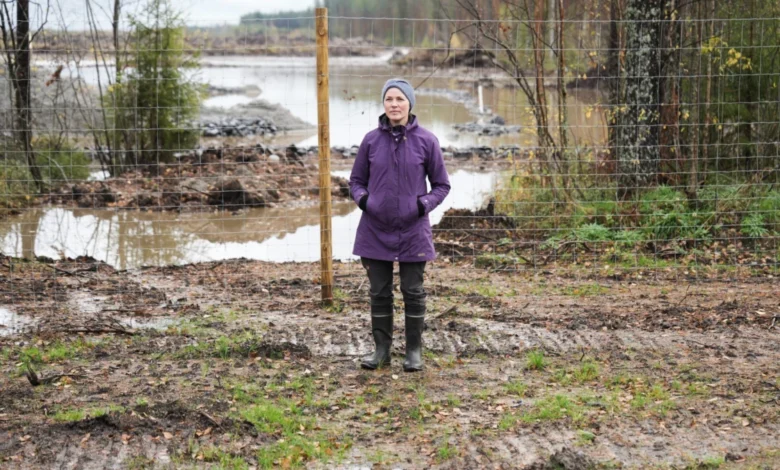
In the quiet, rural expanses of northern Finland, the transformation of the landscape has been as swift as it has been destructive. Near the town of Muhos, an 815-acre tract of land that was once a dense, thriving forest has been reduced to a scarred, mud-slicked wasteland. The removal of an estimated quarter-million trees—a move that saw even the topsoil stripped away—has become the epicenter of a national controversy, pitting the global ambitions of Big Tech against the environmental heritage and legal sovereignty of a Nordic nation. This site, along with another in the village of Otanmäki, lies at the heart of a $17 billion AI infrastructure project led by Google, a development that has exposed deep fissures in how Finland manages the rapid, energy-intensive expansion of the digital economy.
The fallout from these clear-cutting operations has prompted the Finnish Licensing and Supervision Authority (LVV) to issue an emergency halt to work at both sites earlier this month. The regulatory intervention followed the discovery that Google had bypassed critical environmental impact assessments (EIAs) before felling hundreds of thousands of trees. As Finland prepares for upcoming elections, the incident has morphed from a localized environmental grievance into a defining political issue, forcing the government of Prime Minister Petteri Orpo to defend its aggressive push for foreign investment against a growing public backlash.
A Chronology of Environmental Conflict
The timeline of the Muhos and Otanmäki developments reflects a rush to build that appears to have outpaced the regulatory guardrails of the state. Google’s expansion into Finland is part of a broader strategy to leverage the country’s unique geographic advantages: a stable electrical grid, a temperate climate that reduces cooling costs, and vast, inexpensive land.
In early 2026, plans were finalized for a massive data center expansion intended to support Google’s escalating AI compute requirements. By mid-summer, site preparation began in Muhos and Otanmäki. However, the process quickly diverged from standard Finnish protocol. Without completing the mandated EIAs—studies designed to evaluate potential impacts on local biodiversity, water tables, and soil erosion—heavy machinery moved onto the land.
By September 2026, drone footage captured by local activists revealed the extent of the clear-cutting. The imagery showed not only the loss of forest cover but also evidence of significant soil degradation and runoff entering local waterways, specifically those feeding into the Oulujoki River. On October 6, the LVV intervened, issuing a formal stop-work order. Google’s response was an admission of error, framed as a misunderstanding of local legislative requirements. Antti Järvinen, Google’s country manager for Finland, issued a public apology, yet the damage—both ecological and reputational—had already been done.
The Ecological and Social Cost
The environmental consequences are being felt acutely by local residents. Beyond the immediate loss of habitat for local fauna, such as the three-toed woodpecker, the removal of the forest canopy has altered local water drainage. Residents report that runoff from the construction sites is now tainted with sediment, turning formerly clear streams into murky, brown corridors of sludge.
In Otanmäki, the impact is even more visceral. Anni Ranta, a resident whose family has lived in the village for generations, notes that the displacement of wildlife has led to an uptick in animal encounters, including wolves venturing into residential areas. The noise pollution from the construction, compounded by the geological nature of the "hardrock" soil, acts as a sounding board, amplifying the mechanical activity of the data center construction to a degree that has significantly degraded the quality of life for those living in proximity to the site.

The social fabric of these small, rural municipalities is also under strain. While some residents initially welcomed the prospect of new jobs and increased tax revenue, the reality of the construction has shifted the narrative. Critics, including Jussi Kangasharju, head of computer science at the University of Helsinki, argue that the economic benefits are largely illusory. "For Finland, there are no benefits," Kangasharju stated, noting that data centers are primarily designed to serve international clients with little contribution to the local tax base or the creation of high-skilled domestic employment.
Data Center Proliferation in the Nordic Region
Finland is currently home to 145 data center projects in various stages of development. The country has positioned itself as a premier destination for global tech giants, but the "data gold rush" has raised fundamental questions about energy sovereignty. Finland’s commitment to renewable energy, which the government has touted as a selling point for foreign investors, is increasingly being diverted to fuel the insatiable energy needs of AI server farms.
Critics argue that by prioritizing these projects, the government is effectively subsidizing the digital infrastructure of foreign multinational corporations at the expense of its own climate goals and energy affordability for its citizens. The petition, which has garnered over 93,000 signatures—a significant figure in a country of 5.5 million people—demands a mandatory, robust regulatory framework and a "nature compensation fee" for any company that inflicts damage on the environment during infrastructure development.
Official Responses and the Path Forward
The Finnish government finds itself in a delicate position. Prime Minister Orpo, who has advocated for fiscal austerity and economic growth, initially hailed the Google investment as a "top priority." However, in the wake of the Muhos scandal, he was forced to pivot, describing the situation as a "cold shower." The Ministry of the Environment, under Director General Veli-Matti Uski, has signaled that legislative amendments are under consideration to prevent a recurrence of the incident.
For its part, Google has attempted to manage the PR crisis by promising to plant 74 acres of new forest at the Muhos site. Conservationists, however, view this as a token gesture that fails to account for the ecological complexity of the original, mature forest that was felled. A spokesperson for Google maintained that the company has "always worked to meet or exceed zoning, environmental, health, and safety requirements," and that it is currently in full compliance with the LVV’s directives to cease all activity while it coordinates with local authorities.
Analysis: A Test for Democratic Oversight
The situation in Muhos and Otanmäki serves as a case study for the friction between the global AI expansion and national environmental governance. The "American style" of rapid, large-scale industrialization, as described by some residents, clashes with the Nordic model of consensus-based development and environmental stewardship.
The primary implication of this conflict is the potential for a permanent shift in how Finland handles large-scale foreign investment. The political pressure leading up to the April elections suggests that the "data center question" will force candidates to address whether the economic promise of the digital economy outweighs the tangible, long-term costs of environmental degradation.
As the legal review of the Google projects continues, the case serves as a warning for other nations currently courting the data center industry. Without transparent, rigorous, and strictly enforced environmental assessments, the short-term gains of foreign infrastructure investment may be eclipsed by the long-term erosion of public trust and the permanent loss of natural capital. For the people of Muhos and Otanmäki, the scars on the landscape remain a stark reminder that the digital future, while invisible to many, leaves a very heavy footprint on the physical world.