The Hidden Financial Toll of Childbirth: Why Expectant Parents Face Thousands in Unexpected Medical Debt

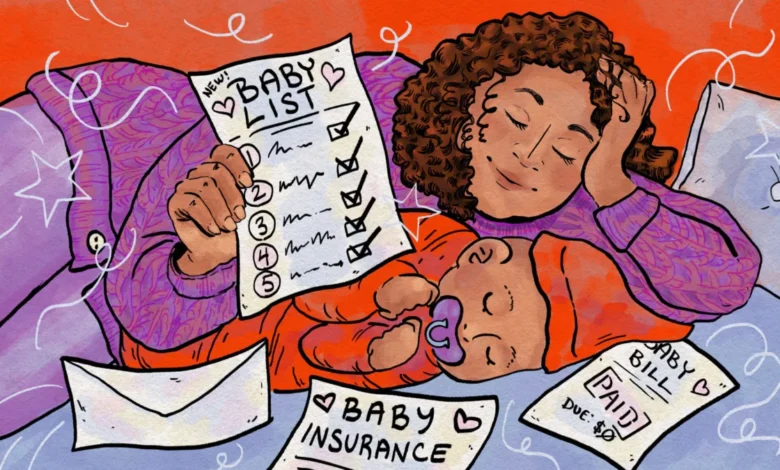
The arrival of a long-awaited newborn is universally celebrated as a moment of profound joy, but for millions of American families, it also triggers a secondary crisis of staggering financial anxiety. When 26-year-old Grace Griffin and her husband, Daniel, welcomed their daughter in June, their elation was quickly overshadowed by a mounting avalanche of medical bills. Living in Calumet, Michigan, the young couple had meticulously planned for their first child, attempting to budget down to the last dollar before conception. Yet, despite their proactive measures, they found themselves confronting out-of-pocket medical expenses that soared past $9,000—more than triple their insurer’s initial estimates.
The Griffins’ experience is far from an isolated incident. Across the United States, expectant parents are routinely caught off guard by the labyrinthine nature of maternity healthcare billing. While federal laws have promised transparency for years, structural loopholes, confusing insurance architectures, and delayed regulatory enforcement continue to leave families financially vulnerable. As the debate over healthcare affordability intensifies, the true cost of bringing a child into the world remains a sobering reminder of the systemic gaps plaguing the American medical system.
A Chronicle of Broken Budgets: The Griffin Family’s Journey
Long before they began trying to conceive, Grace and Daniel Griffin understood that financial prudence would be necessary to navigate an American healthcare system notorious for its high costs. Eager to avoid post-delivery debt, Grace set out to determine exactly how much a routine pregnancy and childbirth would cost under her UnitedHealthcare student plan.
Her initial hurdle appeared immediately when the online cost estimator demanded specific medical billing codes for procedures she had not yet received—information an expectant mother cannot reasonably possess at the outset of a pregnancy. Undeterred, Grace combed through the insurer’s website until she located the Summary of Benefits and Coverage document. The paperwork estimated that out-of-pocket costs for a routine pregnancy and uncomplicated delivery would hover around $2,700. Feeling confident that they could save that amount, the couple moved forward with their family planning.
The illusion of a predictable budget began to shatter early in the gestational period. Grace quickly met her $500 deductible, the mandatory threshold patients must pay before insurance begins covering major costs. Furthermore, her policy enforced a 20% coinsurance rate for in-network care. This meant that for every $100 billed for essential services—such as routine blood work to monitor iron levels or screen for gestational diabetes—the Griffins were personally responsible for $20.
As routine lab visits accumulated, the bills began to mount rapidly. By the time Grace delivered her daughter in June, the hospital alone charged approximately $18,000 for the labor and delivery process. Subsequent explanation of benefits notices revealed that the family’s share of the total expenses would drastically eclipse their initial budget. By October, Grace’s total out-of-pocket expenditures exceeded $9,000, forcing the young couple to scramble and drain emergency reserves to cover the deficit.
The Regulatory Landscape: Transparency Promises and Delays
The systemic difficulty of predicting maternity costs has drawn intense scrutiny from federal lawmakers and healthcare policy experts for years. Sabrina Corlette, a research professor and co-director of the Center on Health Insurance Reforms at Georgetown University, notes that legislative remedies have faced persistent roadblocks.
As part of the bipartisan No Surprises Act enacted in December 2020, Congress mandated that health insurance companies provide consumers with an individualized “advanced explanation of benefits” (AEOB). This tool was designed to give patients a binding, transparent estimate of scheduled medical care costs before services were rendered, preventing surprise bills and severe budget deviations. The rule was originally scheduled to take effect on January 1, 2022. However, more than four and a half years past its intended implementation date, federal regulators have yet to enforce the requirement, drawing ongoing criticism from lawmakers and patient advocacy groups.
"So, it’s basically four and a half years since this was supposed to be available, and I think it’s a source of a lot of frustration for a lot of folks," Corlette observed. "People have a right under the law to know these things."
Compounding the complexity of medical billing, another major shift is slated for the near future. Beginning January 1, long-standing maternity billing codes that traditionally bundle prenatal, labor, delivery, and postpartum care into single packages are set to be overhauled. These legacy codes will be replaced with granular, individualized billing codes for specific prenatal and postpartum services. While healthcare providers argue the change will improve administrative tracking of specific treatments, policy experts like Corlette remain skeptical about whether the restructuring will offer any tangible relief or financial clarity to patients trying to stick to a household budget.
Comparative Cost Realities: The Burden of American Maternity Care
To understand the severity of the Griffins’ situation, it is necessary to examine the broader macroeconomic data surrounding childbirth in the United States. According to comprehensive studies from organizations like KFF and the Peterson-Kaiser Family Foundation, the U.S. remains the most expensive developed nation in the world for giving birth.

Even with employer-sponsored or private health insurance, the average out-of-pocket cost for pregnancy, childbirth, and postpartum care frequently exceeds $3,000 for normal vaginal deliveries and can easily surpass $4,500 for Caesarean sections. For patients enrolled in high-deductible health plans (HDHPs) or student-specific insurance policies—which often feature higher coinsurance rates and restricted networks—out-of-pocket obligations routinely scale upward of $5,000 to $10,000.
These figures stand in stark contrast to other industrialized economies, where maternal care is heavily subsidized, regulated, or provided free at the point of service. In the United States, the burden is largely shifted onto individual consumers via cost-sharing mechanisms like deductibles, copayments, and coinsurance. Consequently, maternal debt has become a primary driver of medical bankruptcies and delayed family planning nationwide.
The Broader Implications for Family Planning and Public Health
The financial hurdles documented in cases like Grace Griffin’s carry profound societal implications. As out-of-pocket healthcare expenses climb, young families are increasingly forced to reevaluate their family planning timelines or abandon the prospect of expanding their households altogether.
During interviews reflecting on her experience, Griffin voiced a sentiment shared by millions of American parents: "This whole experience has me wondering (keeping me up at night, actually): Can we ever afford to have another child?"

Public health researchers warn that financial stress during pregnancy is not merely an economic issue; it directly impacts clinical outcomes. High out-of-pocket costs can deter expectant mothers from seeking timely prenatal care, routine lab work, or essential screenings out of fear of incurring insurmountable debt. Skipping or delaying medical interventions due to cost considerations increases the risk of undiagnosed gestational complications, contributing to maternal and infant health disparities.
Furthermore, administrative friction—such as stringent enrollment deadlines for newborns—creates secondary crises for new parents. For instance, Michelle Critzer, a working mother from Ventura, California, faced a bureaucratic nightmare after missing a rigid 30-day window to enroll her newborn son, Hudson, born in February 2026, into her primary employer-sponsored health plan. Despite extensive appeals, her insurer refused to grant an exception, forcing the family to rely on her husband’s secondary workplace coverage, which offered significantly less comprehensive benefits. Situations like these expose the unforgiving administrative timelines that govern American insurance architecture, adding undue stress to families during an already vulnerable postpartum period.
Actionable Strategies for Navigating Pregnancy Costs
While systemic legislative reform continues to stall at the federal level, healthcare policy experts and financial counselors recommend several proactive strategies for expectant parents seeking to minimize their financial exposure:
- Strictly Monitor Newborn Enrollment Windows: Parents must act immediately following birth to secure health insurance coverage for their newborn. While employer-sponsored plans typically enforce a strict 30-day enrollment window, ACA marketplace plans generally provide up to 60 days. Missing these deadlines can leave an infant uninsured or force families into inferior coverage options.
- Identify Critical Insurance Thresholds: Beyond the deductible, patients must familiarize themselves with their plan’s coinsurance obligations and Maximum Out-of-Pocket (MOOP) limits. Under the Affordable Care Act, in-network MOOP caps are set at $10,600 for individuals and $21,200 for families, though specific plans may feature lower thresholds. Additionally, families should monitor whether their pregnancy spans two calendar years, which resets deductibles and out-of-pocket maximums midway through prenatal or postpartum care.
- Verify In-Network Providers and Facilities: Choosing an in-network obstetrician does not guarantee that the associated hospital, anesthesiologist, diagnostic laboratories, and imaging centers are also in-network. Patients should explicitly instruct their providers to route lab tests and procedures through contracted facilities to avoid surprise out-of-network billings.
- Scrutinize Every Bill and Leverage the ACA: The Affordable Care Act mandates that specific preventive services—including routine prenatal visits, gestational diabetes screenings, folic acid supplements, and lactation counseling—must be covered by insurers without cost-sharing. Patients should cross-reference bills against federal preventive service guidelines and file formal appeals if charges are improperly billed.
- Explore Financial Assistance and Community Grants: Most major hospitals maintain financial assistance policies (charity care) that can reduce balances or establish manageable zero-interest payment plans. Furthermore, localized programs—such as Michigan’s Rx Kids initiative, which provided Grace Griffin with vital cash assistance during and after pregnancy—can serve as critical financial lifelines.
As systemic reforms remain pending, navigating the true cost of childbirth requires constant vigilance from patients. Until structural transparency is successfully mandated and enforced across the healthcare industry, families across the country will continue to rely on meticulous planning, advocacy, and community support to weather the financial storm of welcoming new life.