The Uncertain Future of Jazz Chisholm Jr.: Analyzing the Infielder’s Post-Yankees Free Agency Outlook and Bronx Legacy

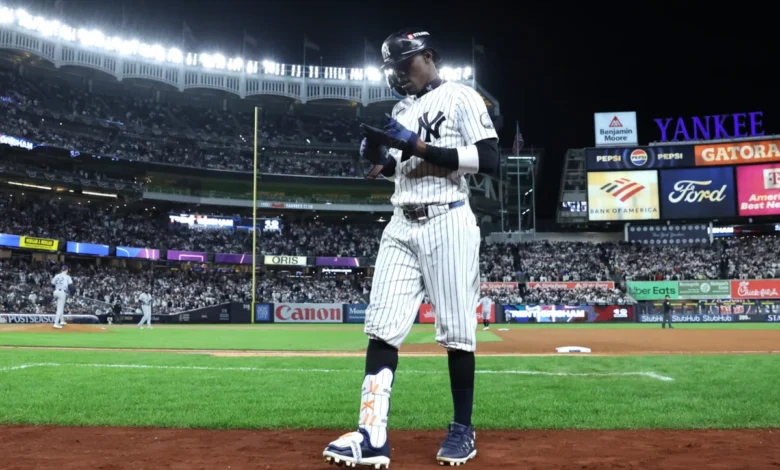
The New York Yankees have officially charted their course for the upcoming Major League Baseball offseason, and infielder Jazz Chisholm Jr. is not part of their immediate blueprint. In a series of expected organizational moves announced on Monday, the Bronx Bombers extended a $23.15 million qualifying offer to star closer David Bednar while conspicuously bypassing Chisholm. The decision not to extend the qualifying offer to the dynamic second baseman makes him an unrestricted free agent without draft-pick compensation attached, significantly altering his market dynamics as winter negotiations commence.
The move comes as the culmination of a tumultuous 2026 campaign for Chisholm, whose production and focus fell short of the lofty expectations held by the Yankees’ front office, coaching staff, and fanbase. While his raw athleticism and flashes of brilliance have never been in question, recurring concerns regarding consistency, on-field concentration, and clubhouse fit have seemingly closed the door on a sustained tenure in New York. As Chisholm prepares to navigate an uncertain free-agent market—potentially facing the prospect of signing a short-term "pillow contract" to rebuild his value—analysts, executives, and fans are left evaluating how a partnership filled with immense promise ultimately unraveled.
A Season of High Expectations and Undelivered Promise
The timeline of Chisholm’s tenure with the Yankees was marked by intense scrutiny from the moment he arrived in the Bronx. Acquired to inject youth, athleticism, and versatility into the lineup, the infielder experienced a roller-coaster 2026 season characterized by brilliant offensive stretches counterbalanced by prolonged slumps and defensive lapses.
Throughout the regular season, the Yankees’ coaching staff occasionally expressed frustration over details regarding Chisholm’s focus. Matters came to a head mid-summer when manager Aaron Boone publicly addressed lapses in concentration, highlighting incidents that drew the ire of both management and the team’s veteran leadership core. Despite these friction points, Chisholm flashed moments of impact, demonstrating the elite bat-to-ball skills and base-running threat that initially made him one of the league’s most exciting young talents.
However, the margin for error in the Bronx is notoriously thin. As the Yankees battled through a grueling regular-season schedule to secure a postseason berth, Chisholm’s offensive output stabilized into inconsistency, putting pressure on a lineup already seeking dependable production behind its core sluggers. By the time October arrived, his standing within the team dynamic was precarious, setting the stage for a difficult postseason conclusion.
The Postseason Collapse and the Bronx Fan Reaction
The breaking point for the relationship between Chisholm and the Yankee Stadium faithful materialized during the American League Division Series. Matched against a relentless Tampa Bay Rays squad, the Yankees struggled to find offensive rhythm, ultimately suffering a stunning sweep that eliminated them from World Series contention.
Amid the offensive struggles, Chisholm found himself the target of harsh booing from home fans inside Yankee Stadium. The hostile reception left the infielder visibly bewildered. Speaking to reporters following the team’s season-ending loss in Game 3, Chisholm did not shy away from addressing the crowd’s reaction, questioning the logic of targeting active players during a postseason series.
"It doesn’t hurt, it’s just confusing because it’s the playoffs and we’re trying to win games," Chisholm told reporters after the sweep. "So you’re booing a guy that’s playing currently trying to help the team win. You’re hearing boos instead of trying to hype guys up. But at the end of the day, it didn’t hurt me because I’ve seen Aaron Judge get booed here too."
While Chisholm attempted to contextualize the booing by pointing to the notoriously demanding nature of New York sports fans—noting that even team captain Aaron Judge has faced similar treatment—his public commentary highlighted a persistent disconnect between the player’s approach and the expectations of the market. For many observers, the episode underscored the unique psychological pressure required to thrive in New York, a test that ultimately proved too demanding for the enigmatic infielder.
Front Office Perspective: The "Baggage" Factor in Free Agency
As Chisholm enters the open market, baseball executives are weighing his undeniable physical tools against the intangible concerns that complicated his time in New York. Evaluating player acquisitions requires a holistic approach that balances WAR projections, defensive metrics, and clubhouse chemistry. In Chisholm’s case, baseball operations experts suggest that the perceived off-field distractions may severely depress his market value.

Appearing on the sports talk program Foul Territory on Monday, former Major League Baseball general manager Jim Bowden offered a candid assessment of why several clubs might hesitate to pursue Chisholm or similarly profiled free agents this winter.
"[Ketel Marte] and free agent Jazz Chisholm, I love both their talents, don’t get me wrong," Bowden stated. "लेकिन I put them kind of in that box where I’m just not sure that’s what I want to win with. I’d rather go younger, rather go with less baggage, rather go with more hard-nosed consistent players that come to the ballpark every day and play the game the right way, where I don’t have to have all the issues come involved."
Bowden elaborated on the specific administrative and managerial burdens that can accompany players who struggle with consistency and focus, referencing high-profile incidents from the season.
"I don’t have to worry about teammates guiding them, I don’t have to worry about lollipops being licked at second base… I just don’t want any part of that. These jobs are hard enough as it is, it’s hard to win games as it is. So I’d probably pass on both."
Such evaluations from respected talent evaluators explain why the Yankees opted against issuing the qualifying offer. Attaching a $23.15 million salary for a single season to a player carrying such organizational question marks would have severely restricted the team’s payroll flexibility while signaling an endorsement of production and behavior that management was ultimately ready to move away from.
Financial and Market Implications for Chisholm
The decision by the Yankees not to extend a qualifying offer changes the economic calculus of Chisholm’s free-agent journey. Without the anchor of a qualifying offer—which would have required any signing team to forfeit draft capital—interested franchises face a lower barrier to entry. This could broaden his market, potentially attracting small- to mid-market clubs looking to buy low on a high-ceiling player.
However, industry insiders anticipate that multi-year, high-dollar commitments will be difficult for Chisholm to secure. Given his fluctuating performance metrics, defensive versatility questions, and the public narratives surrounding his focus, front offices are expected to proceed with caution. Consequently, baseball economists project that Chisholm may be forced to settle for a "pillow contract"—a one-year, prove-it deal loaded with performance incentives. Such a pact would allow him to rebuild his market value, demonstrate maturity, and re-enter free agency under more favorable terms in a future cycle.
Despite the writing on the wall regarding his departure from the Bronx, Chisholm expressed a clear preference to remain in pinstripes during his end-of-season exit interviews. "This is where I want to be," he told reporters. Yet, the realities of modern MLB roster construction and the strict operational standards of the Yankees front office make a reunion highly improbable.
Broader Impact on the Yankees’ Offseason Strategy
With Chisholm officially non-tendered for a qualifying offer and set to test the open market, the Yankees can redirect their financial and strategic resources toward addressing other critical roster deficiencies. The successful preservation of relief pitching via David Bednar’s qualifying offer underscores the organization’s commitment to fortifying the bullpen while maintaining financial agility for position-player upgrades.
The infield now presents a clear vacancy, prompting speculation about how general manager Brian Cashman and the front office plan to address second base and utility depth for the 2027 season. Whether through external free-agent acquisitions, internal promotions from a developing minor league system, or trade market explorations, the Yankees will prioritize players who embody the rigorous, disciplined profile emphasized by Boone and the coaching staff.
Ultimately, the parting of ways between the Yankees and Jazz Chisholm Jr. serves as a cautionary tale of talent meeting market reality. As Chisholm searches for a new home to resurrect his career, the Bronx moves forward, turning the page on a chapter that offered flashes of brilliance but ultimately ended in an unsurprising separation.