The Night Sky Under Siege: Reflect Orbital’s Space Mirror Ambitions Spark Global Controversy

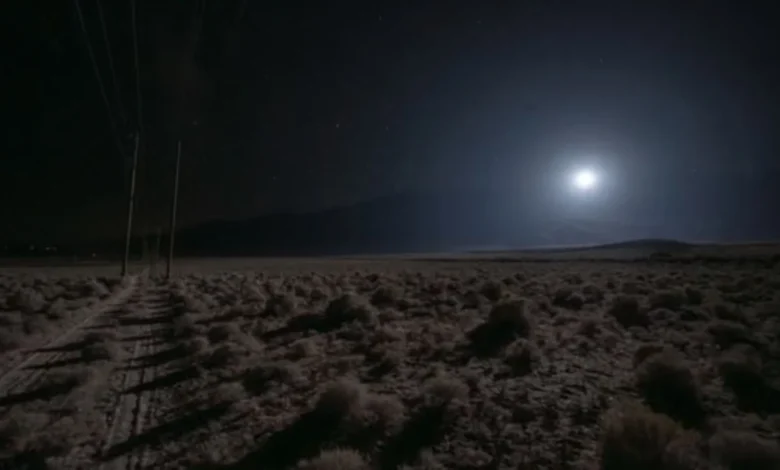
The quiet solitude of the Sierra Nevada desert, near the town of Lone Pine, California, was recently punctured by an unearthly, artificial brilliance. Residents, accustomed to the pristine darkness of the high-altitude landscape, were startled to witness a concentrated, blinding beam of light descending from the heavens. This event was not a natural phenomenon or a classified military exercise; it was a high-stakes field demonstration conducted by the startup Reflect Orbital, marking a significant—and contentious—milestone in the company’s mission to commodify the night sky.
Reflect Orbital’s ultimate objective is as audacious as it is polarizing: to launch a constellation of 50,000 satellite-based mirrors into low Earth orbit (LEO) within the next decade. These mirrors are designed to capture solar radiation and redirect it toward specific coordinates on the planet’s surface. While the company markets this as a revolutionary tool for emergency services and energy efficiency, the project has ignited a firestorm of opposition from environmentalists, astronomers, and public health experts who argue that the wholesale privatization and alteration of the nocturnal environment poses an existential threat to biological rhythms and scientific observation.
A Chronology of Escalation
The trajectory of this technology has moved rapidly from conceptual theory to tangible hardware. In July 2026, the Federal Communications Commission (FCC) granted approval for the company to launch an initial demonstration satellite. This craft, equipped with a 59-foot-diameter reflective membrane, is scheduled to deploy in 2027. Once operational, the satellite is designed to generate 3-mile-wide illumination zones with intensity levels varying from the soft glow of a full moon to the harsh, direct radiance of a midday sun.
The California demonstration, held in mid-October 2026, served as the first real-world proof-of-concept. By deploying ground-based mobile light arrays near Mount Whitney, the company successfully simulated the intended effects of their orbital hardware. According to local witnesses, the experience was jarring. Reports from the region described the light as “blinding,” fundamentally disrupting the visual environment that rural residents and nocturnal wildlife rely upon. While Reflect Orbital insists the test was a success, conducted in collaboration with local search-and-rescue teams to showcase the technology’s utility in critical missions, the visual impact suggests a future where the transition from day to night may become a programmable variable.
The Business Case and Tactical Utility
Reflect Orbital’s business model rests on the promise of “on-demand sunlight.” By utilizing an app-based interface, customers could ostensibly request light for specific geographic locations. The company identifies three primary use cases for this technology:
- Emergency Response: Providing high-intensity illumination for search-and-rescue teams, disaster zones, or regions suffering from power grid failures.
- Agriculture: Extending the photosynthetic window for crops, theoretically increasing yields in regions with shorter growing seasons or insufficient natural light.
- Infrastructure and Security: Providing temporary lighting for street repairs, construction, or military operations, effectively replacing the need for traditional light-polluting infrastructure.
The company argues that its technology could also bolster the renewable energy sector. By reflecting light onto solar arrays during the night, they contend that energy production could be sustained beyond sunset, reducing the dependency on fossil-fuel-based peaker plants. However, this claim remains unverified by independent energy analysts, who note that the cost of launching and maintaining such a massive fleet of satellites may outweigh the energy benefits produced.
Ecological and Biological Implications
The most vocal opposition to the Reflect Orbital initiative stems from the scientific community, which points to the evolutionary reliance of life on Earth on the established day-night cycle, or circadian rhythm. The introduction of artificial, high-intensity night light is not merely an aesthetic concern; it is a biological disruption.
“Literally all of life on Earth evolved based on the rhythm of day and night, and there is a ton of data showing that messing with this is not a good idea,” says Jan Hasselman, a senior attorney at Earthjustice. The group has led a coalition of environmental organizations in petitioning the FCC to reverse its approval. The arguments are rooted in established ecological science: many species of insects, birds, and migratory mammals use the darkness of night for navigation, mating, and predator avoidance. The introduction of persistent, man-made beams of light threatens to disorient these species, potentially leading to population collapses in sensitive ecosystems.

Furthermore, the implications for human health are significant. Chronic exposure to light during the night is linked to the suppression of melatonin, a hormone critical for sleep regulation and immune function. Prolonged disruption of these cycles is associated with increased risks of depression, cardiovascular disease, and metabolic disorders.
The Astronomer’s Lament: A Dimming Universe
For astronomers, the threat is twofold. First, the physical presence of tens of thousands of satellites adds to the already critical problem of space debris and orbital congestion. With major players like SpaceX and Blue Origin already planning to launch tens of thousands of satellites for telecommunications and data centers, the night sky is becoming increasingly crowded.
Second, the reflective nature of these satellites threatens to create a permanent, shifting glow in the atmosphere. Astronomers argue that even if the mirrors are pointed away from major observatories, the diffuse light scattered by these massive surfaces will degrade the clarity of the night sky, making deep-space observation—already hampered by terrestrial light pollution—even more difficult.
“This is an idiotic project,” Hasselman adds, reflecting the sentiment of many in the scientific community who feel the regulatory process has failed to account for the cumulative, long-term impact of such orbital modifications.
Regulatory and Geoengineering Concerns
The FCC’s approval of Reflect Orbital has raised questions regarding the lack of a global governance framework for “space-based modifications.” Unlike environmental regulations that govern land or water, there is no international treaty that effectively prevents a private entity from altering the illumination of the planet.
Climate scientists are also sounding the alarm regarding the unintended consequences of messing with the Earth’s radiative balance. David Ho, a climate scientist at the University of Hawaii, has highlighted the hypocrisy of the technology: “Some people are promoting the already unhinged idea of installing space mirrors facing away from the Earth to reflect the sun’s energy in order to decrease global warming. Imagine wanting to turn those mirrors around so that the Earth gets hotter.”
While Reflect Orbital is currently focused on regional illumination, the precedent of using solar geoengineering tools—even for commercial lighting—could accelerate the development of more extreme climate intervention technologies that lack robust oversight.
The Path Forward
In response to the growing backlash, a spokesperson for Reflect Orbital stated that the company is committed to “substantive discussions” with the scientific community. They have claimed that their flight paths can be programmed to avoid designated astronomical sites, national parks, and ecologically sensitive areas. “We welcome oversight and want to play a role in shaping it,” the spokesperson stated. “We believe it is our responsibility to work alongside governments, scientists, and regulators rather than ahead of them.”
However, for many critics, the promise of self-regulation is insufficient. As the company moves toward its 2027 demonstration launch, the debate is shifting from a local California dispute to a global conversation about the stewardship of the heavens. Whether the night sky remains a shared, dark, and natural resource or becomes the next frontier for corporate-managed lighting remains a defining question of the coming decade. The balance between human convenience and planetary integrity is fragile, and as Reflect Orbital prepares to reach for the stars, the world is beginning to question the cost of turning the lights on when the sun goes down.
Related posts: