The Cost of the American Dream: How Climate Change and Inflation Intersect in Modern Politics

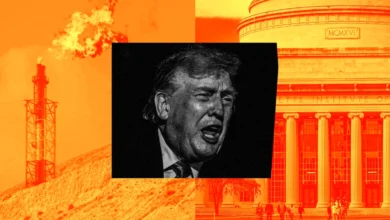
When President Donald Trump took the oath of office in January 2025, he used his inaugural address to declare that “the American Dream will soon be back and thriving like never before.” For the administration, realizing this promise meant an immediate and comprehensive pivot away from federal climate change policies. Citing the preservation of the American Dream as a primary justification, the White House and the Environmental Protection Agency swiftly moved to dismantle a suite of environmental regulations. These actions included proposing the termination of mandatory greenhouse gas emissions reporting, rolling back strict corporate average fuel economy standards to cut vehicle emissions, and systematically deregulating the domestic coal industry.
Yet, public opinion data suggests a significant disconnect between the administration’s deregulatory agenda and the lived realities of American voters. While the federal government frames environmental protections as an undue burden on economic mobility, a broad cross-section of the electorate views climate change itself as an active impediment to their financial security and personal aspirations.
Public Perception and the Threat of a Warming Planet
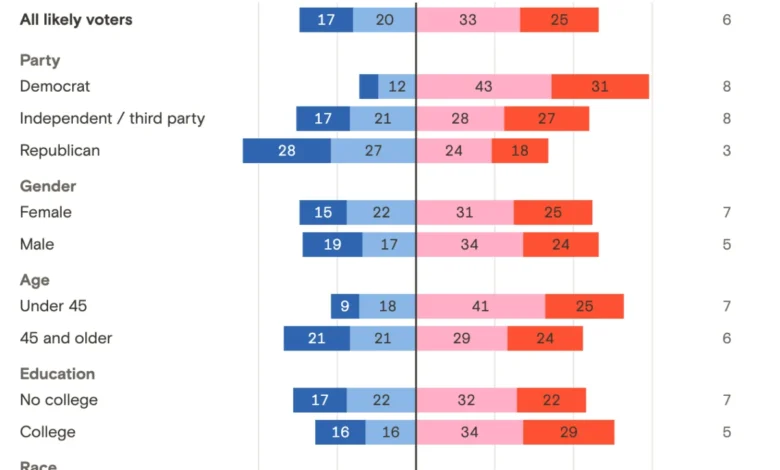
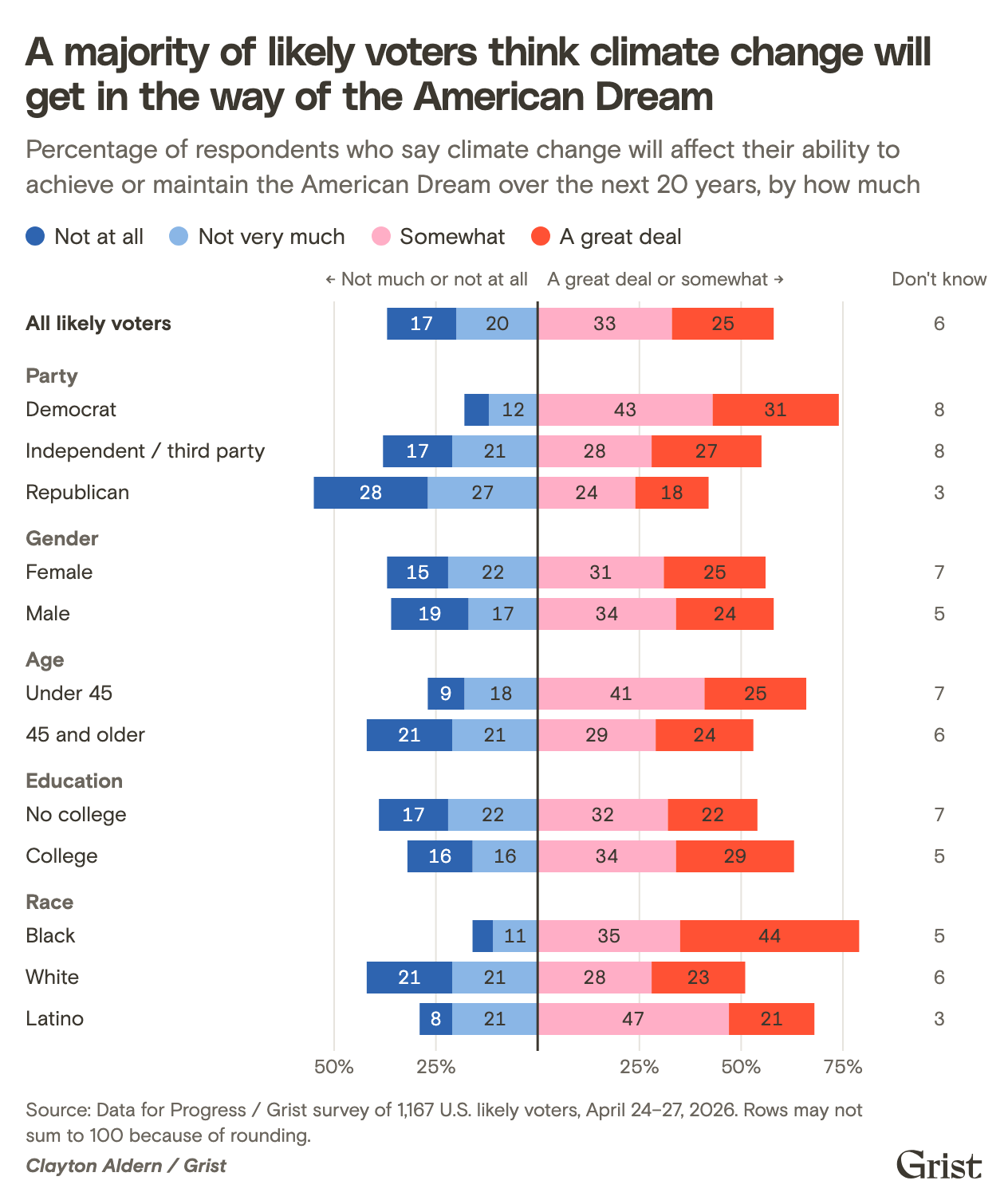
Exclusive polling conducted this spring by the progressive think tank Data for Progress for Grist reveals that 58 percent of likely U.S. voters believe a warming climate will actively hinder their ability to achieve or maintain the American Dream over the next two decades. This sentiment is not confined to one political party; notably, 42 percent of self-identified Republicans share this concern, alongside overwhelming majorities of Democrats and independent voters.
“We identify a strong concern about climate change as a threat to achieving the American Dream,” said Grace Adcox, a senior climate strategist at Data for Progress.
Demographic breakdowns within the survey highlight even higher levels of anxiety among specific populations. Roughly 74 percent of Democrats and 79 percent of Black voters surveyed indicated that climate change would impact their long-term financial goals either "a great deal" or "somewhat." Overall, one-quarter of respondents said the warming climate would affect their future aspirations a great deal, while 33 percent said it would somewhat.
The Immediate Pressures of Cost of Living
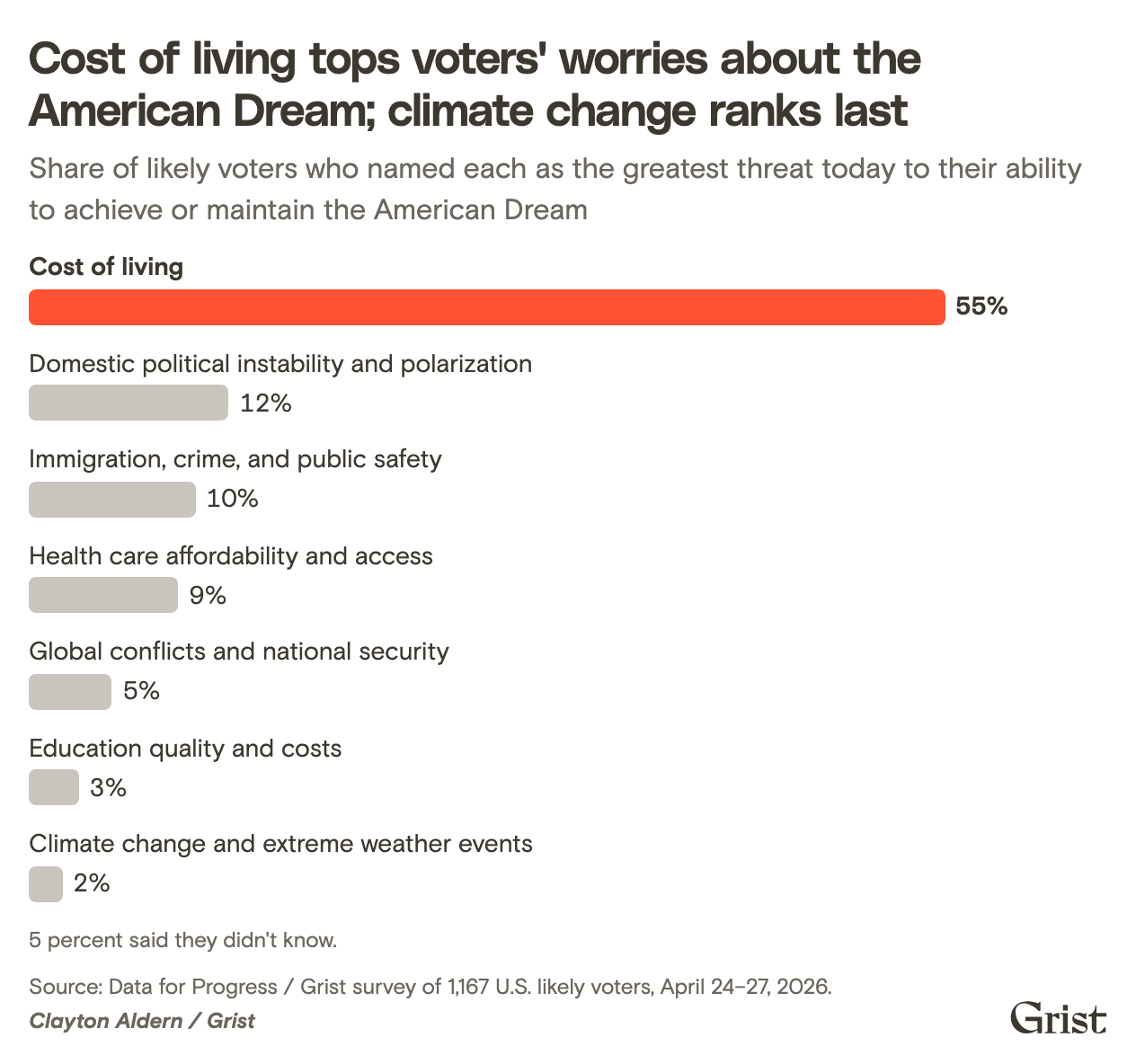
Despite deep-seated anxieties regarding the long-term impacts of environmental degradation, immediate economic pressures overwhelmingly dominate the national consciousness. When asked to identify the single greatest threat to their ability to achieve the American Dream today, 55 percent of likely voters pointed to the soaring cost of living. Domestic political instability and polarization followed a distant second at 12 percent. Climate change and extreme weather events ranked dead last as an immediate, singular threat, cited by only 2 percent of respondents.
This hierarchy of concern tracks closely with broader economic indicators and political polling throughout the year. Inflationary pressures have fundamentally altered the financial milestones associated with traditional stability. According to a recent comprehensive analysis from Investopedia, the baseline cost of achieving the modern American Dream—accounting for homeownership, purchasing a new car, raising children, and securing other standard life milestones—now totals a staggering $5.3 million per household.
Connecting Climate Change to Household Inflation
The paradox of voters ranking climate change low as an immediate threat while simultaneously viewing it as a long-term barrier to the American Dream is resolved by examining how citizens perceive downstream economic impacts. Voters are increasingly connecting environmental shifts to inflation and household expenses.
More than half of all surveyed voters expressed deep concern that climate change will actively drive up the cost of living over the next 20 years. This specific economic anxiety outranks traditional environmental worries, such as rising global temperatures, severe droughts, localized extreme weather events, agricultural crop failures, and the degradation of natural ecosystems.
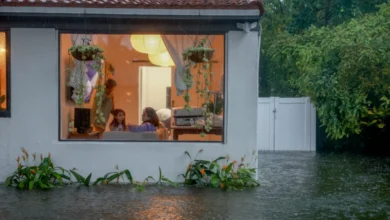
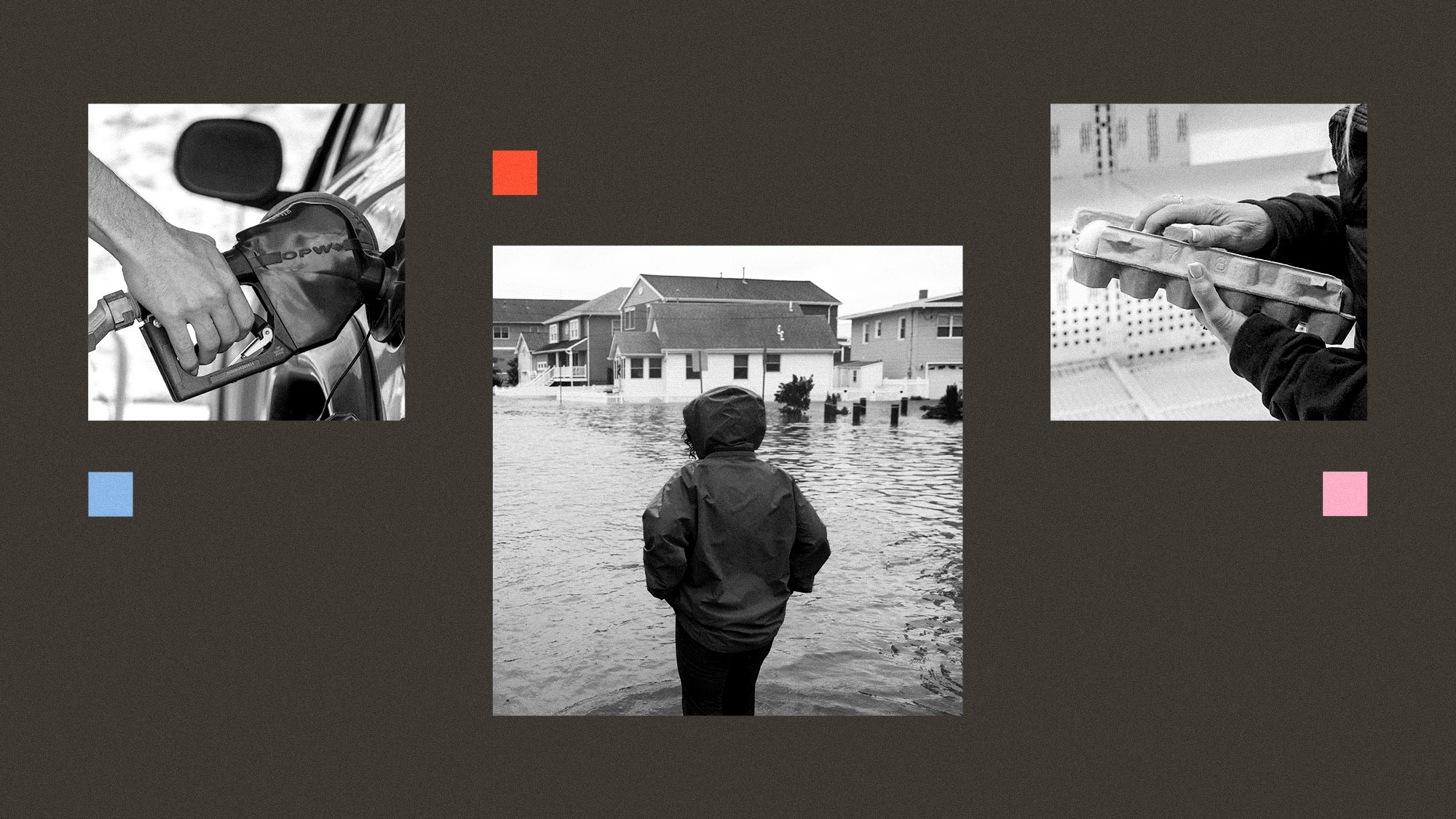
This concern is grounded in mounting empirical evidence. Climate change is no longer viewed merely as an environmental crisis, but as an immediate line item in household budgets. A study published earlier this year by the Massachusetts Institute of Technology’s Center for Energy and Environmental Policy Research (MIT CEEPR) found that American families are already paying between $400 and $900 more annually due to the compounding effects of global warming. These expenditures manifest as escalating utility bills driven by extreme summer cooling demands and climbing property insurance premiums in climate-vulnerable regions. In the hardest-hit counties across the United States, these climate-driven household costs routinely exceed $1,000 per year.
Partisan Divides and Cross-Cutting Anxieties
While partisan polarization frequently defines American energy and environmental debates, polling data reveals a remarkable bipartisan consensus when it comes to the fear of climate-induced inflation.
When researchers evaluated the share of likely voters who are "very worried" about specific effects of climate change over the next 20 years, an increasing cost of living ranked as the primary concern across every political affiliation. Sixty-two percent of Democrats, 53 percent of independents, and 42 percent of Republicans reported being very worried about climate change making their lives more expensive. While a partisan gap persists regarding other climate impacts—such as a 36-point divergence on the issue of severe extreme weather—the economic anxieties surrounding the cost of living remain the most unifying climate-related concern for the electorate.
The Political Battleground and Energy Costs
As the nation approaches midterm congressional elections, energy affordability has emerged as a central flashpoint in battleground districts nationwide. Climate advocacy groups and progressive political action committees have aggressively seized on the issue of high utility and fuel bills, seeking to pin rising costs on the administration’s fossil-fuel-centric policies.
These groups have increasingly championed wind, solar, and other renewable energy sources as structurally cheaper alternatives that can lower consumer utility bills. Conversely, they argue that executive actions to block offshore wind development and delay renewable integration will artificially inflate energy prices for working families.
Challenging the Administration’s Rhetoric
The Trump administration has consistently utilized messaging centered on the financial dangers of environmental mandates, frequently dismissing federal climate initiatives as the "Green New Scam." The administration’s core political narrative asserts that aggressive climate policies impose an intolerable sacrifice and expense on ordinary citizens.
However, polling data suggests this anti-regulatory framing may be failing to resonate with a significant portion of the electorate. When Data for Progress asked survey participants to select phrases that best captured their personal views on climate policies, a mere 6 percent chose the characterization of climate action as "an expensive burden on working people."
Even among Republican respondents, the "expensive burden" framing was largely rejected. Instead, conservative voters were more likely to categorize climate action as a political distraction from more pressing national issues or as a misguided policy approach based on faulty scientific information. By contrast, the most frequently selected phrase across the entire survey to describe climate policies was "a critical step to protect our environment."
“That really is interesting, and suggests that potentially voters are not going to be as susceptible to the sacrifice or expense framing, despite this top-down use of the rhetoric,” Adcox noted.
Broader Implications for Policy and the Economy
The intersection of climate anxiety and economic survival highlights a complex political landscape. As traditional milestones of financial stability grow increasingly out of reach for average households—pegged at a multi-million-dollar lifetime price tag—the electorate’s focus remains intensely pragmatic.
The political implications of these findings suggest that future electoral debates will likely hinge less on abstract debates over carbon emissions and more on the tangible, dollars-and-cents impacts of energy policy. If voters continue to view global warming and its regulatory management through the lens of household inflation and financial security, both political parties will be forced to adapt their economic messaging. For the current administration, successfully tying deregulation to the revival of the American Dream may prove difficult if voters increasingly calculate that a warming planet is quietly driving up the price of everyday life.