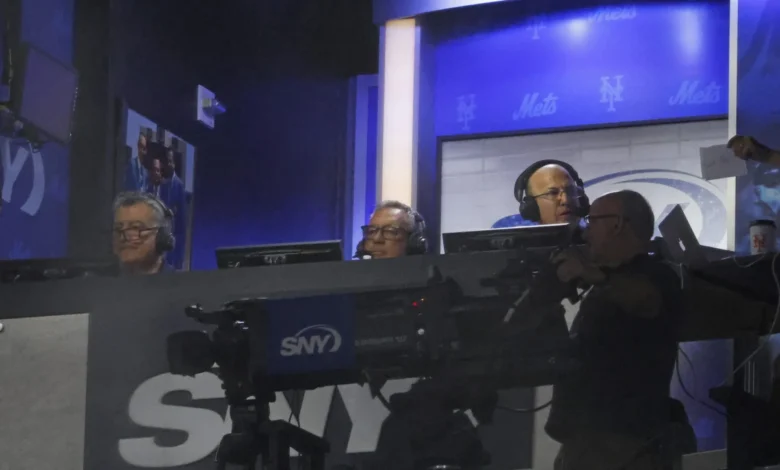
Sports New York (SNY) has long held a prominent place in the media landscape of the tri-state area, serving as the television home for the New York Mets and a staple for regional collegiate athletics. However, recent developments have cast a long shadow over the network. In a move that sent shockwaves through the local sports media industry, SNY executed a round of significant layoffs and canceled several of its flagship studio programs. This contraction arrives at a precarious time for regional sports networks (RSNs) nationwide, highlighting the difficult economic realities facing traditional cable-dependent sports broadcasters in an era of rapid cord-cutting and shifting consumer habits.
The dismantling of several high-profile shows and the dismissal of dedicated production, technical, and on-air personnel just before the Thanksgiving holiday underscore a deepening crisis within sports broadcasting. While the network remains the exclusive cable home for live New York Mets baseball games—its crown jewel—the broader identity of SNY as a comprehensive, 24/7 New York sports destination has fundamentally eroded. Industry analysts, former employees, and media observers are left to dissect how a once-thriving regional powerhouse arrived at this critical juncture.
Main Facts of the Restructuring
The recent operational downsizing at SNY involved the cancellation of several top-tier studio programs that traditionally filled the programming gaps between live sporting events. Shows that once offered deep-dive analysis, debate, and comprehensive daily coverage of New York sports have been shelved, replaced largely by automated reruns, syndicated content, or paid programming.
Crucially, the cuts directly impacted a significant portion of the workforce. Producers, directors, camera operators, desk assistants, and digital content creators received pink slips, abruptly ending careers that in many cases spanned over a decade. Despite the severity of the cuts, network executives have maintained that live game broadcasts—most notably New York Mets telecasts—will remain insulated from the structural changes. The gold standard of the network, featuring the iconic game and studio broadcast trio of Gary Cohen, Keith Hernandez, and Ron Darling, will continue to anchor the spring and summer schedules.
However, the contraction signals that the network is no longer viable as a round-the-clock general interest sports channel. The economic model that sustained original studio programming for nearly two decades has buckling under the weight of declining subscriber fees and shrinking advertising revenues.
Chronology and Background Context
To understand the current state of SNY, it is necessary to examine the historical trajectory of the network since its inception. Launched in March 2006, Sports New York was created as a joint venture primarily involving Sterling Equities (the ownership group of the New York Mets), NBC Sports Group, and Charter Communications (formerly Time Warner Cable). The network was envisioned as a direct competitor to the long-established YES Network, which launched in 2002 to broadcast New York Yankees games.
During its first decade, SNY capitalized on the massive local appetite for baseball, supplementing its Mets coverage with extensive reporting on the New York Jets, local college sports, and high school athletics. The network invested heavily in state-of-the-art studio facilities located in downtown Manhattan and later at the studios near Citi Field, producing daily studio shows that covered the entire spectrum of metropolitan area sports.
The turning point for SNY, much like the rest of the RSN industry, arrived in the late 2010s and early 2020s. The accelerated migration of television viewers away from traditional cable and satellite packages toward streaming platforms—commonly referred to as cord-cutting—severely impacted subscriber fee revenue. Cable operators pay RSNs a fixed monthly fee for every subscriber who receives the channel, regardless of whether that subscriber watches sports. As millions of households dropped traditional cable bundles in favor of broadband-only options and digital streaming services, SNY’s core revenue stream experienced a steady, compounding decline.
Compounding the revenue challenge was the evolving media rights landscape. While the Mets remain under contract with SNY through a lucrative long-term broadcasting agreement signed when the network was founded, ancillary properties proved difficult to retain or monetize profitably. The loss of major professional secondary rights over the years forced the network to rely more heavily on collegiate partnerships, such as broadcasting University of Connecticut women’s basketball games, and original studio programming that struggled to attract the demographics advertisers coveted.

Supporting Data and Industry-Wide Trends
The struggles at SNY do not occur in a vacuum; they represent a microcosm of a broader national crisis affecting regional sports networks across the United States. Diamond Sports Group, which operated numerous Bally Sports-branded RSNs, filed for Chapter 11 bankruptcy protection in early 2023, setting off a wave of rights renegotiations and channel shutdowns nationwide. Warner Bros. Discovery similarly signaled its intention to exit the RSN business, leading to the wind-down of AT&T SportsNet channels in Pittsburgh, Rocky Mountain, and the Southwest.
Data from media research firms indicate that traditional pay-TV penetration in the United States has plummeted from over 85 percent of households in 2010 to fewer than 50 percent today. For regional sports networks, this translates to millions of lost subscriber fees. Concurrently, advertising dollars have shifted heavily toward digital platforms, social media, and national streaming services, leaving local linear television with shrinking pools of revenue to fund expensive daily studio productions.
For SNY, these macroeconomic headwinds manifested in a rigid cost-structure that no longer matched its income. While live sports rights—specifically Major League Baseball—command high premiums and remain the most resilient form of television advertising, the ancillary content required to fill a 24-hour network schedule became an unsustainable financial burden.
Official Responses and Stakeholder Reactions
The announcement of the layoffs and cancellations drew sharp reactions from media guilds, former employees, and local sports fans. The Writers Guild of America East (WGAE) and other labor representatives expressed outrage over the timing of the cuts, which arrived just ahead of the holiday season, characterizing the move as an abrupt and heartless abandonment of dedicated professionals.
In internal communications obtained by industry reporters, network leadership framed the downsizing as a painful but necessary business adjustment designed to secure the long-term viability of the enterprise. Executives emphasized that the changing media consumption habits of sports fans necessitate a leaner operating model that prioritizes live event production over expensive studio-bound daily commentary.
Mets leadership, while maintaining a distinct corporate firewall from the day-to-day operations of the network, has continuously monitored the financial health of SNY, given the historical ownership overlap and the critical importance of the broadcast partnership to the team’s brand visibility and revenue sharing agreements. Representatives for the team declined to comment extensively on the operational restructuring, reiterating confidence in the broadcasting team led by Cohen, Hernandez, and Darling.
Broader Impact and Implications for New York Sports Media
The contraction of SNY marks the end of an era for regional sports journalism in the New York metropolitan area. For nearly twenty years, the network served as a vital training ground and employment hub for producers, reporters, camera operators, and on-air analysts. The loss of these studio programs means fewer independent platforms exist for localized, in-depth discussions of New York sports outside of national broadcasts and digital-first content creators.
Furthermore, the downsizing raises questions about the future accessibility of local sports content. As traditional television networks retreat from comprehensive coverage, fans are increasingly forced to navigate a fragmented landscape of subscription-based streaming services, team-owned direct-to-consumer apps, and independent podcasts. While dedicated fans of the New York Mets will continue to find their games on SNY for the foreseeable future, the broader mission of providing a unified, round-the-clock destination for New York sports has effectively come to an end.
Ultimately, the restructuring at SNY serves as a sobering reminder of the economic realities shaping modern sports media. In an ecosystem dominated by cord-cutting, shifting ad revenues, and the rise of digital streaming, even storied regional sports networks must shed their legacy footprints to survive. Whether this leaner iteration of SNY can successfully sustain its core live-game product while weathering the ongoing transformation of the television industry remains the central question for the network’s future.