Ebenezer: Johnny Depp’s Return to the Spotlight and the Polarizing Reception of a Holiday Classic

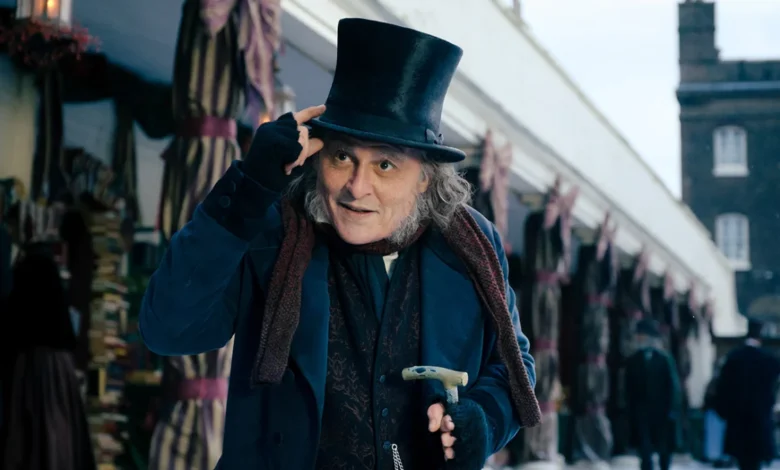
The release of Ebenezer, a dark, horror-tinged adaptation of Charles Dickens’ A Christmas Carol directed by Ti West, marks a significant juncture in the career of Johnny Depp. As the film arrives in theaters, it serves as the actor’s most high-profile attempt to reclaim his position as a major studio leading man following years of legal turmoil, personal controversy, and a self-imposed hiatus from mainstream Hollywood. The project has become an unavoidable flashpoint for critics, who find themselves grappling not only with the artistic merits of the film but with the complex ethical questions surrounding Depp’s return to the big screen.
The Context of a Hollywood Return
Johnny Depp’s career trajectory over the past decade has been defined by a series of high-profile legal battles and a subsequent decline in his standing within the major studio system. His departure from the Pirates of the Caribbean and Fantastic Beasts franchises left a vacuum in his filmography, with his recent work relegated primarily to smaller independent projects and European productions.
Ebenezer functions as a strategic pivot. By stepping into the role of Ebenezer Scrooge—a character synonymous with redemption, transformation, and the casting off of one’s past sins—Depp and his team have created a narrative that mirrors the actor’s own public-facing goal: to be seen as a man who has changed, moved forward, and deserves a second chance. The script’s inclusion of pointed dialogue, such as "I am not the man I was" and "I was once good, and I know I can be again," is widely viewed by industry observers as a calculated effort to bridge the gap between the character’s journey and the actor’s real-world narrative.
Chronology of the Production
The development of Ebenezer was fast-tracked as part of a push to revitalize the holiday horror subgenre. Director Ti West, known for his work on the X trilogy and Pearl, was brought on to provide a distinct stylistic edge to the familiar Dickensian tale.
- Early 2025: Production announcements confirm Johnny Depp’s attachment to the project, sparking immediate industry debate regarding the feasibility of his mainstream return.
- Mid-2025: Filming commences in London, with a supporting cast featuring industry heavyweights including Ian McKellen, Andrea Riseborough, and Rupert Grint.
- Late 2025: Post-production focuses on the film’s "horror-tinged" aesthetic, emphasizing practical effects and a gothic atmosphere intended to distinguish it from the family-friendly adaptations of the past.
- November 2026: The film holds its premiere, followed by a wide release, setting the stage for a critical assessment of Depp’s performance and the viability of his commercial comeback.
Critical Reception and Artistic Analysis
The critical response to Ebenezer has been sharply divided, resulting in a 51 percent approval rating on Rotten Tomatoes. This split reflects a broader tension in contemporary film criticism: the difficulty of separating an actor’s personal history from their on-screen performance.
Those who have offered positive reviews, such as The Hollywood Reporter, suggest that the role is a perfect match for Depp’s long-standing penchant for eccentric, theatrical performances. These critics argue that the film provides exactly the kind of "quirky" vehicle that defined his early success. However, even these favorable reviews are often tempered by the acknowledgment that the performance is "not subtle."
Conversely, critics from outlets like Vulture and The New York Times have been more scathing. The criticism here often focuses on a perceived lack of evolution in Depp’s craft. Critics argue that the actor is leaning into a "tiresome variation" of the mugging and scenery-chewing that defined his Jack Sparrow era, suggesting that he is essentially playing a version of himself rather than inhabiting the soul of the character. The Boston Globe went as far as to describe the performance as a "hollow shell," lacking the humanity required to make the character’s redemption arc feel earned.
Despite the divided opinions on the lead, there is a strong consensus regarding the supporting cast. The performances of Andrea Riseborough, as a haunting iteration of the Ghost of Christmas Past, and the presence of Ian McKellen have been cited as highlights, providing a grounded counterweight to the more flamboyant choices made by the film’s lead.
Supporting Data and Market Performance
The financial success of Ebenezer remains to be seen, but the film’s opening weekend will be a critical indicator of whether the "Depp brand" still holds the same weight with general audiences that it once did. Historically, Dickens adaptations are reliable performers during the holiday season; however, this iteration is specifically marketed as being unsuitable for younger children, potentially limiting its reach in the family-film market.
The "audience score" versus "critic score" dynamic will be a key metric to watch. Often, in cases where a star is embroiled in public controversy, there is a marked discrepancy between the professional critic community and the actor’s loyal fan base. If the audience score trends significantly higher than the critical consensus, it may suggest that the public is more willing to overlook the controversies that dominated the headlines of the early 2020s.
The Mechanics of a Comeback
The decision to cast Depp in a role as loaded with subtext as Scrooge is a classic Hollywood maneuver. In the history of star-driven cinema, casting an actor in a role that parallels their real-life scandal is a common way to "address the elephant in the room" without ever explicitly naming it.
However, the efficacy of this strategy is debated. Film historian and marketing analysts note that while "redemption arcs" are effective storytelling devices, they often require the audience to feel genuine empathy for the character. If the audience perceives the performance as an insincere or "calculated" attempt at a comeback, the meta-narrative can backfire. As noted in the review from IndieWire, the "grotesque caricature" of the performance may actually hinder the audience’s ability to reconnect with the actor, creating a psychological distance that even the most well-produced set design or supporting performance cannot bridge.
Broader Implications for the Industry
The release of Ebenezer poses a fundamental question for major studios: Is there a path back to the A-list for stars who have been sidelined by social and legal controversies?
The industry is currently in a state of flux regarding "cancel culture" and its impact on box-office performance. While some studios remain cautious, avoiding actors with high volatility, others view the "comeback narrative" as a marketing opportunity in itself. By leaning into the controversy, the film generates organic headlines and debate, which, in the era of social media, can be more effective than traditional advertising.
Furthermore, the involvement of a director like Ti West suggests that the film was intended to be an "art-house" take on a classic, which allows the studio a level of plausible deniability. It is not just a "Johnny Depp movie"; it is a "Ti West horror film" that happens to feature Depp. This layering of genres allows the film to appeal to a niche audience that might prioritize the director’s vision over the lead actor’s personal history.
Final Outlook
As Ebenezer hits theaters this Friday, the film exists in a liminal space. It is a traditional adaptation of a holiday classic, a piece of gothic horror, and a real-world stage for a career rehabilitation attempt. Whether or not the film is considered a success will likely depend on which metric the studio prioritizes: the critical consensus, the box office return, or the long-term viability of Depp as a bankable asset.
For the audience, the experience is essentially a litmus test of their own feelings regarding celebrity culture and the concept of public redemption. As the lights dim and the film begins, the question remains: Can the audience see past the makeup and the history to the character on screen? The initial reviews suggest that for many, the answer is a complicated no, but the final verdict will ultimately be delivered by the theater-going public throughout the holiday season. The film stands as a testament to the enduring power of the Dickensian myth, even as it struggles under the weight of its own casting.
Related posts: