Billionaires and Public Lands: The Controversy Over Montana’s Crazy Mountains and the Trump Administration’s New Resource Frontier

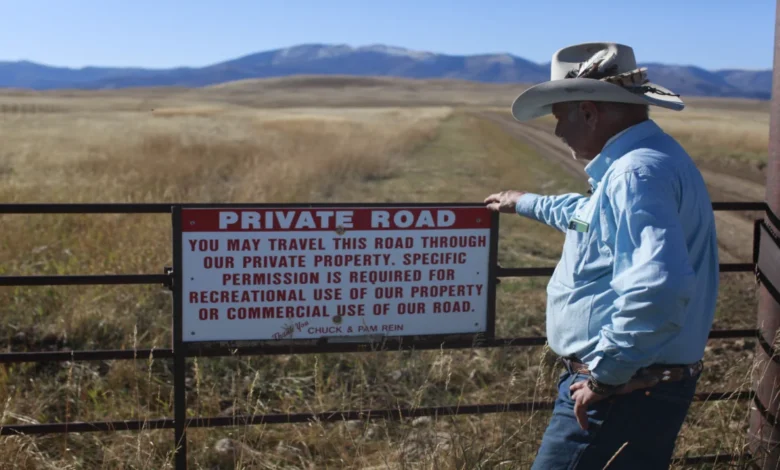
Standing at the terminus of a winding dirt road on the northeastern edge of Montana’s Crazy Mountains, Brad Wilson, a fifth-generation Montanan, faces a simple sign that has become a symbol of a national crisis. The notice, which warns visitors they are entering private property, marks the end of a century-old public access point. For Wilson, a former sheriff’s deputy and lifelong hunter who has tracked elk across these jagged peaks since his youth, the gate represents more than a personal loss; it is a manifestation of a systemic shift in how the United States manages its 600 million acres of public land. The road beyond the gate once led to a historic trail used by the public for generations, but it was recently relinquished by the U.S. Forest Service as part of a complex land swap with the Yellowstone Club—an ultra-exclusive mountaintop retreat for the global elite.
The controversy in the Crazy Mountains serves as a microcosm of a broader transformation occurring across the American West. As private interests and high-level political figures converge, the traditional ethos of public land management—grounded in conservation and multi-use access—is being challenged by a model that treats federal acreage as a financial asset. This shift has gained significant momentum under the current administration, raising questions about the future of the nation’s wilderness, the influence of the "megarich," and the ethics of public officials who hold personal stakes in the very developments they oversee.
The Rise of the Yellowstone Club and the Luxury Frontier
Located roughly 100 miles from the Crazy Mountains in Big Sky, Montana, the Yellowstone Club is often cited as the most exclusive residential community on the planet. Perched 7,000 feet above sea level, the club was built on former public lands acquired through exchanges in the 1990s. Today, it encompasses more than 15,000 acres of private ski slopes, an 18-hole golf course, and high-security gates that protect a membership list featuring tech titans like Mark Zuckerberg and Bill Gates, celebrities like Tom Brady, and financial giants like Warren Buffett.
Initiation fees for the club reach into the hundreds of thousands of dollars, with undeveloped lots selling for as much as $10 million. Since 2009, the club has been owned by CrossHarbor Capital Partners, a Boston-based investment firm. Through its subsidiary, Lone Mountain Land Company, CrossHarbor has aggressively expanded its footprint, becoming one of the largest luxury developers in the Rocky Mountains. Critics, including former congressional staffers, argue that the club’s influence extends far beyond its gates, utilizing vast financial resources to navigate federal bureaucracy and secure favorable land deals that prioritize private luxury over public utility.
The club’s presence in Montana has not been without friction. In 2016, a sewage overflow leaked 30 million gallons of wastewater into the Gallatin River, resulting in $300,000 in penalties. More recently, the club’s acquisition of the 18,000-acre Crazy Mountain Ranch—a move locals described as a "bait and switch" during land swap negotiations—led to a lawsuit from state regulators after the ranch illegally diverted water to irrigate its new golf course.
Federal Policy and the Ethics of "Assets on a Balance Sheet"
The local struggle in Montana is inextricably linked to a federal policy shift spearheaded by the Trump administration. Leading this charge is Interior Secretary Doug Burgum, who oversees 500 million acres of federal land. A former real estate developer and governor of North Dakota, Burgum has frequently referred to public lands as "assets on America’s balance sheet."
Burgum’s personal ties to the Yellowstone Club have drawn intense scrutiny from ethics experts. Property records indicate that Burgum owns a $22 million condo at the club, held through an entity called Lone View, LLC. In 2024, Burgum reported rental income from the property ranging between $100,000 and $1 million, alongside a separate ownership stake in the club itself. Despite his role in overseeing land-use policies that could directly benefit luxury developers, Burgum has not divested from these interests.
Under the leadership of Burgum and Agriculture Secretary Brooke Rollins, the administration has pursued an aggressive agenda of deregulation and development. This includes:
- A proposed $1 billion cut to the National Park Service budget.
- The repeal of the 2001 Roadless Rule, which protected nearly 60 million acres from timber harvesting and road construction.
- The opening of the Arctic National Wildlife Refuge to oil and gas drilling.
- Efforts to sell federal land to developers under the guise of addressing the national housing crisis—a move critics argue will only result in more luxury resorts rather than affordable housing.
A Chronology of Conflict: The Checkerboard Legacy
To understand the current tension in the Crazy Mountains, one must look back to the late 19th century. In an effort to fund the transcontinental railroad, Congress granted railroad companies every other square mile of land along their routes. This created a "checkerboard" pattern of ownership that persists today, where public and private parcels are intermingled.
For over a century, the public maintained access to trails that crossed through these private sections, supported by various congressional acts and court rulings. However, as wealthy individuals began purchasing these private parcels, many sought to block public access.
- 2016: Tensions flared when a U.S. Forest Service ranger began installing signs to assert public rights on contested trails. Following complaints from wealthy landowners to Senator Steve Daines and then-Agriculture Secretary Sonny Perdue, the ranger was temporarily reassigned.
- 2017: The ranger was reinstated after an investigation, but the incident highlighted the political pressure surrounding the range. During this time, the Yellowstone Club began quiet negotiations for a land exchange.
- 2024: The Yellowstone Club purchased the Crazy Mountain Ranch, signaling a move from the Big Sky area into the heart of the Shields Valley.
- January 2025: The Forest Service officially authorized the East Crazy Inspiration Divide Land Exchange.
Supporting Data: The Math of the Land Swap
The East Crazy Inspiration Divide Land Exchange was presented by the Forest Service as a win for the public. On the surface, the numbers appear favorable: the public relinquished approximately 4,000 acres of land and received more than 6,000 acres in return. Appraisals valued the land gained by the public at $9.6 million, compared to the $8.5 million value of the land surrendered.
However, a deeper analysis of the topography reveals a different story. The land given up by the public consisted of low-elevation, accessible terrain suitable for hiking and hunting. In contrast, the land acquired is largely high-altitude, rugged, and "difficult to reach." An independent appraiser noted that one section of the new public land is so steep that a visitor "would have to be a skilled rock climber" to navigate it.
Furthermore, the swap consolidated public land into the center of the range, effectively surrounding it with a "ring of private ownership." This allows large landowners, such as Yellowstone Club member David Leuschen—who owns an 8,500-acre ranch in the Crazies—exclusive "backdoor" access to prime public hunting grounds while the general public is forced to navigate 20-mile backcountry loops to reach the same areas.
Official Responses and Public Sentiment
The Forest Service, represented by former supervisor Mary Erickson, maintains that the exchange was the only viable way to resolve decades of access disputes. Erickson argues that the deal creates a consolidated block of "wild country" and that the new 22-mile trail funded by the Yellowstone Club will meet all federal standards.
The Yellowstone Club, in a written statement, defended its actions, noting that it has spent millions on environmental mitigation and that its acquisition of the Crazy Mountain Ranch was a separate business decision that "only enhanced the benefits to the public."
However, the public response has been overwhelmingly negative. A Floodlight analysis of over 1,000 public comments submitted to the Forest Service found that approximately two-thirds opposed the exchange. Residents expressed fears that the deal sets a precedent for "pay-to-play" land management, where wealthy donors can dictate the terms of public access.
The Crow Tribe has occupied a nuanced position. While some tribal members seek increased access to Crazy Peak—a sacred site for vision quests—critics have pointed out that the supposed agreement to allow tribal access through private land remains a private contract with no federal oversight or guarantee of durability.
Implications: The Privatization of the American West
The outcome in the Crazy Mountains suggests a fundamental shift in the American land-use paradigm. As federal budgets for conservation are slashed and officials with ties to private development take the reins of land management agencies, the line between public benefit and private profit continues to blur.
Advocates for public lands warn that the Montana land swap is a "harbinger" of things to come. If the "assets on a balance sheet" philosophy prevails, more historic trails may be traded for inaccessible peaks, and more public forests may be converted into gated retreats. For residents like Brad Wilson, the fight is no longer just about a single trail in Montana; it is a battle for the soul of the American wilderness. "We’re losing pieces every day," Wilson says. "And if we don’t stand up, there won’t be anything left for the next generation."
The precedent set in the Crazy Mountains will likely influence future decisions in Arizona, Utah, and Minnesota, where similar battles over mining, development, and Indigenous rights are unfolding. As the administration continues to reshape the map of the American West, the question remains whether public lands will remain a shared heritage or become the exclusive playground of the global elite.
Related posts: