Yayoi Kusama iconic yellow pumpkin sculpture makes a triumphant return to Japan’s art island of Naoshima

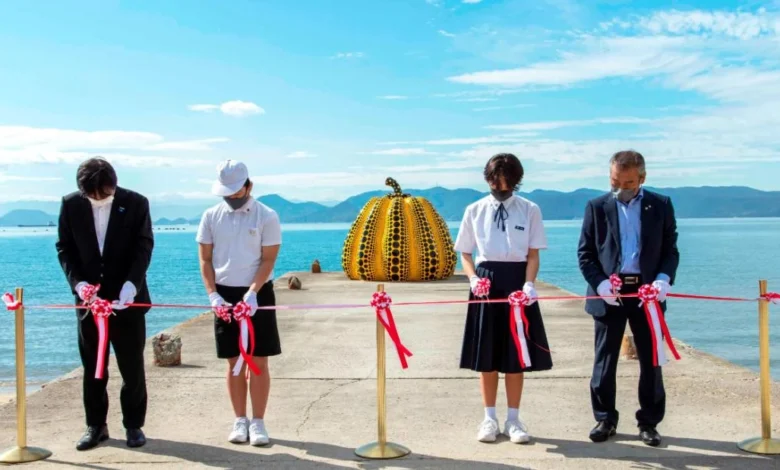
The serene shores of Naoshima, an island nestled in the Seto Inland Sea, witnessed a poignant cultural homecoming on October 4, 2022. Yayoi Kusama’s globally recognized yellow pumpkin sculpture—a work that has become synonymous with the island’s identity as a premier global art destination—was officially reinstalled on its iconic pier. The return of the fiberglass-reinforced plastic masterpiece marked the conclusion of a year-long absence that began when a powerful typhoon swept the original sculpture into the sea in August 2021, shattering the beloved installation into three distinct pieces.
For the 3,200 residents of Naoshima, as well as the international art community that has long viewed the island as a pilgrimage site, the restoration of the pumpkin represents more than just the return of a physical object. It is a restoration of a landmark that anchors the island’s unique dialogue between contemporary art and the natural environment.
A Chronicle of Displacement and Recovery
The incident in August 2021 sent shockwaves through the art world. As typhoon-force winds battered the Seto Inland Sea, the structural integrity of the pumpkin—which had sat on the edge of the pier since 1994—was compromised. The sculpture, measuring two meters in height and 2.5 meters in width, was lifted by the turbulent waters and carried away, sustaining significant damage that rendered the original structure irreparable.
Following the storm, the immediate priority for Benesse Holdings, the organization responsible for managing the island’s expansive art collection, was the recovery of the remnants. Once the pieces were salvaged from the sea, a comprehensive evaluation by Kusama’s production team determined that the structural fatigue and environmental damage were too severe to justify a restoration of the original fiberglass shell. Instead, the decision was made to commission a brand-new iteration of the sculpture, crafted with the same artistic integrity but improved engineering to account for the increasing frequency and intensity of extreme weather events in the region.
The production phase began in the spring of 2022. The team meticulously recreated the sculpture, ensuring that the vibrant yellow hue and the characteristic black polka dots remained true to the original design. However, significant modifications were made to the internal and external architecture to ensure longevity. The shell was engineered to be 10% thicker than the 1994 original, providing increased resistance against gale-force winds and high-velocity waves. Furthermore, engineers integrated a specialized hook into the stem of the pumpkin, a structural addition that will allow local officials to quickly and securely move the sculpture to higher ground should a severe typhoon threaten the island in the future.
The Cultural Significance of Naoshima
Naoshima’s reputation as an "art island" is not a product of recent tourism trends but the result of a decades-long initiative to revitalize a remote, aging community through the intersection of architecture, landscape, and avant-garde art. Since the late 1980s, Benesse Holdings has spearheaded the transformation of the island, inviting renowned architects like Tadao Ando to construct museums that sit in harmony with the local geography.
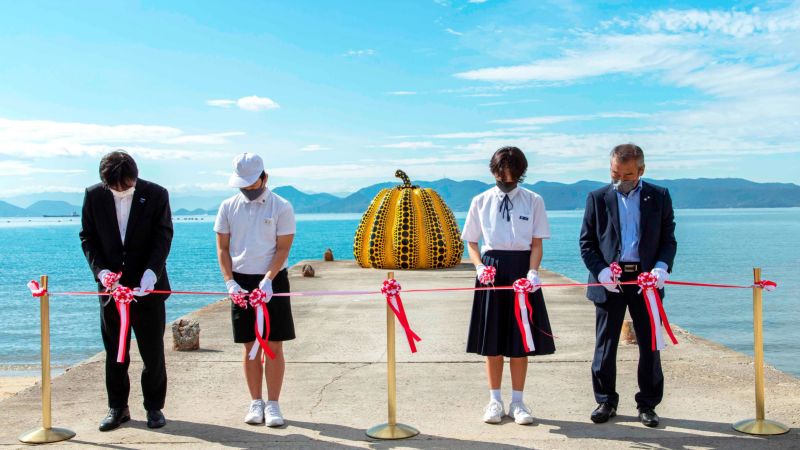
The yellow pumpkin, installed as part of the 1994 "Out of Bounds" exhibition, became the unofficial mascot of this project. Situated at the end of a narrow concrete pier, the sculpture creates a stark, surrealist contrast against the deep blues of the Seto Inland Sea and the lush, rugged hills of the island. For decades, it has served as a central focal point for visitors, becoming one of the most photographed pieces of contemporary public art in Asia.
"Since the pumpkin was a symbol of Naoshima, it is great to see the same artwork installed again at the same spot," said Yukari Stenlund, a spokeswoman for Benesse Holdings. "We are happy to share the joy with residents in Naoshima." The sentiment reflects the deep connection between the artwork and the local population, who have seen their home evolve from a sleepy fishing community into a vibrant cultural hub.
Logistics and Accessibility for the Global Traveler
The reinstallation of the pumpkin coincided with a pivotal moment for Japan’s tourism sector. Following a lengthy period of border closures and strict entry requirements necessitated by the global pandemic, Japan officially reopened to individual leisure travelers on October 11, 2022. The return of the sculpture provided a major incentive for domestic and international travelers to return to the Setouchi region.
Accessing Naoshima remains a journey that rewards the patient traveler. Visitors typically arrive via a 20-minute ferry ride from Okayama, a city that serves as a primary transit hub. Okayama itself is highly accessible, situated approximately 50 minutes from Osaka by the Sanyo Shinkansen, or bullet train.
Beyond the pier-side pumpkin, the island offers an immersive experience. The Benesse House Museum, the Chichu Art Museum—built almost entirely underground to avoid disrupting the island’s natural aesthetics—and the Art House Project, which involves the renovation of abandoned traditional Japanese homes into immersive art installations, constitute a world-class circuit of contemporary expression. The timing of the pumpkin’s return was particularly advantageous for those attending the Setouchi Art Festival, which ran through November 2022, further cementing the island’s status as a critical node in the global art circuit.
Engineering Resilience in an Era of Climate Uncertainty
The tragedy of the 2021 typhoon highlights a growing challenge for cultural institutions worldwide: the preservation of outdoor art in an era of climate change. As severe weather patterns become more unpredictable, the curators of public spaces must balance the desire for public access with the practical requirements of structural survival.
The decision to thicken the fiberglass shell and install a recovery hook is a form of "proactive conservation." By designing for potential disaster, the stakeholders in Naoshima are acknowledging that the sculpture is not a static object but a living part of an environment that is susceptible to the elements. This approach sets a precedent for other coastal art installations, suggesting that the future of public art must include built-in contingency plans for climate-related damage.

Economic and Social Implications
The economic impact of the pumpkin on Naoshima cannot be overstated. Tourism is the lifeblood of the island’s economy, and the "art island" branding has brought a consistent influx of visitors who support local galleries, guesthouses, and restaurants. The absence of the pumpkin, even for a relatively short period, left a noticeable void in the island’s visitor experience.
The reinstallation event on October 4 was a communal celebration, attended by students, local officials, and longtime residents. It served as a symbolic re-assertion of the island’s resilience. The ceremony underscored that the pumpkin is not merely a tourist attraction but a source of local pride. For the residents, the sculpture represents the success of their community’s transition from an industrial and fishing base to a center of global cultural dialogue.
Looking Toward the Future
As the yellow pumpkin once again sits at the edge of the pier, it acts as a sentinel for the future of Naoshima. The artwork continues to embody the "Out of Bounds" spirit of the 1994 exhibition, challenging the boundaries between the artificial and the natural, the domestic and the international.
The story of the pumpkin’s destruction and restoration is, in many ways, a microcosm of Japan’s broader resilience. It highlights a culture that values the preservation of history and art while simultaneously embracing the necessity of innovation and adaptation. As international travel continues to recover, the pumpkin stands ready to welcome a new generation of visitors, offering them a sight that is both familiar to those who remember it from the past and invigorated for the challenges of the future.
The return of the sculpture is a victory for the art world, but it is primarily a triumph for the people of Naoshima. By restoring this icon, they have reaffirmed their commitment to maintaining a space where the human imagination can flourish, undeterred by the forces of nature. The yellow pumpkin is no longer just a sculpture; it is a testament to the enduring bond between a community and its commitment to art.