The Definitive Guide to China’s Most Essential Culinary Landmarks and Iconic Dishes

With one of the world’s most diverse and geographically distinct food scenes, China presents a culinary landscape that defies simple categorization. Spanning over 9.6 million square kilometers, the country’s gastronomy is a tapestry woven from eight major regional cuisines—Cantonese, Sichuan, Jiangsu, Zhejiang, Fujian, Hunan, Anhui, and Shandong—each defined by its own climate, trade history, and cultural evolution. Navigating this vast territory requires more than just an appetite; it demands an understanding of how historical migration, imperial mandates, and local environmental constraints have shaped the plates of 1.4 billion people.
Historical Context and Regional Evolution
The development of Chinese cuisine is inextricably linked to the country’s dynastic history. The migration of imperial courts, such as the relocation of the capital from Nanjing to Beijing in the 15th century during the Ming Dynasty, fundamentally altered the trajectory of national dishes. As royal chefs followed the throne, regional specialties—such as the roasting techniques that would eventually evolve into the iconic Peking Duck—were refined and codified under the scrutiny of the imperial court.

Modern analysis of China’s food economy reveals that the industry contributes significantly to the national GDP, with the catering sector alone accounting for trillions of yuan in annual revenue. The shift toward urbanization has further accelerated the homogenization of certain dishes, yet the regional identity remains a pillar of Chinese pride. According to recent demographic data, local specialties continue to serve as the primary draw for domestic tourism, with "food travel" rising by an estimated 15% annually in post-pandemic consumer reports.
The Evolution of the Peking Duck
Peking Duck stands as a global symbol of Chinese haute cuisine. Records suggest that roasted duck preparations were being documented as early as 1,500 years ago in Nanjing. The transition of the dish to Beijing solidified its status as a luxury item. The technical precision required to produce the characteristic thin, crispy skin—achieved through a combination of air-drying and specialized wood-fire roasting—has led to the establishment of rigorous culinary standards. Culinary historians note that the current method of service, involving delicate wheat pancakes, scallions, and sweet bean sauce, represents a sophisticated balance of textures designed to offset the richness of the waterfowl’s fat.
The Spice Route: Hunan and Sichuan
While Cantonese food emphasizes the natural umami of fresh ingredients, the landlocked southern provinces of Hunan and Sichuan have pioneered a distinct culinary philosophy centered on the preservation of flavor through intense seasoning. Hunan (Xiang) cuisine is defined by its liberal use of salt and chili. The regional folk belief that "it doesn’t count as a dish if there is no chili" is backed by the province’s agricultural output, which prioritizes the cultivation of unique peppers, such as those used in duo jiao yu tou (steamed fish head with salted chili).

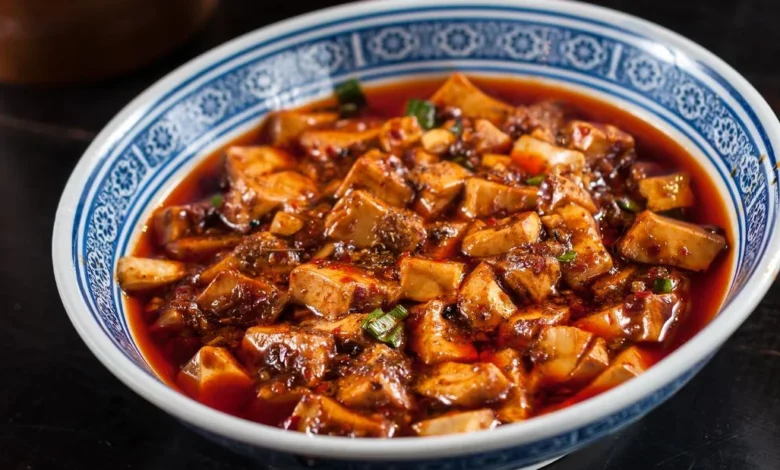
Sichuan cuisine, meanwhile, relies on the ma-la (numbing and spicy) profile, anchored by the Hanyuan peppercorn. Dishes like mapo tofu and dan dan mian are not merely spicy; they are scientific exercises in flavor layering. The history of dan dan mian serves as a poignant reminder of the country’s industrial past; the noodles were named after the dan dan (carrying poles) used by street hawkers in the 19th century to transport portable kitchens to laborers.
Dim Sum and the Cantonese Philosophy
In the Pearl River Delta, the culture of dim sum—a style of service rather than a singular dish—has become an international benchmark for brunch. Cantonese culinary tradition prioritizes the "freshness" (xian) of ingredients. This is nowhere more evident than in the art of steaming, a process that requires absolute mastery of timing. A variation of even a few seconds in a steam basket can mean the difference between a succulent, tender fish and one that has lost its structural integrity.
Dim sum culture also serves as a crucial social mechanism. The practice of "yum cha" (drinking tea) alongside small plates allows for lengthy social and business negotiations, a hallmark of Hong Kong and Guangzhou’s corporate landscape. Analysts observe that this communal dining style has remained remarkably resilient to the rise of individualistic dining trends seen in Western markets.

The Science of Comfort: Congee and Dumplings
Beyond the elaborate banquet halls, the backbone of the Chinese diet is found in humble, high-efficiency staples. Jiaozi (dumplings) and congee (rice porridge) are foundational. Dumplings, which date back to the Han Dynasty, are often cited by agricultural economists as an ingenious method of balancing protein and carbohydrate intake within a single, portable unit.
Congee, a staple across the southern regions, is widely utilized in traditional medicine to support digestive health. Its simplicity—often served with century egg or lean pork—belies a complex preparation process involving hours of slow-boiling to achieve the perfect viscosity. The consistency of congee is often used by food inspectors as a primary indicator of a restaurant’s dedication to traditional techniques.
Regional Specialties: From Xi’an to Tianjin
The geography of China dictates the wheat-versus-rice divide. In the north, specifically in Xi’an, the rou jia mo (often described as the world’s first hamburger) dominates the street food scene. This dish is a testament to the Silk Road’s influence, utilizing a sophisticated braising process for pork belly that incorporates spices like star anise and cloves. The "perfect" mo (bread) must adhere to the traditional "tiger’s back" pattern, a standard that local street food vendors are still held to by discerning residents.

Similarly, in Tianjin, the jian bing guozi represents the pinnacle of breakfast efficiency. The preparation involves a complex mung bean crepe layered with eggs, scallions, and deep-fried crisps (guozi). It is a fast-paced, high-heat cooking style that reflects the rapid urbanization of China’s coastal cities, where convenience meets ancestral flavor profiles.
Economic and Cultural Implications
The standardization of these dishes has become a priority for the Chinese government in recent years, with the Ministry of Culture and Tourism occasionally issuing guidelines on the preservation of intangible cultural heritage, which includes traditional cooking methods. The goal is to prevent the "dilution" of regional identity as chain restaurants proliferate.
However, the international success of dishes like Kung Pao Chicken and Sweet and Sour Pork has created a dual-track culinary system. There is the "domestic authentic" track, which strictly adheres to regional ingredient sourcing (such as the specific use of Pidu bean paste for mapo tofu), and the "international adaptive" track, which modifies recipes to suit global palates. Market analysts suggest that this dual-track system is essential for the soft-power projection of Chinese culture.

Future Outlook
As the global food supply chain faces challenges related to sustainability and climate change, the traditional Chinese emphasis on "nose-to-tail" eating—seen in dishes like vermicelli soup with duck blood and offal—is gaining renewed interest. The efficiency of utilizing every part of the animal is no longer just a cultural habit; it is increasingly viewed as a model for sustainable urban food systems.
For the traveler or the culinary enthusiast, the "essential" list is merely a gateway. The true depth of Chinese cuisine lies in the regional variations that occur even within individual counties. Whether it is the Chen cun fen flat rice noodles of Shunde or the mei cai pickled mustard greens of the Hakka people, each dish offers a window into the demographic shifts and historical migrations that have built modern China. Understanding these dishes is not just about identifying ingredients; it is about acknowledging the resilience and ingenuity of a civilization that has, for millennia, viewed cooking as a fundamental pillar of human governance and social cohesion.
Related posts: