The Perilous Intersection of Artificial Intelligence and Wilderness Exploration

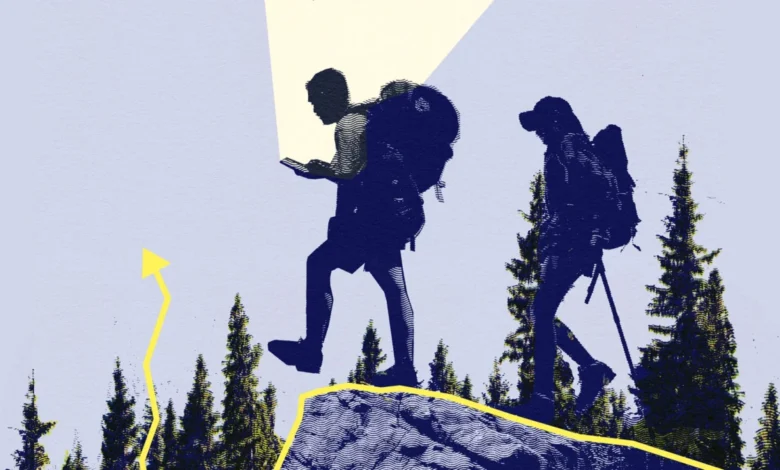
The rapid integration of generative artificial intelligence into daily decision-making has moved beyond writing emails and summarizing documents, extending into the high-stakes realm of backcountry navigation and wilderness safety. Across the United States and Canada, search and rescue (SAR) teams are reporting an unsettling trend: hikers and climbers are increasingly relying on AI-driven chatbots to plan complex excursions, leading to ill-informed decisions, dangerous off-trail deviations, and, in some cases, life-threatening emergencies. This reliance on algorithmic advice, often provided by models prone to "hallucinations" and outdated data, is raising alarms among land managers who warn that the convenience of a digital assistant is no substitute for mountaineering expertise and critical thinking.
The incident on Mount Shasta in Northern California serves as a primary case study for this digital-age hazard. A group of three hikers, all in their early twenties, ventured onto the mountain’s rugged terrain with minimal preparation. Their strategy, which they later admitted during a post-rescue interview, relied heavily on Google’s Gemini chatbot. Guided by the AI’s itinerary, the group failed to account for changing weather, the necessity of early starts, and the physical demands of high-altitude climbing. By the time they reached the summit at 7:30 p.m., they were trapped by darkness. Their subsequent descent resulted in injuries and a frantic request for rescue services. The U.S. Forest Service, which oversees the Mount Shasta Wilderness Climbing and Avalanche Center, confirmed that the hikers’ reliance on the chatbot led to a fundamental breakdown in their situational awareness.
A Growing Pattern of Algorithmic Misadventure
The Mount Shasta incident is not an isolated anomaly. The encroachment of AI into outdoor recreation is manifesting in various ways, from erroneous campsite selection to the distribution of phantom trail maps. In one instance, a visitor to the same wilderness area attempted to set up camp in a restricted zone, citing a "permission" granted by an AI chatbot. Elsewhere, SAR teams have encountered hikers navigating with AI-generated maps that misplace mountain landmarks, effectively sending recreators into hazardous, unmapped terrain.
A notable international incident occurred in British Columbia, where a 16-year-old hiker became stranded on the treacherous Widowmaker Arete of Crown Mountain. The teen had utilized Anthropic’s Claude chatbot to assist in his route planning. While the hiker also consulted traditional tools like Google Maps and AllTrails, the case gained viral attention as a cautionary tale of how AI can provide a false sense of security, encouraging users to attempt routes that exceed their technical capabilities.
The Data Behind the Trend
Public land management agencies are struggling to quantify the exact impact of AI, though the anecdotal evidence is mounting. In Grand Teton National Park, Park Superintendent Chip Jenkins reports a significant shift in visitor behavior. Data collected by the park indicates that the percentage of visitors reporting the use of AI for trip planning has risen from zero to 26 percent in just one year. While the total number of search and rescue calls across some regions has seen a slight downward trend—partly due to better weather or varying traffic patterns—officials worry that the "AI curve" is only just beginning.
Historical data suggests that recreation safety often lags behind technological adoption. When GPS devices became widely available, SAR teams saw a spike in rescues as hikers ventured further than their physical training allowed. The subsequent rise of social media platforms like Instagram and TikTok similarly led to "destination saturation," where users flocked to fragile or dangerous locations for photos, often without understanding the risks. AI chatbots represent the third wave of this phenomenon: a tool that offers specific, authoritative-sounding instructions rather than mere visual inspiration.
The Mechanism of Cognitive Surrender
Experts in human-computer interaction argue that the danger lies in a psychological phenomenon known as "cognitive surrender." Chris Flathmann, a professor of human-centered computing at Clemson University, notes that when individuals interact with AI, they often enter a state of reduced critical vigilance. Because the AI presents information with a high degree of confidence and linguistic fluidity, users are less likely to question its accuracy, even when the advice pertains to life-safety topics.
"When you don’t have the expertise to verify what the machine is saying, you cannot call out a falsehood," Flathmann explains. This is particularly dangerous in the backcountry, where a single incorrect instruction—such as a suggestion to take a shortcut through a gully or an underestimation of required water supplies—can have fatal consequences. Unlike a search engine, which provides a list of links for the user to evaluate, a chatbot synthesizes information into a single, cohesive narrative. This process obscures the original sources, which may be outdated Reddit threads, irrelevant YouTube commentary, or entirely fabricated facts.
The Risks of Hallucinations and Stale Data
Generative AI models are trained on massive datasets that include the entirety of the open internet. In the context of wilderness travel, this is a distinct disadvantage. Trail conditions change seasonally, bridges wash out, and avalanche risks fluctuate daily. An AI chatbot might scrape a blog post from 2012 that recommends a specific route, failing to account for current closures or structural changes to the landscape.
Furthermore, AI models are prone to "hallucinations," where the system generates plausible-sounding but entirely fictional information. For a hiker asking about the safety of a glacier crossing, an AI might confidently provide a set of steps based on standard mountaineering literature, regardless of the fact that the specific glacier has receded or shifted significantly in recent years.
Recommendations for Responsible Recreating
Search and rescue professionals and land managers emphasize that while technology can be an asset, it should never replace the fundamentals of wilderness safety. The consensus among experts is that digital tools should be used as secondary aids rather than primary decision-makers.
Key recommendations for safe wilderness planning include:
- Verification of Sources: Always cross-reference AI-generated advice with official government websites, such as those maintained by the National Park Service or the U.S. Forest Service.
- Utilizing Topographic Maps: Physical maps and compasses remain the gold standard for navigation, as they do not rely on battery life or signal strength.
- Consulting Human Experts: When in doubt, speak to a park ranger or a professional guide. Human experience provides context that a language model cannot replicate.
- The "Check-In" Rule: Always ensure that someone who is not on the trip knows your exact itinerary and expected return time.
As the outdoor recreation community continues to evolve, the challenge will be to balance the accessibility of information with the reality of natural hazards. For now, the message from the rescue community remains clear: the mountains do not care about the sophistication of your software. If you are venturing into places that possess the capacity to cause injury or death, the responsibility for your safety rests entirely on your own judgment, not on an algorithm.