Federal judge dismisses Trump administration lawsuit seeking to block Alaska Senate election results over ballot confusion allegations


In a significant judicial development impacting the 2026 midterm election cycle, U.S. District Judge Sharon L. Gleason has dismissed a lawsuit filed by the Department of Justice (DOJ) that sought to enjoin the state of Alaska from certifying its Senate election results. The federal government had argued that the presence of a second candidate named Daniel J. Sullivan on the ballot—an individual distinct from the Republican incumbent, Senator Dan Sullivan—was a deliberate effort to confuse voters and tilt the election in favor of Democratic challenger Mary Peltola.
Judge Gleason’s 20-page order, issued this past Sunday, centers on the fundamental legal principle of standing. The court concluded that the federal government failed to demonstrate that it possessed the legal authority to interfere with state-run election certification processes under the circumstances presented. Furthermore, the court noted that the DOJ provided no actionable or constitutional plan for how it would isolate or investigate the potentially "confused" ballots without infringing upon the sanctity of voter secrecy, a cornerstone of the American democratic process.
The Genesis of the Ballot Confusion Controversy
The legal battle originated from a uniquely Alaskan political scenario. Daniel J. Sullivan, a teacher by trade, successfully secured a spot on the ballot, creating a situation where two candidates with identical names and identical party affiliations—at least in the perception of some voters—were vying for the same seat.
The DOJ’s suit, which alleged violations of the National Voter Registration Act and invoked the Supremacy Clause, suggested that this was not a mere coincidence of nomenclature. Instead, the government alleged that the candidate, who has been colloquially dubbed "Decoy Dan," was recruited by political operatives associated with the Peltola campaign to serve as a spoiler candidate. The objective, according to the federal complaint, was to siphon votes away from the incumbent Senator Dan Sullivan, thereby artificially boosting the prospects of the Democratic contender.

This maneuver—often referred to as a "spoiler candidate" strategy—is not entirely unheard of in American politics, but the direct intervention of the Department of Justice in a state election is an extraordinary measure. By attempting to block the certification of results before they were even finalized, the federal government placed itself in the middle of a high-stakes partisan dispute, drawing criticism from legal scholars who questioned the reach of federal power in state-managed elections.
Chronology of the Legal and Political Maneuvers
The timeline of the controversy reveals a rapid escalation in both legal and political circles:
- Pre-Election Period: Reports emerged suggesting potential coordination between third-party actors and the recruitment of "Decoy Dan" to the ballot.
- Late October 2026: Investigative reporting, notably by The New York Times, brought public attention to the alleged recruitment conspiracy, prompting the DOJ to amend its lawsuit on Thursday, October 29.
- Late October/Early November 2026: The DOJ filed for an emergency injunction to halt certification in the event of a loss for Senator Dan Sullivan.
- November 1, 2026: Judge Sharon L. Gleason issued her order dismissing the suit, citing a failure of the federal government to establish "redressability" or a legal basis for the requested intervention.
- November 1, 2026: The Department of Justice filed a formal notice of appeal, signaling that the legal conflict is likely to continue into the post-election period.
Reactions and Counter-Arguments
The dismissal of the lawsuit has elicited polarized responses. A spokesperson for the Department of Justice maintained that the court’s decision was procedural and did not address the core substance of their claims. The DOJ continues to assert that the candidacy of the second Sullivan represents a fraudulent attempt to manipulate the electorate. "Alaskan voters deserve a fair election, not to be misled in an attempt to rig outcomes," the spokesperson noted in a statement to the press.
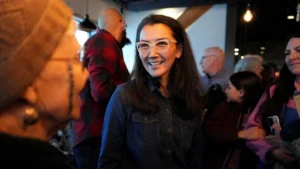
On the other side of the aisle, Mary Peltola has vehemently denied any involvement in the recruitment of the namesake candidate. During a recent campaign appearance, she stated, "I am not interested in tricking voters," characterizing the accusations as a distraction from the real issues facing Alaskans. Her campaign has consistently reiterated that they have no formal or informal connection to either the incumbent senator’s campaign or the namesake candidate.
Senator Dan Sullivan, however, has expressed deep skepticism regarding these denials. In an interview with CNN’s "State of the Union," the Senator suggested that the coordination required to keep a candidate on the ballot for such an extended period would be impossible to hide from a campaign’s inner circle. "She got caught lying, and she’s still lying to the Alaskan people," the Senator remarked, emphasizing that he believes the presence of his namesake has already caused measurable damage to his electoral standing.

The Broader Implications for Election Integrity
Beyond the immediate result of the race, this case raises critical questions about the intersection of federal law and state sovereignty. The DOJ’s invocation of the Supremacy Clause to justify intervention is a significant legal argument that, even in defeat, signals a shift in how federal authorities may approach allegations of election interference in the future.
Furthermore, the criminal investigation currently being conducted by the Department of Justice into the alleged plot remains ongoing. The issuance of subpoenas to various Democratic officials indicates that the legal ramifications of the "Decoy Dan" incident extend well beyond the civil lawsuit dismissed by Judge Gleason. Because no charges have yet been filed, the investigation remains in the fact-finding phase, leaving the potential for criminal litigation on the horizon.
From a data-driven perspective, analysts are watching closely to see if there is a quantifiable "confusion effect" at the ballot box. Historical data on candidate name similarity—while rare—often shows that voters are susceptible to confusion, particularly in high-volume, down-ballot contests. However, in a major Senate race, voter engagement is typically higher, which might mitigate the impact. The difficulty for the court, as noted by Judge Gleason, is that isolating those specific votes to determine if they were cast in error is effectively impossible without violating the fundamental principle of the secret ballot.
Looking Ahead
As the election results are finalized, the failure of the DOJ’s civil suit places the burden of proof back onto the evidentiary findings of the ongoing criminal probe. If the DOJ can uncover tangible evidence of a conspiracy, the political landscape in Alaska could shift significantly in the coming months, regardless of who is eventually declared the winner of the seat.
The case serves as a stark reminder of the complexities involved in modern election administration. As political tactics become increasingly aggressive, the role of the judiciary in acting as a gatekeeper—balancing the need for election integrity against the risks of federal overreach—becomes ever more precarious. For now, the Alaskan electorate remains in a state of uncertainty as the legal appeals process and the criminal investigation continue to unfold in the shadow of one of the most contentious Senate races in the state’s history. The resolution of this case will undoubtedly set a precedent for how future allegations of ballot-name-based interference are litigated in federal courts.