Will Warren is Transforming from Reliable Back-End Starter to Crucial Postseason Weapon for the New York Yankees

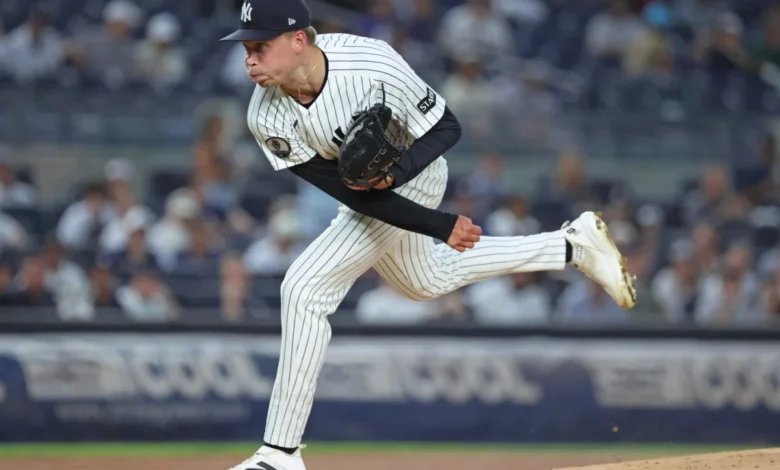
The architectural makeup of a World Series contender is rarely defined solely by its marquee superstars; rather, it is frequently forged in the crucible of late-season development by unexpected contributors. For the New York Yankees, right-hander Will Warren has rapidly transitioned over the past month from a conventional, depth-oriented fifth starter into a versatile, high-stakes asset capable of reshaping the team’s pitching strategy as October approaches. Once viewed merely as a reliable innings-eater intended to stabilize the rotation from the vernal equinox through the autumnal threshold, Warren has found a late-season surge in velocity, command, and competitive grit. This transformation was on full display Wednesday afternoon at Yankee Stadium, where Warren delivered another masterclass in a 6-1 victory over the Colorado Rockies, securing his 10th win of the campaign and cementing his case for a high-leverage role in the upcoming postseason.
Main Facts and the Rockies Outing
In front of a sun-drenched Bronx crowd on September 9, 2026, Warren put together a signature performance that underlined his evolutionary trajectory. Over six strong innings of work, the 27-year-old right-hander limited the Rockies to a single run on four hits, while racking up eight strikeouts and issuing just two walks. The outing marked Warren’s fifth consecutive start in which he surrendered no more than two earned runs, reflecting a sustained period of mastery that has quietly altered the pitching philosophy of manager Aaron Boone’s coaching staff.
The centerpiece of Warren’s recent dominance has been an extraordinary stretch over his past three appearances. This sequence includes two traditional starts sandwiched around a relief appearance on Friday in San Diego, where he tossed two hitless, scoreless frames piggybacking behind Max Fried, who was building up his pitch count. Across these last 15 ⅓ innings, Warren has yielded a mere two earned runs, driving his season earned run average (ERA) down from 4.39 to a much sturdier 4.05. While established rotation stalwarts like Gerrit Cole, Carlos Rodón, and Max Fried command the headlines with elite velocity and sweeping breaking balls, Warren’s recent ascension has provided the Yankees with an unexpected tactical layer as they evaluate candidates for postseason bullpen roles.
Chronology and Recent Performance Timeline
To fully understand Warren’s meteoric rise, one must trace the timeline of his developmental adjustments over the concluding weeks of the regular season. Earlier in the summer, Warren profile-matched the description of a standard back-end starter—effective enough to navigate a third time through an opponent’s batting order, but occasionally vulnerable to hard contact when his command wavered.
The pivot point arrived in late August and rolled directly into September. On September 4, Warren exhibited sharp command in a solid outing, before traveling to the West Coast to provide a unique bridge relief appearance behind Fried on September 4 in San Diego. Pitching out of the bullpen without a traditional rest cycle, Warren adapted seamlessly, firing two flawless, hitless frames.

Just days later, back in the Bronx on Wednesday, September 9, he returned to the starting rotation and immediately set a personal standard for raw power output. His four-seam fastball ticked upward by nearly a full mile per hour compared to his seasonal baseline, registering an average velocity of 94.6 mph. Crucially, Warren dialed up eight pitches of at least 96 mph during the afternoon—matching a threshold of upper-tier velocity he had only reached 35 total times prior in the entire 2026 campaign. This deliberate uptick in velocity has not come at the expense of his secondary offerings; rather, the heightened threat of his fastball has fundamentally enhanced the effectiveness of his changeup and sinker, keeping opposing hitters perpetually off balance.
Technical Adjustments and Mechanical Evolution
Baseball analysts and coaching staff members have closely monitored the mechanical tweaks responsible for Warren’s late-season velocity surge. Speaking to reporters after his victory over Colorado, Warren attributed his newfound potency to a subtle adjustment in posture. By maintaining a taller, more upright posture throughout his delivery, he has been able to keep his kinetic chain more consistently aligned from release to follow-through.
This mechanical refinement has yielded a dual benefit: enhanced control over the strike zone and an incremental spike in velocity. "It’s a little posture, just staying taller. I think it keeps me more in line," Warren explained. "Therefore, I can fill the zone up and get a little tick in velo."
This mechanical discipline was severely tested in the top of the fifth inning against Colorado. Having cruised through the first four frames, Warren encountered his sole period of distress. Rockies infielder Connor Norby greeted him with a sharp home run to left field, breaking the scoreless tie and energizing the visitors. Consecutive singles by Zac Veen and Jake McCarthy immediately followed, leaving runners on the corners with only one out. For a pitcher who has historically battled to escape self-inflicted jams, the situation carried immense pressure, with every subsequent pitch threatening to prematurely end his afternoon.
Demonstrating the poise of a seasoned veteran, Warren reached deep into his repertoire and induced the exact ground ball he needed. Facing Cole Carrigg, Warren deployed a heavy sinker that induced a sharp bouncer directly toward the right side of the infield. First baseman Luis García Jr. fielded cleanly and fired to shortstop George Lombard Jr., who then relayed the ball back to the covering Warren. Exhibiting surprisingly agile footwork, Warren not only beat Carrigg to the bag to complete the inning-ending double play but punctuated the defensive gem with an emotional fist-pump and a celebratory strut back to the dugout—a rare display of overt passion from the typically stoic right-hander.
Official Responses and Managerial Perspectives
The implications of Warren’s development have not been lost on the Yankees’ leadership group. With the bullpen undergoing rigorous evaluation as the franchise prepares for a deep October run, versatility remains the most coveted attribute for any pitching staff. Aaron Boone acknowledged that Warren’s profile has fundamentally shifted from a traditional "innings-eater" into a weapon with multi-faceted utility.

"He can serve a lot of roles potentially [in October]," Boone remarked during his postgame media session. "He’s been incredibly durable. But he’s got weapons."
While barring unforeseen injuries, Warren is unlikely to displace the top-tier arms atop the postseason rotation hierarchy, his capacity to navigate high-leverage frames, bridge multi-inning gaps, or provide bulk relief makes him an invaluable commodity. In a modern postseason environment where traditional bullpen roles are frequently blurred by tactical matchups and opener strategies, a pitcher who can touch 96 mph while maintaining exceptional command represents a luxury for any championship contender.
Broader Impact, Injury Updates, and Franchise Notes
Warren’s success forms part of a broader narrative regarding the Yankees’ pitching depth as the regular season enters its final fortnight. The organization continues to carefully manage the recovery timelines of key personnel aiming for late-season or postseason contributions.
Prior to Wednesday’s contest, right-hander Clarke Schmidt advanced his ongoing rehabilitation assignment from a Tommy John recovery by making his fourth appearance for Double-A Somerset. Pitching on just two days’ rest—a deliberate stress test designed to simulate condensed postseason workloads—Schmidt struck out a pair of batters in a clean, 12-pitch scoreless inning. The Yankees project Schmidt to potentially factor into their bullpen equation before the regular-season schedule concludes.
Additionally, the solemnity of the day extended beyond the diamond. Before the first pitch against Colorado, the Yankee Stadium faithful observed a moment of silence in honor of Rollie Sheldon. The veteran right-hander and Connecticut native, who played a vital role in securing consecutive World Series championships for New York in 1961 and 1962, passed away the previous week at the age of 88.
As the Yankees honor their storied past, the present iteration of the ballclub continues to write its own chapter. For Will Warren, the journey from an unheralded depth piece to an indispensable October option serves as a testament to late-season evolution, mechanical perseverance, and the relentless pursuit of peak performance when the stakes are highest.