The Convergence of Literary Horror and Cinematic Adaptation Defines the 2026 Fall Film Season

The landscape of modern horror cinema is undergoing a significant transformation this autumn, as three distinct literary works make their highly anticipated transitions to the silver screen. Josh Malerman’s psychological haunting in Incidents Around the House, Daniel Kraus’s visceral survival thriller Whalefall, and Virginia Feito’s gothic satire Victorian Psycho are set to premiere in rapid succession, marking a notable moment for the intersection of contemporary publishing and film production. These adaptations, scheduled for release between October and November 2026, represent a broader trend in Hollywood: the aggressive acquisition and development of genre fiction that offers both intense, streamlined premises and inherent "high-concept" visual potential.

A Chronology of Literary Adaptation
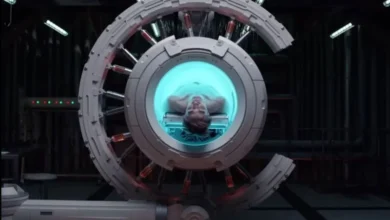
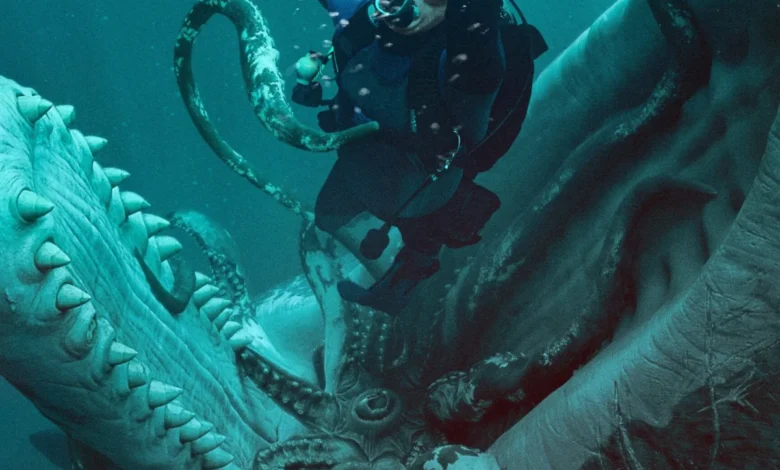
The pipeline from page to screen for these three specific titles reflects the accelerated pace of contemporary studio development. Daniel Kraus’s Whalefall, which debuted as a novel in 2023, was quickly optioned for its unique premise—a deep-sea diver trapped within the digestive tract of a sperm whale. Following in quick succession, Malerman’s Incidents Around the House (rebranded for the screen as Other Mommy) arrived in 2024, with Feito’s Victorian Psycho concluding the literary sequence in 2025.
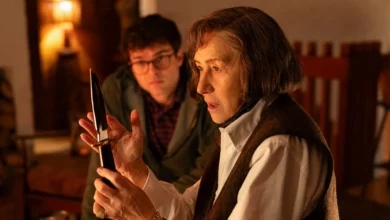
The film adaptations have navigated complex production cycles. Universal’s Other Mommy, directed by Rob Savage, gained significant industry attention following a strategic marketing push during screenings of The Odyssey, where the trailer reportedly became a focal point of audience discussion. Meanwhile, the path for Victorian Psycho was far more turbulent. The project, initially backed by A24, faced significant pre-production challenges, including a casting shift following the departure of Margaret Qualley. The film ultimately secured a new distribution deal with Bleecker Street and a prestigious premiere at the Cannes Film Festival, a rare feat for a work of genre horror.

The Anatomy of High-Concept Horror
Industry analysts point to the "streamlined" nature of these stories as a primary reason for their successful transition to film. Each narrative relies on a singular, claustrophobic setting—a hallmark of effective, budget-conscious, yet high-impact horror. In Other Mommy, the focus remains tightly on a child’s domestic environment, while Whalefall is almost entirely contained within the biological confines of a whale. Victorian Psycho utilizes the rigid social structures of the 19th century to box in its protagonist.
The creative teams involved have leaned heavily into these limitations. For Whalefall, director Brian Duffield and author Daniel Kraus prioritized scientific grounding, consulting with marine biologists and commercial divers to ensure the survival elements—such as the effects of methane poisoning and the physiological reality of the whale’s stomach—were depicted with technical accuracy. This adherence to realism serves to heighten the visceral nature of the film, separating it from standard monster-movie tropes.

The Role of Authorial Involvement
Unlike the early days of film adaptations, where authors were frequently sidelined, the current cycle demonstrates a move toward deeper authorial collaboration. Both Malerman and Kraus served in significant creative capacities; Malerman acted as an executive producer on Other Mommy, while Kraus co-wrote the screenplay for Whalefall. Feito took on the role of screenwriter for her own work, a transition she described as learning a "new language" of the screen.
These authors emphasize that their involvement is not necessarily about exerting total control over the vision of the director, but rather about ensuring the core "spirit" of the work remains intact. Malerman compares the process to his long-standing experience in the music industry: "I write the song, and they make the music." This philosophy has allowed directors like Rob Savage and Zachary Wigon to imprint their specific stylistic signatures onto the source material without alienating the authors who created the worlds.

Industry Implications and Market Shifts
The success of these upcoming films could signal a shift in how studios view "unadaptable" genre fiction. Whalefall, in particular, was considered a long-shot for a major studio production due to its extreme premise. However, its successful six-minute preview at CinemaCon suggests that the industry is increasingly willing to gamble on narratives that challenge traditional cinematic structure.
Data from the past five years indicates that horror remains one of the most profitable and stable genres in the theatrical market, often outperforming high-budget superhero franchises in terms of return on investment. The decision to tap into mid-list and contemporary literary horror suggests a pivot toward IP that carries a dedicated, pre-existing reader base while still offering the "newness" that audiences demand. As Feito noted in a recent discussion, there is a clear "hunger" for original, slightly unsettling stories that don’t fit neatly into the established franchises that dominated the 2010s.

The Intersection of Talent and Narrative
The casting of these films also underscores the prestige currently associated with horror. The presence of A-list talent such as Jessica Chastain in Other Mommy, Josh Brolin in Whalefall, and Maika Monroe in Victorian Psycho indicates that the genre is no longer viewed as a "stepping stone" for actors, but as a legitimate arena for dramatic performance.
For the authors, seeing their protagonists brought to life by these actors has been a transformative experience. Kraus noted the commitment shown by Austin Abrams, who spent weeks in physical sets designed to replicate the interior of a whale, while Feito observed that Monroe’s interpretation of the Victorian governess added a layer of "tenderness" to a character that was written with a much sharper, more nihilistic edge in the source text.

Looking Ahead
As these films hit theaters, the industry will be watching closely to see if the "book-to-screen" pipeline remains as robust as it has been throughout 2026. If these three adaptations prove to be both critical and commercial successes, it is likely that studios will continue to lean into the catalogs of contemporary novelists who specialize in the uncanny and the extreme.
The broader implication is that the definition of a "mainstream" movie is changing. By embracing the specific, often bizarre visions of authors like Malerman, Kraus, and Feito, Hollywood is diversifying the types of stories that reach the multiplex. Whether it is the psychological dread of an entity in a family home, the claustrophobic survival of a diver, or the dark, comedic violence of a Victorian anti-heroine, these films suggest that the future of theatrical horror lies in the specific, the strange, and the deeply literary. For now, the audience’s appetite for these "frightening seasons" remains insatiable, and the creative collaboration between the desk and the camera has never been more vital to the health of the film industry.