ABA Death Penalty Representation Project Marks 40 Years Recognizing Firms Lawyers for Pro Bono Service

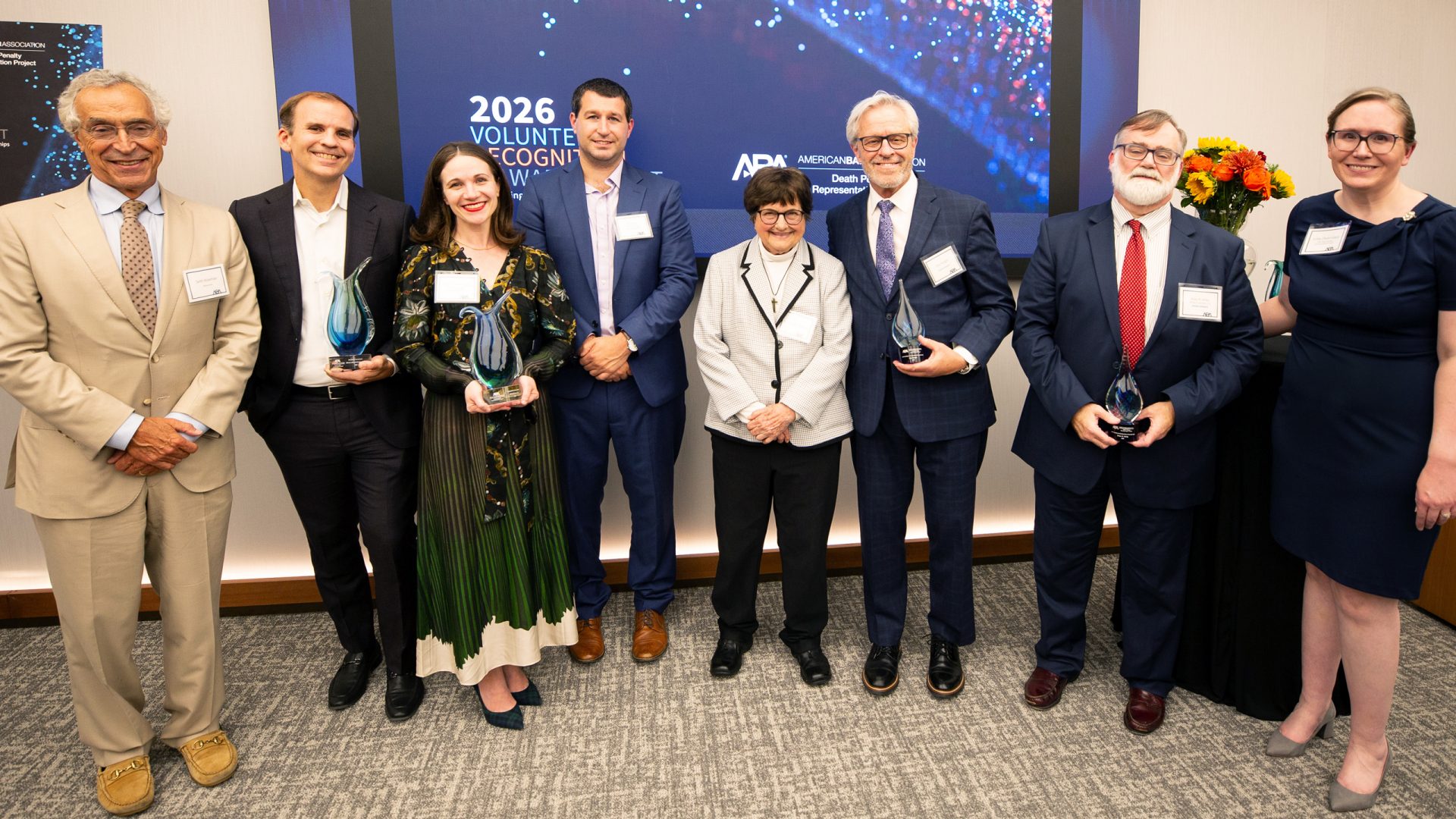
The American Bar Association marked a monumental milestone in the ongoing pursuit of equal justice on September 21, 2026, celebrating four decades of the ABA Death Penalty Representation Project. Held in Washington, D.C., the anniversary event brought together prominent legal minds, advocates, and civil rights leaders to honor the extraordinary contributions of private law firms and pro bono attorneys who have dedicated countless hours to defending individuals facing capital punishment.
Among the notable figures gathered for the commemoration were prominent appellate advocates, defense attorneys, and anti-death penalty campaigners, including Seth P. Waxman, John W.F. Chesley, Jennifer Ware-Phillips, Dan Medici, Sister Helen Prejean, Don Knight, Brian M. White, and Emily Olson-Gault. Their presence underscored the collaborative, interdisciplinary nature of the fight for due process, highlighting how the legal community continues to rally behind individuals who would otherwise face the ultimate penalty without adequate counsel.
The 40th-anniversary celebration served not only as a look back at four decades of rigorous legal advocacy but also as a stark reminder of the systemic vulnerabilities still embedded within the American criminal justice system. As the debate over capital punishment evolves nationwide, the ABA Death Penalty Representation Project remains a critical bulwark against wrongful convictions, systemic bias, and the erosion of constitutional rights.
Origins and Evolution of the ABA Death Penalty Representation Project
Established in 1986, the ABA Death Penalty Representation Project was born out of an urgent, undeniable crisis in the American legal landscape. Throughout the late 1970s and early 1980s, the reinstatement of capital punishment by the U.S. Supreme Court led to a rapidly growing death row population across dozens of states. However, this expansion of the ultimate punishment was not matched by a corresponding guarantee of competent legal representation.
In the early years of modern capital jurisprudence, individuals sentenced to death were frequently appointed trial and appellate lawyers who lacked the specialized training, resources, or funding necessary to mount a vigorous defense. It was not uncommon for condemned prisoners to be represented by attorneys who fell asleep during trial, failed to investigate mitigating evidence of mental illness or childhood trauma, or simply lacked the civil litigation experience required for complex post-conviction proceedings.
Recognizing that the integrity of the American judicial system was fundamentally compromised by inadequate legal defense, the American Bar Association stepped in. The ABA established the project to bridge the vast chasm between the immense legal needs of death-row inmates and the scarcity of specialized counsel. Over the decades, the project has acted as a national clearinghouse, recruiting, training, and mentoring pro bono attorneys from major corporate law firms to represent individuals facing execution.
The Vital Role of Pro Bono Partnerships in Capital Defense
One of the defining achievements of the ABA Death Penalty Representation Project over the past 40 years has been its ability to mobilize the private bar. Navigating a capital case requires an immense allocation of resources, often spanning years or even decades of investigation, forensic testing, evidentiary hearings, and appellate arguments. Few individual public defenders or underfunded state-level offices possess the financial and manpower reserves to absorb the staggering costs of a thorough capital defense.
By partnering with elite private law firms, the project has successfully funneled thousands of hours of high-caliber legal talent into jurisdictions where capital defense resources are severely lacking. Lawyers from corporate, transactional, and civil litigation backgrounds have been successfully trained by the project to handle the intricate nuances of habeas corpus petitions, Eighth Amendment jurisprudence, and international human rights arguments.
This intersection of corporate pro bono culture and constitutional defense has fundamentally altered the landscape of American death penalty litigation. Many individuals who were wrongfully convicted or sentenced to death in the absence of mitigating evidence owe their lives—and eventual exonerations—to the rigorous, tireless advocacy of pro bono teams coordinated through the ABA.
.jpg)
Key Milestones and Chronology of the Project
To understand the enduring impact of the ABA Death Penalty Representation Project, it is necessary to examine the historical arc of its four-decade existence:
- 1986: The American Bar Association formally establishes the Death Penalty Representation Project in response to the widespread crisis of unrepresented and inadequately represented death-row inmates nationwide.
- 1990s: As federal and state legislatures pass restrictive habeas corpus reform acts—most notably the Antiterrorism and Effective Death Penalty Act (AEDPA) of 1996—the project adapts by intensifying its training programs for pro bono lawyers to navigate stringent filing deadlines and procedural hurdles.
- 2000s: The project expands its outreach to major national law firms, establishing structured pro bono pipelines that integrate capital defense work into the core civic responsibilities of premier corporate practices.
- 2010s: Amid shifting public opinion and a declining national execution rate, the project places increased emphasis on uncovering systemic issues such as racial bias, inadequate mental health evaluations, and prosecutorial misconduct.
- 2026: The project celebrates its 40th anniversary, recognizing landmark contributions from foundational figures, litigators, and advocates who have shaped modern capital defense standards.
Perspectives from the Front Lines of Capital Defense
The commemoration event in Washington featured reflections from individuals who have spent decades on the front lines of the criminal justice system. Speakers emphasized that while the legal standards governing capital trials have theoretically improved since the 1980s, systemic pressures and institutional inertia continue to threaten the rights of the accused.
Sister Helen Prejean, a globally recognized anti-death penalty activist and author whose work has profoundly influenced public consciousness surrounding capital punishment, highlighted the human cost of the machinery of death. She stressed that the presence of dedicated legal counsel is often the only barrier separating an individual from a state-sanctioned execution born of poverty, desperation, and structural oversight.
Legal scholars and veteran litigators like Seth P. Waxman noted that the fight for competent representation is inextricably linked to the broader credibility of the rule of law. Without robust adversarial testing—a hallmark of the American judicial tradition—the administration of the death penalty risks devolving into an arbitrary and error-prone exercise. The pro bono attorneys honored at the anniversary event were praised for upholding this foundational principle, often in the face of immense political and societal pressure.
Broader Implications for the Future of Criminal Justice
As the ABA Death Penalty Representation Project enters its fifth decade, the landscape of American criminal justice is undergoing profound transformation. A growing number of states have abolished the death penalty legislatively or through judicial moratoriums, driven by mounting evidence of racial disparities, exorbitant financial costs, and the persistent danger of executing innocent people.

However, capital punishment remains legally authorized and actively pursued in numerous jurisdictions across the United States. In these regions, the work of the project is as critical today as it was in 1986. The ongoing shortage of qualified public defenders, combined with legislative efforts to truncate post-conviction review processes, ensures that the demand for skilled pro bono representation will remain high for the foreseeable future.
Furthermore, the methodologies pioneered by the project—such as rigorous interdisciplinary investigations, systematic peer-review of trial tactics, and the strategic mobilization of private sector resources—have begun to influence broader reforms across the entire criminal legal ecosystem. By demonstrating that high-stakes criminal defense can be effectively supported through collaborative national networks, the project has provided a blueprint for addressing public defense crises outside of the capital context as well.
Ultimately, the 40th-anniversary celebration of the ABA Death Penalty Representation Project served as both a tribute to past victories and a sobering call to action. As legal professionals, advocates, and civil rights leaders look toward the future, the core mission of the project remains unchanged: ensuring that no individual faces the ultimate punishment of the state without the zealous, competent, and unwavering representation they are constitutionally guaranteed.