How Hotel Giants and Travel Brands Are Cashing In By Handing Over Control to Content Creators

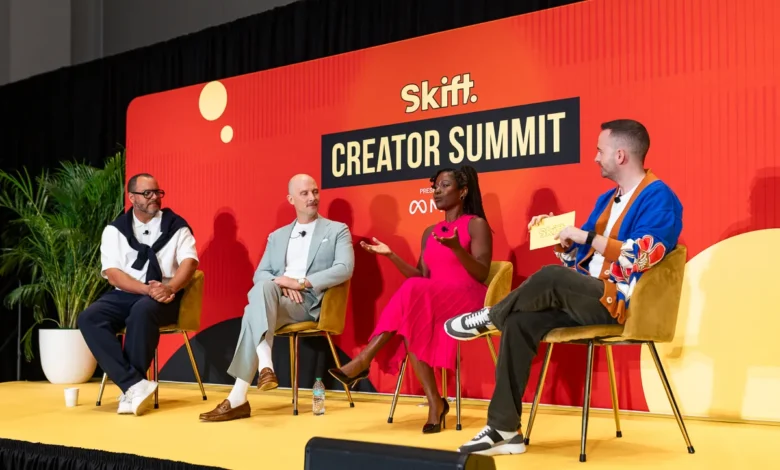
The modern landscape of travel marketing has undergone a fundamental transformation, shifting away from polished, corporate-produced advertisements toward raw, authentic storytelling driven by digital content creators. This paradigm shift was a central theme of discussion at the recent Skift Creator Summit in New York City, where industry leaders gathered to examine how hospitality giants are adapting to changing consumer behaviors. Among the prominent voices at the event was Connor Smith, Senior Vice President of Global Brands at IHG Hotels & Resorts, who oversees a vast portfolio comprising more than 7,000 properties across 21 distinct brands. Smith’s remarks underscored a growing realization among legacy travel executives: maintaining rigid control over brand identity is no longer an effective strategy for engaging modern travelers. Instead, corporate leaders are discovering that relinquishing creative control to independent creators wielding smartphones and ring lights is essential for building genuine consumer trust.
The evolution of travel marketing reflects a broader macroeconomic and digital shift. For decades, hotel conglomerates relied heavily on traditional advertising channels, including television commercials, glossy print magazines, and highly curated digital campaigns. These methods allowed corporate communications teams to meticulously manage every visual element associated with a property. However, the rise of social media platforms such as TikTok, Instagram, and YouTube has fundamentally altered how consumers discover, research, and book travel experiences. Modern travelers, particularly younger demographics such as Millennials and Generation Z, frequently exhibit skepticism toward traditional advertising. Instead, they increasingly turn to peer reviews, video logs, and independent creators for authentic recommendations. Consequently, travel brands are racing to meet consumers where they spend their digital time, compelling executives to rethink long-standing marketing frameworks.
The Chronology of the Creator Economy in Travel
To understand the current reliance on digital creators, it is necessary to examine the timeline of how social media transformed travel promotion. In the early 2010s, the travel industry viewed social media primarily as an extension of customer service and a digital notice board for promotional offers. Platforms like Instagram were utilized mainly by brands to showcase high-resolution, professionally styled photographs of hotel lobbies, infinity pools, and luxury suites.
By the mid-2010s, the emergence of travel bloggers and early influencers introduced a new dynamic. Brands began sponsoring individual travelers, inviting them to properties in exchange for coverage. However, these partnerships were often treated as transactional, low-priority add-ons to traditional public relations budgets. Content produced during this era still leaned heavily toward polished perfection, mirroring the aesthetic of corporate marketing teams.
The turning point arrived with the proliferation of short-form video platforms toward the end of the decade and into the 2020s. The COVID-19 pandemic further accelerated digital consumption habits, resulting in unprecedented engagement with mobile-first video content. Travelers confined to their homes sought virtual escapism, which creators provided through engaging, unscripted narratives. When global tourism rebounded, consumers no longer wanted manufactured perfection; they craved transparency, honest reviews, and relatable perspectives. Travel brands realized that traditional campaigns lacked the organic reach and high engagement rates generated by independent creators, prompting major hospitality groups to formalize creator partnerships into core marketing strategies.
Perspectives from Industry Leaders
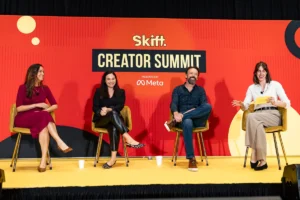
The panel at the Skift Creator Summit, which featured Smith alongside Alex Zeitz, Senior Director of Global Operations, Experience, and Belonging at Virgin Voyages, and prominent travel content creator Oneika Raymond, offered a multifaceted view of this ongoing transition. Moderated by Skift Airlines Editor Gordon Smith, the discussion highlighted the operational and cultural shifts required within legacy corporations to successfully collaborate with independent storytellers.
Smith addressed the psychological and professional challenge of letting go of brand curation. Having spent more than a decade safeguarding the identities of IHG’s extensive brand portfolio, which includes InterContinental, Kimpton, and Holiday Inn, Smith noted that the imperative to reach diverse audiences outweighed the desire for total artistic control. "What I’m realizing is as the role of the creator becomes increasingly important for our marketing, in order to reach all of the different audiences that we need to reach, and in order to build the trust that we need to build… I really had to let go," Smith stated during the panel.
This sentiment was echoed by representatives from other sectors of the travel industry. Alex Zeitz of Virgin Voyages emphasized that cruise lines and hospitality operators must empower creators to highlight real experiences rather than staged presentations. By allowing creators the freedom to document both the highlights and the minor imperfections of a journey, brands can establish a higher degree of credibility with prospective guests. Oneika Raymond, speaking from the perspective of a creator, noted that successful partnerships hinge on mutual respect and creative autonomy, emphasizing that audiences can instantly detect when a creator is reading a corporate script rather than sharing an authentic experience.
Supporting Data and Market Implications
Recent market data highlights the financial and strategic drivers behind this shift in marketing expenditure. According to industry analyses, global influencer marketing market size has expanded exponentially, surpassing substantial valuation milestones year-over-year. Within the travel sector, marketing budgets have increasingly reallocated away from legacy print and broadcast channels toward digital creator partnerships.
Studies on consumer behavior indicate that a significant majority of millennial and Gen Z travelers consult social media platforms before booking accommodations. Furthermore, consumer trust metrics consistently demonstrate that audiences place higher confidence in recommendations from individual creators than in brand-sponsored advertisements. This trust deficit in traditional advertising explains why hospitality executives like Smith are willing to decentralize brand management. By partnering with creators who possess established, niche communities, hotel brands can bypass traditional gatekeepers and communicate directly with targeted demographic segments.
Broader Industry Implications and Future Outlook
The strategic pivot toward creator-led marketing carries several significant implications for the hospitality industry. First, it requires internal restructuring within corporate marketing departments. Teams must evolve from content creators into content curators and partnership facilitators, managing networks of independent talent rather than solely producing internal assets. This requires developing new legal frameworks, compensation models, and performance metrics to evaluate the return on investment for creator-driven campaigns.
Second, the democratization of brand representation introduces new challenges regarding brand consistency and crisis management. When third-party individuals are granted access to properties to produce content, the risk of misrepresentation or brand misalignment increases. Hospitality brands must establish clear guidelines while maintaining enough flexibility to preserve the organic appeal that makes creator content effective in the first place.
Ultimately, the dialogue at the Skift Creator Summit illustrates that the intersection of hospitality and the creator economy is no longer an experimental frontier, but a core component of modern business strategy. As hotel chains and travel providers navigate an increasingly competitive digital marketplace, the willingness of executives to relinquish traditional control in favor of authentic engagement will likely determine their success in capturing the loyalty of the next generation of travelers.