
Apple Vision Pro Tesla
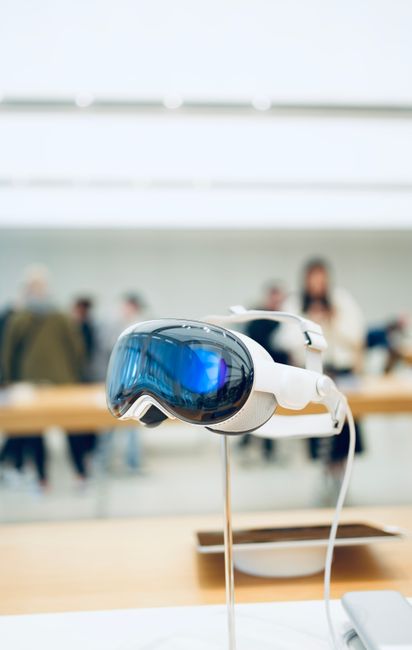
Apple Vision Pro Tesla: The Future of In-Car Immersion and Control
The convergence of cutting-edge spatial computing and automotive innovation heralds a new era for the in-car experience. While Tesla has consistently pushed boundaries with its integrated technology, the potential integration of Apple’s Vision Pro headset promises a revolutionary leap in how drivers and passengers interact with their vehicles and the world around them. This article explores the multifaceted implications of Apple Vision Pro’s presence within a Tesla ecosystem, from augmented reality navigation and enhanced entertainment to advanced vehicle control and safety features. The synergy between Apple’s renowned user interface design and Tesla’s electric vehicle prowess could redefine automotive luxury, productivity, and entertainment.
Augmented Reality Navigation: Beyond the Dashboard
One of the most immediate and impactful applications of Apple Vision Pro in a Tesla would be in the realm of navigation. Current Tesla infotainment systems already excel at displaying crucial driving information. However, Vision Pro’s spatial computing capabilities can overlay this data directly onto the driver’s real-world view. Imagine critical navigation prompts, such as upcoming turns, speed limits, and lane guidance, seamlessly appearing as holographic projections within the driver’s field of vision, superimposed on the actual road ahead. This dynamic AR overlay would eliminate the need to glance down at a central screen, significantly improving driver focus and reducing cognitive load. Furthermore, points of interest, charging stations, and even the estimated arrival time at a destination could be visually highlighted as the driver approaches them. The system could also provide real-time traffic updates and suggest alternative routes by visually guiding the driver through the most efficient path on the road. For Tesla’s Supercharger network, Vision Pro could dynamically display available charging stalls and their current status as the vehicle approaches a station. This level of intuitive, context-aware information delivery moves beyond traditional GPS, transforming navigation into an immersive, integrated experience.
Enhanced Entertainment and Productivity for Passengers
While drivers benefit from enhanced safety and navigation, passengers in a Tesla equipped with Vision Pro would experience an unprecedented entertainment and productivity hub. The spacious interior of a Tesla, particularly models like the Model S or Model X, becomes a personal cinema or an interactive workspace. Passengers could watch movies or play immersive games on virtual screens that appear to float within the cabin, unconstrained by physical display limitations. The visual fidelity and clarity offered by Vision Pro would provide a cinematic experience rivaling home entertainment systems. Beyond passive consumption, Vision Pro opens doors for interactive entertainment. Imagine collaborative gaming sessions that utilize the car’s environment as part of the game world, or virtual tours of landmarks the Tesla is passing. For productivity, passengers could participate in virtual meetings with holographic colleagues, review documents on expansive virtual desktops, or even engage in 3D design and modeling. The ability to seamlessly switch between these immersive environments without physical hardware changes is a testament to Vision Pro’s spatial computing power. Furthermore, integration with Apple’s ecosystem means access to Apple Music, Apple TV+, and other streaming services would be elevated to a new level of immersion.
Advanced Vehicle Control and Customization
The potential for Vision Pro to interact with Tesla’s vehicle controls is a significant frontier. Beyond simple voice commands or touchscreen inputs, users could interact with virtual representations of vehicle functions. Imagine adjusting climate control by manipulating holographic sliders, changing music by interacting with virtual album art, or even customizing the ambient lighting by "painting" desired colors into the cabin. This gestural and spatial interaction could feel more intuitive and futuristic than current methods. For Tesla’s advanced driver-assistance systems (ADAS), Vision Pro could provide a more detailed and understandable visualization of what the car is "seeing." For instance, it could highlight detected pedestrians, cyclists, or other vehicles with clear visual cues, providing an additional layer of awareness for both drivers and passengers. The system could also allow for more granular control and customization of ADAS features, with users able to adjust parameters and preferences through an intuitive spatial interface. Furthermore, the potential for personalized driver profiles to be recalled and activated through Vision Pro’s facial recognition or other biometric authentication adds a layer of seamless convenience.
Safety and Situational Awareness: A New Dimension
While the focus often drifts to entertainment and convenience, the safety implications of Vision Pro integration are profound. As mentioned, AR navigation drastically reduces distraction. However, Vision Pro could also enhance situational awareness in ways previously unimagined. For instance, during challenging weather conditions like heavy fog or rain, Vision Pro could augment the driver’s view by highlighting road edges, lane markings, and other vehicles with enhanced contrast and clarity, effectively piercing through visual impairments. In urban environments with complex intersections, the system could provide predictive guidance, anticipating pedestrian movements or potential hazards. The ability to "see through" obstacles or receive warnings about unseen dangers, such as a car approaching from a blind spot, could be game-changing. Imagine the car’s sensors detecting a pedestrian emerging from behind a parked vehicle, and Vision Pro immediately projecting a clear visual warning onto the driver’s windshield. This proactive safety approach, powered by advanced sensor fusion and spatial visualization, could significantly reduce accident rates. Furthermore, for passengers, Vision Pro could provide real-time alerts about potential hazards outside the vehicle, such as approaching emergency vehicles or approaching cyclists, further contributing to overall safety.
Seamless Ecosystem Integration: Apple and Tesla Synergy
The true power of this hypothetical integration lies in the seamless synergy between Apple’s established ecosystem and Tesla’s pioneering automotive platform. Apple’s strength lies in its intuitive user interface, robust software development tools, and vast content library. Tesla’s strength is in its advanced electric vehicle technology, autonomous driving capabilities, and connected car infrastructure. When combined, these strengths create a formidable proposition. Imagine unlocking your Tesla with your Apple Watch, having your personalized Vision Pro settings load automatically, and your preferred music and navigation presets immediately ready. The integration could extend to Apple’s HomeKit, allowing drivers to control their smart homes from their car, or to Apple Fitness+, enabling passengers to follow guided workouts in a virtual environment. Tesla’s existing Over-the-Air (OTA) update capabilities, which are already a hallmark of their vehicles, would be crucial in delivering continuous improvements and new features for Vision Pro integration. This iterative development cycle ensures that the in-car experience continuously evolves, remaining at the forefront of technological advancement. The potential for third-party developers to create custom applications and experiences for Vision Pro within the Tesla environment opens up a vast landscape of innovation.
Technical Challenges and Future Considerations
While the potential is immense, several technical challenges must be addressed for Apple Vision Pro to be successfully integrated into a Tesla. Power consumption is a significant factor, as both advanced computing and vehicle systems require substantial energy. Efficient power management and potentially dedicated battery solutions for the Vision Pro system would be essential to avoid significantly impacting the vehicle’s range. The development of robust and reliable sensor fusion algorithms to accurately interpret real-world data and translate it into AR overlays for Vision Pro is paramount. Ensuring the hardware is durable and can withstand the rigors of automotive use, including temperature fluctuations, vibrations, and potential impacts, is also critical. User interface design will be paramount to ensure that the spatial computing experience is intuitive, non-distracting for the driver, and provides a clear distinction between critical driving information and optional entertainment or productivity content. Overcoming potential motion sickness for some users during dynamic AR experiences is another area that requires careful consideration and technological solutions. Finally, regulatory hurdles and safety standards for augmented reality displays in vehicles will need to be met.
The long-term vision extends beyond mere entertainment and navigation. Imagine a future where Teslas equipped with Vision Pro can contribute to a more connected and efficient transportation network. Vehicles could communicate with each other and with infrastructure in a visually intuitive way, relaying information about road conditions, traffic flow, and potential hazards. The integration could also foster new forms of mobility services, with personalized and immersive passenger experiences becoming a key differentiator for on-demand transportation. The evolution of autonomous driving, coupled with advanced spatial computing interfaces, could lead to vehicles that are not just a mode of transport but truly intelligent, adaptable, and engaging environments. The partnership between Apple and Tesla, while currently speculative, represents a powerful convergence of expertise that has the potential to redefine the automotive industry and our relationship with technology. The Apple Vision Pro in a Tesla is not just a glimpse into the future; it is a blueprint for a more immersive, intelligent, and connected automotive experience.
