The Nuclear Renaissance Meets the Ocean: How Fluxnium Plans to Solve America’s Uranium Shortage

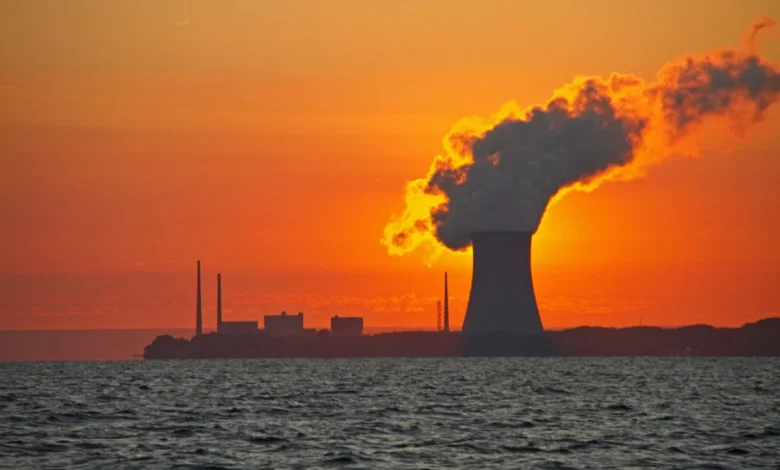
The United States has established an aggressive roadmap to triple its domestic nuclear energy capacity by the year 2050, positioning atomic energy as a cornerstone of its long-term decarbonization strategy. However, this ambitious national objective faces a formidable and immediate economic bottleneck: the soaring cost and geopolitical vulnerability of nuclear fuel. According to recent data from the U.S. Energy Information Administration (EIA), prices for yellowcake—the unrefined form of uranium processed from mined ore—have surged by roughly 75% over the past five years. Compounding this price volatility is a stark geographical reality: the United States possesses limited economically viable domestic uranium reserves within its terrestrial borders, leaving the nation heavily reliant on foreign supply chains.
Enter Fluxnium, a clean technology startup operating out of stealth mode that believes the solution to the looming nuclear fuel crisis has been hiding in plain sight all along. The company is pioneering an innovative approach to extract uranium directly from seawater, a vast and virtually untapped reservoir containing an estimated 4 billion metric tons of the element. If commercialized successfully, this marine-based extraction method could secure the fuel supply required for the global nuclear renaissance while insulating Western energy grids from geopolitical instability.
The Geopolitical Vulnerability of Terrestrial Uranium
To understand the urgency driving Fluxnium and its financial backers, industry analysts point to the fragile architecture of the global nuclear fuel market. While uranium is not exceptionally rare as an elemental metal in the Earth’s crust, economically extractable high-grade ore deposits are geographically concentrated and unevenly distributed.
Historically, Western utilities have relied on a diverse international market for their fuel supply. Yet, a significant majority of the world’s primary uranium production is controlled by a handful of nations, including Kazakhstan, Uzbekistan, Russia, Namibia, Niger, and China. For Western nations striving to decouple their critical energy infrastructure from geopolitical adversaries and volatile foreign regimes, this concentration of supply represents a persistent strategic risk.
Jeff Green, founder and CEO of Fluxnium, highlights the structural pressures currently facing the market. Having previously helped launch prominent ventures such as Stamps.com in 1996, desalination specialist NanoH2O in 2005, and carbon removal enterprise 1PointFive in 2020, Green has built a career identifying macroeconomic shifts. In the wake of a renewed global interest in nuclear energy—driven heavily by technology conglomerates racing to secure reliable, zero-carbon baseload electricity for power-hungry artificial intelligence data centers—Green argues that the industry is facing a structural deficit.
"If demand comes the way it’s being projected, we’re structurally short uranium," Green noted, pointing out that terrestrial hard rock mines alone may struggle to keep pace with the exponential growth curve anticipated over the coming decades.
The Seawater Solution and Technological Breakthroughs
Scientists have known for decades that the world’s oceans contain an astronomical amount of dissolved uranium. Estimates suggest that seawater holds roughly 1,000 times more uranium than all known terrestrial hard rock mines combined. Theoretically, this marine reserve could power global nuclear fleets for tens of thousands of years.
Despite its immense abundance, extracting uranium from seawater has long been considered economically unfeasible. Seawater contains a very low concentration of uranium—measured in parts per billion—making the extraction process chemically challenging and historically too expensive to compete with conventional mining. Early laboratory demonstrations conducted by U.S. Department of Energy (DOE) national laboratories proved the scientific concept was viable, but the operational costs hovered above $200 per pound, more than double the prevailing market price for uranium supplied by traditional terrestrial mines.
Fluxnium aims to change that economic equation. The startup has emerged from stealth with a $7 million seed funding round led by Congruent Ventures, alongside participation from Active Impact Investments and Constellation Energy, the operator of the largest nuclear fleet in the United States.
The core of Fluxnium’s innovation lies in advanced materials science. The company licensed foundational chemistry from the DOE and focused its engineering efforts on optimizing the production and configuration of specially engineered polymer fibers. These fibers are chemically treated to attract and bind with uranium ions dissolved in seawater.
According to Green, the breakthrough came from significantly increasing the surface area of the polymer fibers. By maximizing the surface area exposed to the marine environment, the fibers can capture a much higher volume of uranium per deployment cycle, effectively driving down the capital and operational expenses associated with the extraction process.
Operational Mechanics: Farming for Fuel
The operational model developed by Fluxnium draws conceptual inspiration from aquaculture. Rather than building massive, capital-intensive industrial plants along the coast, the company utilizes a decentralized, low-impact deployment strategy.
- Fiber Manufacturing: The specialized polymer is processed into long, durable, braided fibers at dedicated manufacturing facilities.
- Ocean Deployment: These braided lines are transported out to sea and suspended from offshore buoys, utilizing methodologies and spatial configurations similar to commercial seaweed or mollusk farming.
- Absorption Phase: The lines remain submerged in the open ocean for a duration of 30 to 60 days, during which the polymer fibers passively collect dissolved uranium as ocean currents flow past them.
- Retrieval and Elution: The lines are hauled back to shore for processing. The uranium is stripped—or eluted—from the fibers using chemical baths. Crucially, this process is engineered to leave behind no toxic mining tailings, a common environmental concern associated with traditional open-pit and in-situ recovery uranium mining.
- Purification and Supply Chain Integration: Once extracted from the fibers, the material is refined into standard yellowcake and sold directly into the existing commercial nuclear fuel supply chain. Furthermore, the polymer lines can be regenerated and reused multiple times, further reducing lifecycle costs.
"None of the components of this process are anything novel. It’s all been done in different ways," Green explained, emphasizing the pragmatic engineering philosophy behind the company. "Our job is to drive cost out of the supply chain, keep working through all the stages of the process to make it as low cost as possible."
Broader Market Implications and Future Outlook
The timing of Fluxnium’s public unveiling coincides with a pivotal moment for the energy sector. Governments worldwide are reassessing the role of nuclear fission in achieving net-zero carbon emissions while maintaining grid reliability. In the United States, federal policies aimed at tripling nuclear capacity by 2050 require unprecedented volumes of fuel, creating an urgent market opening for novel extraction technologies.
Furthermore, the involvement of strategic investors like Constellation Energy signals a growing recognition within the nuclear utility sector that fuel security must be addressed through technological innovation rather than reliance on traditional market dynamics. As tech giants pour capital into advanced nuclear fission startups to secure clean energy for AI workloads, the entire ecosystem is being forced to confront potential supply constraints.
If Fluxnium can successfully scale its seawater extraction technology and prove that it can undercut or match the production costs of conventional terrestrial mines, the geopolitical map of energy could be radically redrawn. By converting the world’s oceans into a limitless, geographically neutral uranium reserve, the nuclear industry could permanently bypass the resource nationalism and supply chain bottlenecks that have historically plagued atomic energy development.
As the startup transitions from its recent seed funding round toward pilot-scale commercial deployments, energy analysts and policymakers will be watching closely to see whether the promise of marine uranium mining can finally be translated into commercially viable reality.