The culinary landscape of China represents one of the most sophisticated and diverse food cultures in human history, making the task of identifying a singular "best" dish an impossible endeavor. Spanning thousands of miles and encompassing a vast array of climates, ethnicities, and traditions, Chinese cuisine is a complex mosaic of flavors that reflects the nation’s historical evolution. From the imperial kitchens of the north to the moisture-rich coastal regions of the south, food serves as both a primary cultural identifier and a testament to the country’s resourcefulness. For travelers and gourmands alike, understanding the foundational dishes of the region is essential for navigating this gastronomic expanse. This guide examines the essential eats that define the Chinese culinary experience, providing historical context, regional analysis, and the technical precision required to master these iconic offerings.
The Imperial Heritage and Northern Traditions
Northern Chinese cuisine is often characterized by its historical ties to the imperial court and its reliance on wheat-based staples. No dish embodies this legacy more effectively than Peking Duck (Beijing Kaoya). While now synonymous with the capital, the origins of roasted duck date back over 1,500 years to Nanjing, which served as the seat of various ancient imperial regimes. When the Ming Dynasty relocated the capital to Beijing in the 1400s, the imperial family brought their master chefs and roasting techniques with them.

The modern iteration of Peking Duck is celebrated for its technical complexity. The bird is traditionally air-dried and roasted in a closed or hung oven until the skin reaches a state of glassy, mahogany crispness. It is served in thin, translucent pancakes with julienned cucumber, scallions, and a sweet bean sauce. This method of consumption was popularized globally in the 20th century, but it remains a pillar of Beijing’s identity.
In contrast to the refined presentation of the duck, the northern city of Xi’an offers a more rugged, historical staple: Rou Jia Mo. Often referred to as the "Chinese burger," this street food consists of a toasted flatbread (mo) stuffed with shredded pork belly that has been braised for hours in a mixture of over 20 spices, including star anise, cinnamon, and cloves. Local tradition dictates that a perfect mo must feature a specific charred pattern known as the "chrysanthemum heart." This dish, alongside the nearby Terracotta Warriors, serves as a primary draw for cultural tourism in Shaanxi province.
The Sichuanese Influence: Spice and Complexity
Sichuan cuisine (Chuan Cai) is perhaps China’s most famous export, defined by the "mala" flavor profile—a combination of "ma" (numbing) from Sichuan peppercorns and "la" (spicy) from dried chilies. Dan Dan Noodles (Dan Dan Mian) serve as a quintessential entry point. Named after the "dan dan" or carrying poles used by 19th-century street hawkers, the dish features thin wheat noodles topped with minced pork fried in lard, preserved vegetables, and a potent sauce of chili oil and sesame paste.

Another global favorite, Kung Pao Chicken (Gongbao Jiding), offers a historical look at regional adaptation. Named after Ding Baozeng, a 19th-century governor of Sichuan whose title was Gongbao, the dish was inspired by a salty fried chicken from Shandong. Upon moving to Sichuan, Ding’s chefs incorporated local peppercorns and peanuts, creating the spicy-sweet-savory balance recognized today.
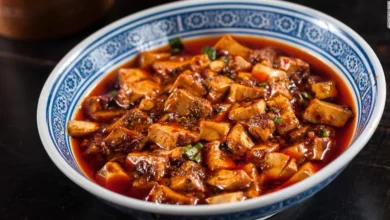
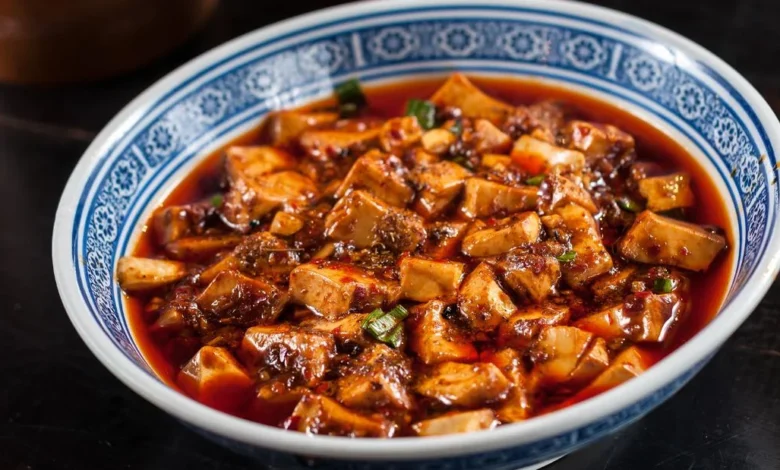
For those seeking the pinnacle of Sichuanese "mala" heat, Mapo Tofu and Shui Zhu (water-boiled) dishes are essential. Mapo Tofu, traditionally made with fermented broad bean paste (doubanjiang) and Hanyuan peppercorns, is a study in texture and temperature. Similarly, the Shui Zhu technique—whereby meat or fish is poached in a concentrated broth of chili oil and aromatics—demonstrates the region’s ability to use heat to tenderize protein rather than simply overwhelm the palate.
Cantonese Precision and the Philosophy of Freshness
In Southern China, particularly the Guangdong province, the culinary philosophy shifts toward "qing," or lightness and freshness. Cantonese chefs believe that seasoning should enhance, not mask, the natural flavor of ingredients. This is best exemplified in Cantonese Steamed Fish. The dish requires impeccable timing; a discrepancy of just sixty seconds can mean the difference between succulent flakes and toughened flesh. Usually finished with ginger, scallions, and a dash of sweetened soy sauce, it represents the height of culinary restraint.

Dim Sum is another cornerstone of Cantonese culture, referring to a style of morning or afternoon tea (yum cha) accompanied by small plates. This tradition allows for a diverse tasting of textures, from the translucent skins of Har Gow (shrimp dumplings) to the fluffy, sweet-and-savory Char Siu Bao (barbecue pork buns). Char Siu itself—pork marinated in maltose and honey before being roasted—is a versatile staple, appearing in everything from breakfast noodles to high-end banquet platters.
The Southern tradition also emphasizes the medicinal properties of food. Cantonese herbal soups are simmered for hours with seasonal ingredients like snow fungus, wolfberries, and winter melon. Based on Traditional Chinese Medicine (TCM), these soups are designed to balance the body’s "internal heat" or "humidity," demonstrating how deeply integrated health and gastronomy are in Chinese daily life.
Regional Innovations: From Nanjing to Yunnan
Beyond the major hubs, specific cities have developed niche specialties that have gained national acclaim. Nanjing, often engaged in a friendly rivalry with Beijing over its "Duck Capital" status, is famous for Duck Blood Vermicelli Soup. This street food utilizes every part of the bird, featuring a rich duck-bone broth filled with cubes of duck blood curd and offal. It reflects a traditional Chinese value of minimizing waste and maximizing flavor.

In the southwest, Yunnan province offers the legendary Cross-the-Bridge Rice Noodles (Guoqiao Mixian). According to folklore, the dish was invented by a wife who needed to keep soup hot for her husband studying on an island. She discovered that a layer of chicken oil on top of the broth acted as an insulator, keeping the liquid at scalding temperatures. Today, the dish is served as a deconstructed kit: a bowl of boiling broth into which the diner adds raw slices of meat, vegetables, and rice noodles to cook instantly at the table.
Fujian province, on the eastern coast, contributes unique textures to the national menu. Rouyan dumplings feature wrappers made from pounded pork and flour, resulting in a distinctively chewy "snap." Fujian is also known for its desserts, such as Taro Paste (Mani), which uses the high-quality "binlang" yams of Fuding to create a silky, lard-infused mash garnished with candied fruits.
The Staples: Dumplings, Rice, and Congee
Regardless of regional variation, certain staples provide the structural framework of Chinese dining. Jiaozi (dumplings) are a universal comfort food, particularly in the north, where they are essential for Lunar New Year celebrations. Whether boiled (shuijiao), steamed (zhengjiao), or pan-fried (guotie), they represent a complete meal of protein, carbohydrates, and vegetables.

Fried rice, though often viewed as a simple side dish in the West, is a measure of a chef’s skill in China. A successful version must possess "wok hei"—the "breath of the wok"—a smoky flavor achieved by tossing ingredients over extreme heat. Similarly, Congee (rice porridge) serves as the ultimate restorative meal. From the lean pork and century egg varieties of the south to the pumpkin and millet versions of the north, congee is the primary choice for breakfast and for those recovering from illness.
Culinary Soft Power and Economic Impact
The global proliferation of Chinese cuisine has served as a significant tool of cultural diplomacy. According to data from the World Tourism Organization, food is a primary motivator for over 30% of international travelers visiting China. Domestically, the catering industry is a massive economic driver, with the "Time-Honored Brands" (Zhonghua Laozihao) of the restaurant world receiving state protection to preserve culinary heritage.
The modernization of these dishes continues to evolve. In cities like Shanghai and Shenzhen, fusion techniques are being applied to classics like Xiaolongbao (soup dumplings) and Sheng Jian Bao (pan-fried buns), incorporating ingredients like truffles or crab roe to appeal to a globalized palate. However, the foundational techniques—the precision of the steam, the heat of the wok, and the balance of the braise—remain unchanged.

Conclusion: A Living Gastronomic Record
To eat in China is to consume a living history. Each dish, from the humble jiaozi to the imperial Peking duck, tells a story of migration, innovation, and cultural pride. While a single list can never fully encompass the breadth of the nation’s food scene, these essential eats provide a necessary map for any culinary journey. By understanding the regional philosophies behind the flavors—the spice of the west, the freshness of the south, and the heartiness of the north—one gains a deeper appreciation for China’s enduring contribution to the global table. As the nation continues to urbanize and modernize, its kitchens remain the most reliable keepers of its ancient soul.