United Airlines Launches Strict Enforcement Against Flight Attendants Brokering Seniority for Lucrative International Routes

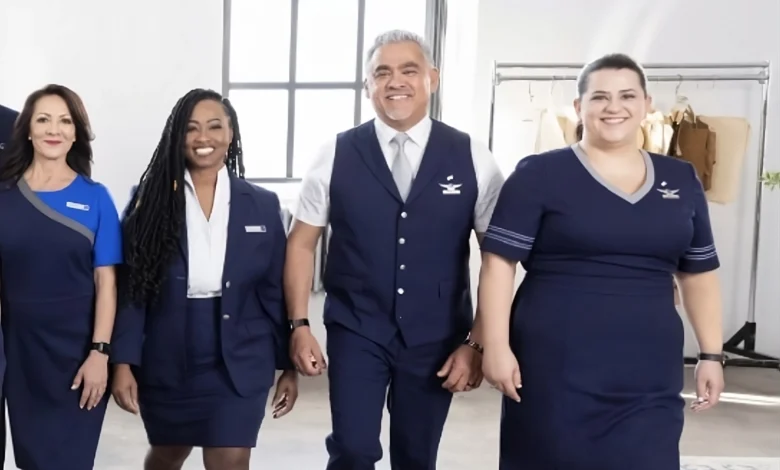
United Airlines has reportedly accelerated the termination of flight attendants found to be participating in "trip-brokering" violations, a practice where senior crew members sell their highly desirable flight assignments to junior colleagues for cash, gifts, or other favors. According to internal communications from the Association of Flight Attendants-CWA (AFA-CWA), the union representing United’s cabin crew, the carrier is cracking down on this underground secondary market with a wave of disciplinary actions and dismissals. The practice, often referred to within the industry as "seniority renting," involves the unauthorized exchange of work duties, often leveraging the airline’s seniority-based bidding system to monetize the perks of long-term employment.
This enforcement surge marks a significant escalation in a long-standing conflict between airline management and crew members over the integrity of scheduling systems. While trip trading is a standard and legal part of airline operations, the introduction of financial compensation or "side deals" into these exchanges violates corporate policy and, in some cases, federal labor regulations. The crackdown at United follows similar aggressive stances taken by other major carriers, signaling a broader industry-wide effort to dismantle what some have described as a "cartel-like" structure within the flight attendant community.
The Mechanics of the Seniority Bidding System
To understand why a secondary market for flight assignments exists, one must first understand the Preferential Bidding System (PBS) used by major legacy carriers like United Airlines. In the aviation industry, seniority is the primary currency. The longer a flight attendant has been with the company, the higher their seniority rank, which grants them the first pick of monthly schedules.
Senior flight attendants typically bid for "high-value" trips. These are often long-haul international routes to destinations such as Rome (FCO), Paris (CDG), Tokyo (NRT), or Sydney (SYD). These routes are coveted for several reasons: they offer higher pay due to international overrides, they often include longer layovers in desirable locations, and they allow crew members to maximize their flying hours in fewer calendar days.
Junior flight attendants, conversely, are often relegated to "reserve" status or less desirable domestic "turns"—short-distance flights with minimal layover time. The disparity in quality of life between a senior and junior schedule creates a natural economic vacuum. Junior attendants, eager for higher pay and better destinations, are often willing to pay a premium to "buy" a trip from a senior colleague who would rather stay home but has the seniority to secure the route.
Decoding the Secret Language of Trip Brokering
The exchange of trips for money is strictly prohibited under United Airlines’ Working Together Guidelines. To evade detection by management and automated monitoring systems, flight attendants have developed a sophisticated vernacular and various "code" systems.
Historically, the practice has been linked to crude slang and shorthand. For instance, exchanges involving flights to Rome often use the airport code "FCO" as a pivot point for negotiations. In recent years, as airlines have begun monitoring internal message boards and private social media groups, the language has become more metaphorical. On platforms like Facebook and specialized crew forums, investigators have discovered attendants using phrases like "exchanging cookies for kisses" or "trading a dress for a scarf" to mask the transfer of cash.

The AFA-CWA has warned its members that these attempts at cleverness are largely ineffective. United’s corporate security and IT departments have become adept at identifying patterns in the trade logs that suggest financial impropriety. When a senior flight attendant consistently bids for high-value international trips only to trade them away to the same junior attendants minutes after the awards are posted, it triggers red flags within the airline’s scheduling software.
A Chronology of Enforcement and Union Involvement
The issue of trip-brokering is not a new phenomenon at United Airlines. The carrier has been issuing formal warnings to its staff regarding this practice since at least 2019. However, the current wave of terminations suggests a shift from passive warning to active purging of offenders.
United is not alone in this struggle. American Airlines has been a pioneer in cracking down on the practice. For nearly a decade, American has been investigating and firing crew members for selling job duties. In a notable shift in labor relations, American Airlines’ flight attendant union, the Association of Professional Flight Attendants (APFA), eventually partnered with the airline to address the issue. The logic was that the practice unfairly disadvantaged senior members who followed the rules and junior members who could not afford to "buy" better schedules.
In 2022, American Airlines went as far as codifying the prohibition of trip selling into their new collective bargaining agreement. The contract explicitly states that any crew member found soliciting or accepting payment for a trip trade is subject to immediate termination. United Airlines appears to be following this blueprint, utilizing both contractual language and aggressive investigative techniques to root out the practice.
Industry Divergence: The Case of Southwest and JetBlue
Interestingly, the prohibition of trip selling is not universal across the U.S. aviation industry. At Southwest Airlines, the flight attendant contract—negotiated by the Transport Workers Union (TWU) Local 556—actually permits the practice. In Southwest’s culture, the ability to trade trips for cash is seen by some as a flexible benefit of the job. In fact, union materials have even discussed the issue of "bad actors" who fail to pay the promised cash for a trade, framing it as a "culture problem" of non-payment rather than an illegal act of brokering.
Similarly, JetBlue Airways’ current agreements do not expressly prohibit the exchange of compensation for trip trades. However, industry analysts note a key difference: Southwest and JetBlue primarily operate domestic or short-haul international networks. They lack the ultra-long-haul, "glamour" destinations like Rome or Sydney that command high prices on the black market. Without the high-stakes international layovers, the secondary market at these airlines is significantly less lucrative and therefore less disruptive to the overall operation.
The Union’s Precarious Position
For the AFA-CWA at United, the crackdown presents a complex political challenge. Unions are fundamentally designed to protect the jobs of their members, particularly those with high seniority who have paid dues for decades. However, the union must also uphold the integrity of the contract and ensure a fair working environment for all members.
The AFA-CWA’s recent communication to members reflects this tension. While the union provides legal representation to those facing termination, it is also sounding a loud alarm that the airline is no longer "looking the other way." The union’s most vocal voting blocs are often divided on the issue. Some senior members view the ability to monetize their seniority as a hard-earned right, while many junior members—and even other senior members who are bypassed for routes by those "buying" their way in—see the practice as a form of corruption that undermines the collective bargaining unit.
Economic and Operational Implications
From a corporate perspective, United Airlines has several motivations for stopping trip-brokering. First, there are significant legal and tax implications. When an employee pays another employee for a shift, that transaction represents untaxed income. If an airline knowingly allows a secondary payroll to exist outside of federal and state tax withholding systems, it could face substantial legal liability and audits from the Internal Revenue Service (IRS).
Second, the practice creates operational risks. The airline’s scheduling system is designed to manage crew fatigue and ensure that attendants are rested and qualified for specific aircraft types. If a junior attendant is "buying" an excessive number of long-haul trips to maximize income, they may be operating at a level of exhaustion that compromises safety. Furthermore, it creates a "pay-to-play" environment that can lead to workplace harassment or coercion, where junior employees feel pressured to pay for better shifts to avoid burnout on the "reserve" list.
Third, it damages morale. A seniority system is a social contract: you put in the time, and eventually, you get the rewards. When that system is bypassed by those with the deepest pockets, the fundamental fairness of the workplace is eroded.
Analysis of a Broken System
Some labor experts argue that the rise of trip-brokering is a symptom of an inefficient duty assignment system. When employees are willing to pay hundreds of dollars out of their own pockets to change their work schedule, it suggests that the current bidding process does not accurately reflect the needs or desires of the modern workforce.
In an efficient market, the company would be the one capturing that value. Some have suggested that airlines could implement a system where crew members could "bid" with points or small salary deductions for premium routes, with the proceeds going back into the general crew fund or used to increase pay for the less desirable domestic shifts.
However, changing the seniority system is a "third rail" in airline labor relations. Seniority is the bedrock of the industry, governing everything from pay scales to vacation time and retirement benefits. As long as the system remains rigid and based solely on years of service, the pressure for a secondary market will persist.
Conclusion and Future Outlook
The current crackdown at United Airlines serves as a stark reminder of the changing technological landscape of the workplace. With the integration of AI-driven monitoring and data analytics, the "private" deals once struck in airport breakrooms or on encrypted message boards are increasingly visible to management.
As United continues to terminate flight attendants involved in these violations, the message to the remaining crew is clear: the era of "cookies for kisses" is coming to an end. The airline is prioritizing the integrity of its scheduling system and legal compliance over the historical norms of the cabin crew community. For the flight attendants, the focus must now shift back to the official channels of the AFA-CWA to negotiate for more flexible scheduling options that don’t require an under-the-table transaction. In the meantime, the "FCO" routes and other international gems will remain strictly the province of those who have the years on the clock to earn them—and the willingness to actually fly them.