California Legislation Pioneers Environmental Reparations Through Direct Cash Aid for Inglewood Oil Field Residents

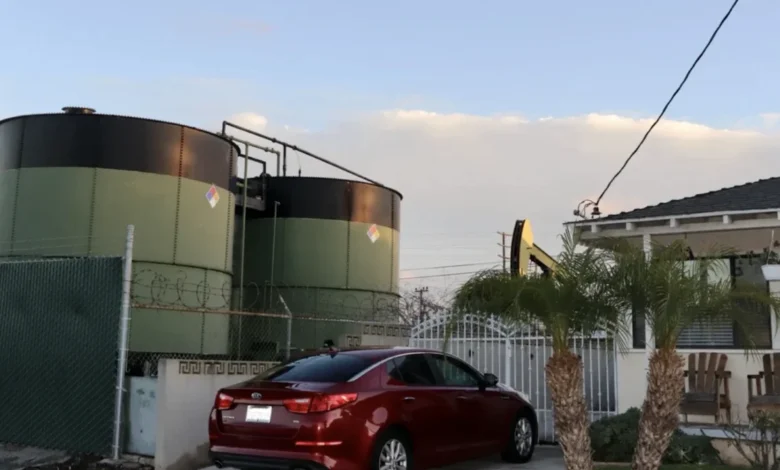
The state of California is on the cusp of a landmark policy shift as Governor Gavin Newsom prepares to sign Assembly Bill 1661, a measure that establishes a precedent for environmental justice by redirecting financial penalties from oil operators directly into the pockets of impacted residents. The legislation mandates that $5 million in funds, collected from penalized, low-producing oil wells in the Inglewood area, be distributed as direct cash assistance to 1,000 households that have suffered respiratory or reproductive health complications linked to proximity to the sprawling urban drilling field. This initiative represents one of the most significant attempts in the United States to address the historical and ongoing health costs borne by marginalized communities living in the shadow of heavy industry.
The Historical Context of Urban Drilling
For over a century, the Inglewood Oil Field—the largest urban oil field in the United States—has functioned in close proximity to predominantly Black neighborhoods, including Inglewood, Ladera Heights, and Baldwin Hills. The historical trend of redlining and discriminatory urban planning frequently concentrated industrial infrastructure in minority communities, resulting in persistent exposure to volatile organic compounds, particulate matter, and hydrogen sulfide.
For decades, residents have reported anecdotal evidence of "the smell"—a sulfurous, rotten-egg odor—and a pervasive sense of malaise. Scientific studies have increasingly validated these concerns, linking proximity to active drilling sites with increased rates of asthma, adverse birth outcomes, and various cancers. For many families, this proximity has not only compromised physical health but has also stifled household wealth through the burden of mounting medical bills and depressed property values in areas saturated with industrial activity.
Chronology of the Legislative Effort
The path to AB 1661 is rooted in a broader, multi-year legislative strategy led by Assemblymember Isaac G. Bryan, who represents the affected districts. The effort is the culmination of years of community organizing and policy advocacy:
- 2024: Governor Newsom signs AB 2716 into law. This foundational legislation mandates the closure of the Inglewood Oil Field by 2030 and institutes a punitive fee structure for low-producing wells, which are notoriously prone to methane leaks.
- Early 2026: Regulators begin enforcing the $10,000-per-well, per-month penalty on operators who fail to address inefficiencies in their low-producing sites.
- September 2026: The California Legislature passes AB 1661, creating the community repair and reinvestment fund.
- October 2026 (Expected): Governor Newsom is scheduled to sign the bill into law, formalizing the creation of the assistance program.
The Mechanics of Environmental Reparations
Under the proposed framework, the $5 million fund is specifically designated for households within a 2.5-mile radius of the Inglewood Oil Field. Supporters of the bill, including Assemblymember Bryan, describe the initiative as "environmental reparations," a term that acknowledges the state’s obligation to compensate communities for historical negligence and the failure to regulate industrial encroachment.
The program is designed to provide up to $5,000 per household. A crucial legislative companion to this initiative is a separate California law that shields these specific reparation payments from state taxation, ensuring that the aid reaches families in its entirety without being clawed back by the state.
Community Advocacy and the Access Challenge
While the funding is a victory for environmental justice groups, the practical implementation remains a subject of intense scrutiny. Tianna Shaw-Wakeman, the environmental justice program director at Black Women for Wellness, has been a vocal proponent of ensuring that the application process does not become an insurmountable barrier.
"My hope has always come at the community level, at the grassroots level," Shaw-Wakeman stated. Her organization is advocating for a streamlined application process that utilizes "self-attestation." The reasoning is clear: many low-income families residing near the oil field may suffer from chronic health conditions but lack the formal, costly medical documentation required to prove a direct clinical link to the pollution. If the county demands rigorous, hard-to-obtain medical records, the program risks excluding the very population it was intended to serve.
Data and Economic Implications
The economic footprint of the Inglewood Oil Field is vast, but the human cost has historically been externalized. By charging operators $10,000 per month for each low-producing well, the state is effectively forcing companies to internalize the cost of their operations.
However, experts note that 1,000 households represent only a fraction of the tens of thousands of residents living within the impact zone. There is an ongoing debate regarding the scalability of this model. If California successfully implements this pilot, it could serve as a template for other states dealing with industrial legacy sites, such as the "Cancer Alley" region in Louisiana or the petrochemical hubs of Texas.
Broader Implications: Beyond the Payment
The significance of AB 1661 extends beyond the immediate cash transfers. It signals a shift in the regulatory philosophy of the state of California, moving from a purely punitive model toward one that centers on restorative justice.
However, community leaders remain wary of the potential for unintended consequences, particularly gentrification. As oil wells are shuttered and land is reclaimed, the potential for real estate speculation increases. Advocates are pushing for policies that ensure that environmental cleanup does not lead to the displacement of the Black residents who bore the brunt of the pollution for generations.
"We can’t replace toxic oil extraction with gentrification," Shaw-Wakeman emphasized. "There is still a lot more to address beyond those 1,000 households. We’re trying to address the ways in which community members are still being harmed every day."
Future Outlook and Regulatory Challenges
As the state moves toward the 2030 closure deadline for the Inglewood Oil Field, the focus will likely shift from cash assistance to long-term land-use planning. Questions remain about how the remaining funds in the community repair and reinvestment account will be utilized. Possibilities include urban greening, the development of affordable housing on remediated land, and the enhancement of public health infrastructure in the affected neighborhoods.
The success of the AB 1661 program will likely be measured by its ability to reach the most vulnerable, its administrative efficiency, and its impact on the long-term economic stability of the Inglewood area. For the families of the region, the bill represents a long-overdue acknowledgement that their health and well-being have value—a value that, for the first time in history, is being calculated and paid back by those who profited from the degradation of their environment.
While critics of such programs often point to the complexity of establishing direct causality between specific pollution sources and health outcomes, proponents argue that the systemic, long-term nature of the environmental harm justifies a collective, state-led response. California’s experiment with environmental reparations is, at its core, a test of whether a government can successfully pivot to prioritize the health of its most marginalized citizens over the industrial status quo. As the signature from the Governor nears, all eyes will be on how the county structures the eligibility requirements and whether this model can truly serve as a sustainable path forward for environmental justice across the nation.