The Silent Suffocation: As Black Lung Cases Hit a 50-Year High, Thousands of Miners Face a Decadelong Battle for Benefits

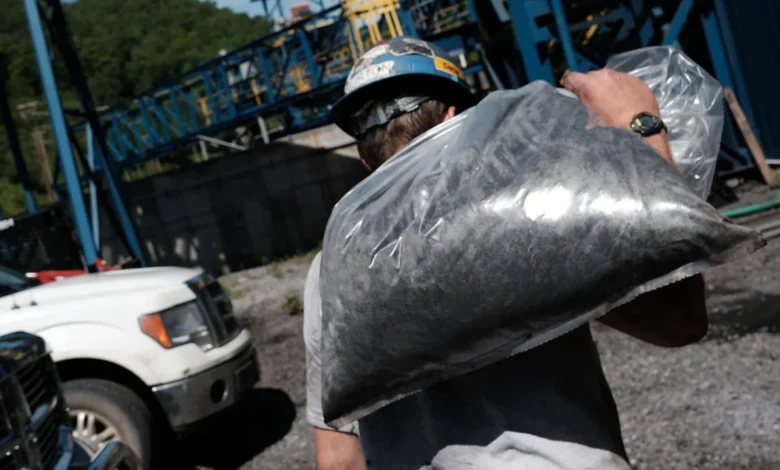
For 38 years, Josh Armes descended into the earth, laboring in the coal mines of West Virginia and Virginia. Today, at 74, his world is defined by the rhythmic hiss of an oxygen tank and the suffocating reality of coal workers’ pneumoconiosis (CWP), commonly known as black lung disease. While his medical diagnosis is clear, his struggle for federal support has become a protracted, 12-year ordeal against an administrative system that critics argue is designed to outlast the very people it was intended to serve.
The plight of the Armes family is not an anomaly but a reflection of a systemic crisis within the U.S. coal industry. As clinical data confirms a surge in black lung cases to levels not seen since 1978, a contentious legal and political standoff over regulatory oversight and benefit accessibility has left thousands of ailing miners in a state of precarious limbo.
A Surge in Disease: The Modern Crisis
The resurgence of black lung is a medical phenomenon that defies historical trends. After decades of steady decline following the passage of the Federal Coal Mine Health and Safety Act of 1969, the disease has returned with a vengeance. According to a landmark study published in the American Journal of Respiratory and Critical Care Medicine in August 2026, approximately 32.5 percent of veteran underground coal miners in Central Appalachia are currently suffering from CWP.
Public health experts point to a shift in mining practices as the primary catalyst. As coal seams become thinner, miners are increasingly forced to cut through the surrounding rock, which is rich in silica. Silica dust is significantly more toxic than coal dust alone, causing faster, more aggressive scarring of the lungs. Between 2020 and 2023, more than 1,700 miners succumbed to the disease, a grim reminder of the high cost of energy extraction.
The Administrative Labyrinth: A Chronology of Delays
The federal black lung program was established to provide a lifeline for miners who sacrificed their health for the nation’s energy needs. However, the path to receiving these benefits is fraught with procedural hurdles.
In 2014, Josh Armes was notified that the federal benefits he had relied upon for three years were being contested by his former coal operator. This sparked a cycle of appeals that has spanned over a decade. Data from the Government Accountability Office (GAO) highlights the scale of this frustration: between 2013 and 2024, nearly 40 percent of all approved claims by the Department of Labor were disputed by coal companies.
The GAO report, requested by a bipartisan group of senators including Mark Warner and John Fetterman, uncovered a staggering reality for claimants. The median length of an appealed claim is now three years or more, with some cases dragging on for over a decade. During these intervals, miners are often left without financial support, forcing them to exhaust their savings on medical tests and legal fees, all while their respiratory health continues to deteriorate.
Legislative Hurdles and Regulatory Stagnation
The political climate surrounding mine safety has reached an impasse. In April 2024, a new federal silica dust rule—designed to mandate stricter engineering and ventilation controls—was introduced to mitigate the rising health risks. However, the path to enforcement has been blocked by legislative and administrative maneuvers.
Following congressional efforts to withhold funding for the rule in June 2024, the Mine Safety and Health Administration (MSHA), under the current administration, has effectively placed the enforcement of these safety measures on hold. The agency has cited "pending judicial review" as the basis for this indefinite delay.
Advocacy groups, such as the Appalachian Citizens’ Law Center, have condemned this inaction. Rebecca Shelton, the organization’s director of policy, characterized the delay as a "ridiculous excuse," noting that every day of regulatory inaction is a day that more miners contract an incurable, fatal condition.
The Human Cost: Corporate Profit vs. Public Health
The confrontation between the United Mine Workers of America (UMWA) and federal regulators highlights a fundamental tension between corporate profit margins and worker safety. Brian Sanson, president of the UMWA International, has been vocal in his criticism of the current trajectory, asserting that a company’s financial health should never take precedence over a worker’s right to breathe.
The irony is not lost on families like the Armes. Crystal Armes, Josh’s daughter, describes a process that feels intentionally adversarial. "They fight you at every single step of the way," she noted. "They’ll send you from one doctor to another, requiring you to travel long distances for tests that are incredibly costly. It feels like they are just waiting for you to die or to give up."
The GAO report validates these concerns, documenting that in 390 instances between 2013 and 2024, miners who were initially approved for benefits had their claims denied after a company-led appeal, often resulting in the miner being forced to pay back the benefits they had already received.
Looking Toward the Future
The implications of this ongoing crisis extend beyond the coalfields of Appalachia. As the nation grapples with its energy transition, the legacy of its mining past remains a significant public health burden. With roughly 22,500 beneficiaries currently in the program, the system is clearly under immense strain.
In response to inquiries, the MSHA stated that it continues to "vigorously enforce" existing permissible exposure limits of 100 micrograms per cubic meter while awaiting the resolution of litigation. However, for those on the ground, such technical assurances offer little comfort. The current limit is widely considered by the medical community to be insufficient to protect against the heightened toxicity of modern silica-rich mining environments.
The proposed legislation aimed at strengthening the program—including measures to simplify the claims process and restrict the ability of operators to appeal after initial benefit awards—remains stalled in Congress. As the legal battles continue, the medical data serves as a haunting indicator of the path forward. Without significant changes to the regulatory framework and a more streamlined approach to providing benefits, the number of miners like Josh Armes, trapped in a cycle of illness and administrative litigation, is projected to grow.
The case of the Armes family serves as a poignant microcosm of the broader struggle. For a generation of miners, the promise of security after retirement has been replaced by a fight for survival. As the legal community and government regulators continue to debate the finer points of administrative law, the reality remains stark: for many, the time to resolve these disputes is running out, and the cost of the delay is measured not in dollars, but in breath.