Federal Judge Rules Against Trump Administration Attempt to Defund Digital Equity Act While Striking Down Racial Criteria


A federal court ruling issued in July has delivered a mixed outcome for digital equity advocates, blocking President Donald Trump’s unilateral attempt to dismantle a multi-billion-dollar federal grant program while simultaneously striking down the use of race and ethnicity as criteria for distributing funds. The decision, handed down by U.S. District Judge John D. Bates, addresses a high-stakes legal battle over the future of internet connectivity and digital literacy programs across the United States.
While the 35-page ruling prevents the executive branch from entirely dismantling a statutory initiative passed by Congress, it affirms the administration’s argument regarding constitutional equal protection limits on race-conscious grantmaking. For local communities, non-profits, and vulnerable populations relying on federal aid to bridge the digital divide, the ruling marks a period of profound uncertainty, delayed funding, and operational restructuring.
A Clash Over Congressional Authority and Executive Power
The controversy centers on the Digital Equity Act, a $2.75 billion legislative measure enacted by Congress in 2021 as part of President Joe Biden’s landmark infrastructure package, officially known as the Infrastructure Investment and Jobs Act. Designed as the skill-development component of the broader “Internet for All” initiative, the Digital Equity Act sought to ensure that communities historically left behind in the digital age—including low-income households, older adults, rural populations, veterans, and racial minorities—possessed the tools, hardware, and training necessary to navigate an increasingly online society.
Following his return to the White House for a second term, President Trump targeted the program directly. In May, he took to social media to denounce the initiative, declaring an end to “woke handouts” and labeling the multi-billion-dollar grant program illegal. His statements closely mirrored executive directives issued earlier in the year that sought to eliminate diversity, equity, and inclusion (DEI) programs across federal agencies, characterizing them as unconstitutional and wasteful.
Prompted by the administration’s rhetoric, the National Telecommunications and Information Administration (NTIA)—the federal agency tasked with implementing the law—abruptly halted the distribution of Digital Equity Act grants. The sudden freeze threw state governments, tribal nations, and non-profit organizations into operational limbo.
In response, the National Digital Inclusion Alliance (NDIA), a non-profit organization slated to receive a nearly $26 million award to bolster digital skills nationwide, filed a federal lawsuit against the administration. The organization argued that the executive branch lacked the constitutional authority to defund a program explicitly mandated and funded by an act of Congress.
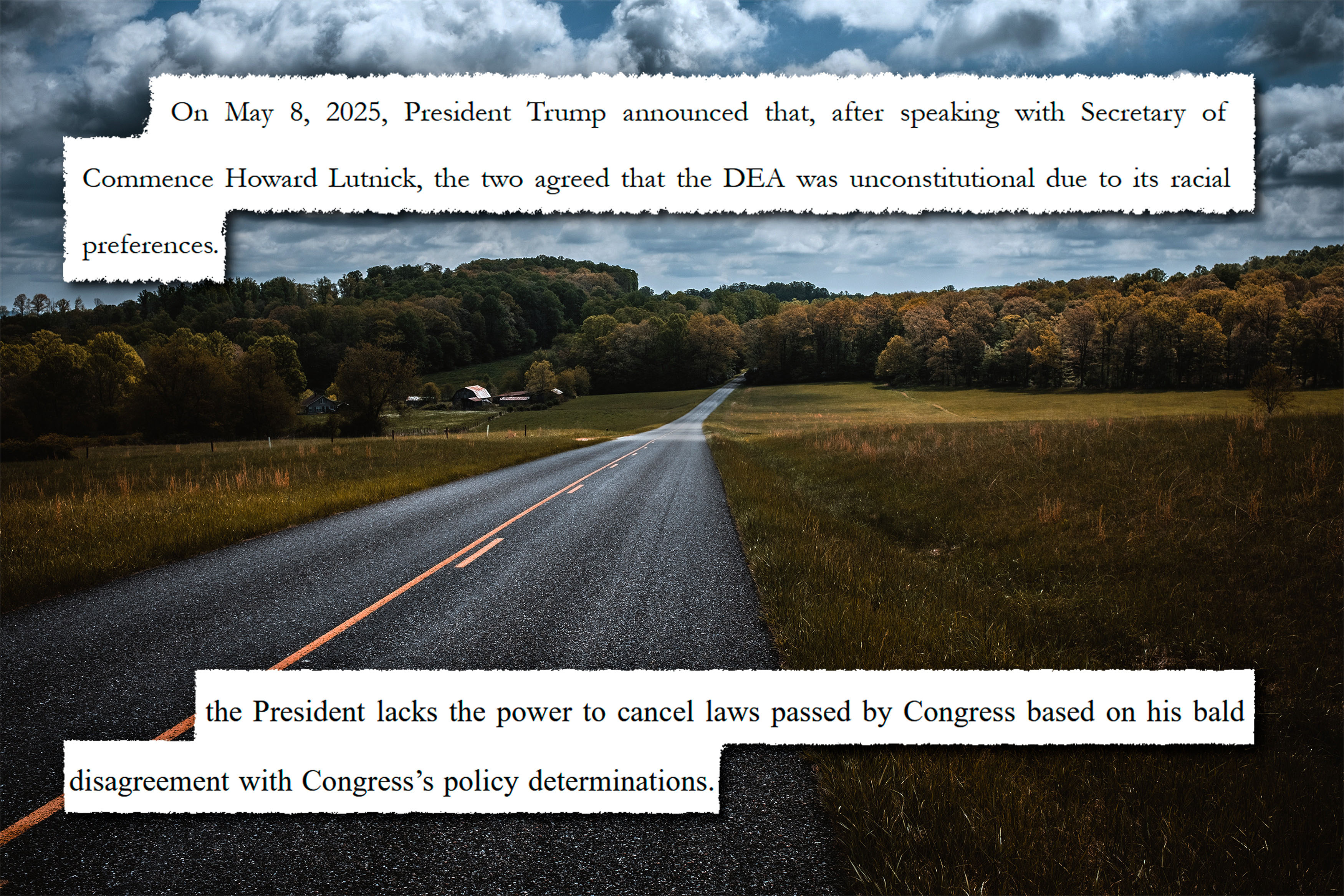
Judge Bates agreed with the plaintiffs on the core constitutional question of executive overreach, writing in his opinion that the president lacks the power to unilaterally cancel laws passed by Congress simply due to a policy disagreement. However, Bates also sided with the Department of Justice on a secondary argument, ruling that utilizing race or ethnicity as a determining factor in awarding federal grants violates equal protection principles, absent a narrowly tailored and compelling governmental interest.
Chronology of Events and Legal Maneuvers
The conflict over the Digital Equity Act unfolded across a rapid succession of legislative, executive, and judicial milestones:
- November 2021: Congress passes the Infrastructure Investment and Jobs Act, which includes the $2.75 billion Digital Equity Act to expand internet access and digital literacy.
- Late 2024: Senator Ted Cruz (R-Texas) sends a formal letter to the NTIA urging the agency to pause a $1.25 billion competitive grant program, arguing that its criteria violated constitutional standards by employing racial classifications.
- January 2025: President Trump issues executive orders targeting federal DEI initiatives. Arielle Roth, former telecommunications policy director for the Senate Commerce Committee under Cruz, is appointed by Trump to lead the NTIA.
- May 2025: President Trump publicly attacks the Digital Equity Act on social media, prompting the NTIA to abruptly halt grant programs nationwide.
- June 2025: During a heated House committee hearing, Democratic lawmakers clash with NTIA leadership over freezes to infrastructure and digital equity programs, while the Department of Justice issues a congressional letter arguing that both state and competitive grants are illegally structured around race.
- July 2025: U.S. District Judge John D. Bates issues a 35-page ruling blocking the administration’s attempt to kill the program entirely, but strikes down the use of racial and ethnic criteria in grant distribution.
- August 2025: Following joint status reports and negotiations, federal attorneys confirm that the administration will reinstate the competitive grant process without racial classifications, aiming for a new application window in December.
The Real-World Impact on Vulnerable Populations
The administrative pause and subsequent legal battles have had immediate, tangible consequences for grassroots organizations providing essential digital literacy training.
In western Ohio, the Northwestern Ohio Community Action Commission operates programs for unemployed and homeless individuals. Jamie Huber, the organization’s director of community services, explained that her agency acts as a subrecipient of NDIA grant funds. Without a reliable stream of federal support, local administrators have been forced to scramble for alternative financing to keep their digital navigator programs afloat.
“How do you find a home? Well, you got to look online. And how do you find a job? You have to look online,” Huber emphasized. Her team of digital navigators works across ten rural senior centers in northwestern Ohio, teaching elderly residents how to access online portals to pay bills and manage healthcare, ensuring they maintain autonomy as essential services transition exclusively to digital formats.
The urgency of these programs is underscored by ongoing public health research. An analysis by KFF Health News revealed that rural residents living in counties lacking both high-speed internet infrastructure and adequate healthcare providers experience poorer health outcomes and lower life expectancies on average than their urban and suburban counterparts.
Similar strains are felt across the country. At Computer Reach, a non-profit organization operating in western Pennsylvania since 2001, Executive Director Dave Sevick reported that funding uncertainties have forced staff reductions and program rollbacks. The organization has refurbished and distributed more than 24,000 computers to families identified through local schools and churches.
“We’re aware that affordability is the biggest issue around, and this doesn’t make it any better for folks,” Sevick noted. “We’re helping a little bit by getting a free computer out to people.”

Data Highlights Persistent Digital Divides
Supporters of the Digital Equity Act point to extensive data demonstrating that access to high-speed broadband and digital literacy remains unevenly distributed across demographic and geographic lines.
Polling data published by the Pew Research Center highlights persistent gaps in home connectivity. While 81% of white adults surveyed reported subscribing to home broadband services, adoption rates dropped to 71% for Black adults and 68% for Hispanic adults. Furthermore, rural Americans continue to lag behind urban and suburban residents in broadband subscription rates, driven by a combination of infrastructure deficits and high consumer costs.
The statutory text of the Digital Equity Act explicitly identifies populations targeted for assistance, including low-income households, older adults, individuals with disabilities, incarcerated persons, rural residents, veterans, and members of racial or ethnic minority groups.
Legal Arguments and Judicial Reasoning
During court proceedings, federal attorney Patrick Butler argued on behalf of the administration that Congress failed to establish a compelling governmental interest when embedding racial and ethnic criteria into the legislation. Butler asserted that lawmakers had not identified specific, actionable instances of discrimination within the broadband industry to justify race-conscious remedial measures.
However, during oral arguments, government attorneys conceded that the statutory language allowed for the severance of racial classifications. Butler noted that if the court struck down the racial criteria, the administration would proceed to administer the grant program without considering race.
In his ruling, Judge Bates affirmed that the administration lacked the legal authority to dismantle the statute wholesale, but agreed that the race-based distribution metrics could not stand under current constitutional standards.
Political Reactions and Legislative Oversight

Lawmakers on both sides of the aisle have reacted sharply to the legal battle and the administration’s handling of the infrastructure funds.
Senator Patty Murray (D-Wash.), a primary sponsor of the Digital Equity Act, stated that she would monitor the implementation process closely to ensure the administration adheres to congressional intent. “It is indisputable that these challenges are particularly pronounced in low income, rural, and Tribal communities—and there’s a reason Democrats and Republicans across the country support this program so strongly,” Murray said.
Conversely, conservative lawmakers have praised the administration’s efforts to purge race-conscious criteria from federal spending. Senator Ted Cruz, who previously urged the NTIA to freeze the competitive grants, maintained that the use of racial classifications in federal technology programs exceeds constitutional authority.
In the House of Representatives, Democrats have raised concerns regarding the broader rollout of the infrastructure law’s state capacity grants. During a congressional hearing, Representative Nanette Barragán (D-Calif.) questioned NTIA Administrator Arielle Roth regarding the fate of state-level funding, such as California’s $70 million grant, which the Department of Justice has also challenged under post-affirmative action legal precedents. Roth declined to answer specific inquiries, citing pending litigation.
Path Forward and Reinstatement Plans
Following the court’s decision, the federal government and the NDIA agreed to a temporary pause in court proceedings to facilitate the restructuring of the grant program. According to joint status reports filed in federal court, the administration plans to issue a revised competitive grant application by December, omitting the contested racial classifications.
To ensure compliance and maintain momentum, the NDIA has requested mandatory 30-day status reports from the agency during the legal pause. While digital equity advocates express disappointment over the removal of demographic targeting tools, leaders like Angela Siefer emphasize that securing the core funding remains an essential step toward keeping community-level programs alive.
As federal agencies prepare to reopen the application portal, organizations nationwide remain focused on delivering essential digital training to low-income, rural, and elderly populations navigating an increasingly digital society.