Navigating the Crossroads: Inside the New York Islanders’ Calculated Roster Retool and the Painful Growing Pains Ahead

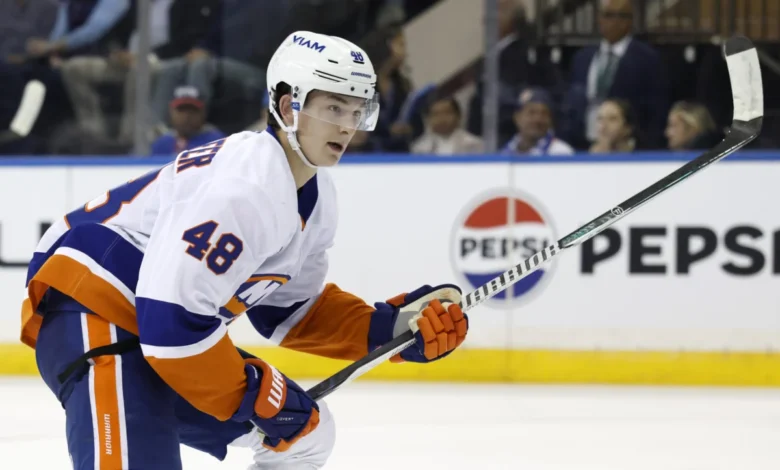
The New York Islanders enter the professional hockey landscape facing a paradox that has defined numerous franchises caught between eras: the path forward is vastly clearer than it was twelve months ago, yet the immediate horizon threatens a period of considerable turbulence. While organizational clarity has replaced the nebulous ambiguity that plagued previous front-office strategies, the physical manifestation of this new direction may translate into a difficult, regression-leaning campaign. This reality does not imply a deliberate front-office tanking strategy; rather, it reflects the deliberate collateral damage of a disciplined, long-term financial and developmental recalibration.
By prioritizing future financial flexibility—specifically preserving substantial projected salary cap space for the upcoming summer—alongside the systematic integration of NHL-ready prospects, general manager Lou Lamoriello and the hockey operations department made a calculated decision to stand relatively pat. Consequently, the team made minimal significant external improvements to a roster that ultimately fell short of the postseason standard a year ago. Objective analysts note that last season’s push down the stretch was buoyed by an unsustainable level of overperformance relative to underlying metrics, masking structural deficiencies that remain unaddressed on Opening Night.
Yet, optimism is not entirely absent on Long Island. The organizational foundation features cornerstone assets capable of altering the competitive calculus on any given night. As long as elite goaltender Ilya Sorokin anchors the crease and high-ceiling defensive prospect Matthew Schaefer continues his developmental trajectory, a plausible bridge to contention remains visible. Furthermore, the installation of veteran head coach Pete DeBoer—entering his first full 82-game campaign behind the Islanders bench—offers tactical stability and a proven track record. However, the tangible evidence supplied by training camp and the exhibition schedule failed to inspire unbridled confidence, leaving fans and observers to weigh theoretical upside against immediate on-ice vulnerabilities.
Historical Context and the Evolution of the Strategy
To understand the current operational philosophy of the New York Islanders, one must examine the trajectory of the franchise over the preceding half-decade. Following deep playoff runs in 2020 and 2021 under former coach Barry Trotz, the team plateaued. Successive seasons of roster stagnation, compounded by aging veteran contracts carrying significant term and cap hits, reduced the front office’s maneuverability.
By the summer of 2023, the limitations of the roster became glaringly apparent. The team relied heavily on veteran resilience, goaltending heroics, and defensive structure, but lacked the dynamic speed and offensive depth required to compete consistently in the modern Eastern Conference. Recognizing the impending danger of a prolonged descent into mediocrity without elite draft capital, the franchise initiated a subtle pivot. The emphasis shifted away from short-term band-aids—such as trading premium assets for rental veterans—toward organic growth, asset accumulation, and financial prudence.
This recalibration culminated in the recent offseason maneuvers. Rather than committing long-term cap space to mid-tier unrestricted free agents, the front office maintained maximum flexibility. This strategy ensures that when the league salary cap rises significantly over the next two fiscal cycles, the Islanders will possess the financial ammunition to aggressively target difference-makers via trade or free agency. Concurrently, the minor league system, historically criticized for a lack of elite offensive talent, has begun yielding prospects capable of transitioning to the professional pace without enduring multi-year developmental bottlenecks.
The Roster Conundrum: Balancing Present Competitiveness and Future Assets
The core tension of the Islanders’ current phase lies in the dichotomy between the current roster’s competitive pride and its statistical limitations. Last season, the team defied several analytical models by remaining in the playoff race until the final weeks. However, a deeper dive into the numbers revealed troubling metrics: negative goal differentials at five-on-five play, reliance on one-goal game luck, and a bottom-tier offensive output that placed immense pressure on the defensive structure and goaltending.
In professional sports, running back the same group without injecting fresh talent rarely yields a divergent outcome. The front office’s decision to preserve cap space for future summers inherently meant accepting a static or marginally adjusted roster for the present campaign. For a fan base accustomed to perennial contention for postseason berths, this reality check can manifest as a regression in the standings.
Hockey operations personnel, speaking on the condition of anonymity due to the sensitivity of organizational planning, have emphasized that player development cannot be rushed to appease short-term ticket sales. For prospects like Matthew Schaefer, the priority is high-volume deployment and experiential learning rather than sheltering minutes on a heavily guarded veteran roster. If this means absorbing losses during high-leverage defensive zone breakdowns in November and December, management views it as an acceptable tuition fee for long-term dividends.
Offensive Anemia: A Persistent Historical Hurdle
It has been a considerable duration since the New York Islanders skated onto the ice boasting a roster defined by true offensive firepower. Historically constructed around defense-first philosophies, physical forechecking, and elite goaltending, the franchise has perennially struggled to generate sustained secondary and tertiary scoring.
The current iteration of the forward group does little to reverse this historical trend. Lacking a consensus elite playmaking winger or a prolific 40-goal sniper outside of isolated top-line producers, the offensive structure relies heavily on execution, cycle dominance, and special teams efficiency. During the preseason, these vulnerabilities manifested as stagnant power-play units and an inability to break through neutral zone traps deployed by structurally sound opponents.
Advanced analytics underline this deficiency. Over the past three seasons, the Islanders have consistently ranked in the bottom third of the league in high-danger scoring chances generated at five-on-five. While Pete DeBoer’s tactical adjustments aim to maximize puck possession and quick-strike transitions, a coach’s system can only elevate a roster as far as its raw skill ceiling permits. Unless internal candidates take monumental developmental leaps or unexpected offensive contributions emerge from the bottom six, scoring by committee will remain an absolute necessity rather than a strategic choice.
Goaltending and Defense: The Anchors of Stability
Conversely, the defensive infrastructure and goaltending tandem represent the absolute bedrock of the Islanders’ identity. Ilya Sorokin remains one of the premier netminders in the National Hockey League. Despite playing behind defensive units that frequently conceded high volumes of rubber and scoring opportunities in recent seasons, Sorokin’s athleticism, positional discipline, and mental fortitude have routinely stolen games and salvaged standings points.
For the Islanders to defy expectations and remain in the wild-card hunt throughout the upcoming campaign, Sorokin must once again perform at a Vezina Trophy-caliber level. Any regression or injury absence would expose the team’s defensive depth in a manner that could quickly derail competitive aspirations.
In front of Sorokin, the defensive corps blends seasoned leadership with emerging youth. The integration of Matthew Schaefer into the defensive mix introduces a dynamic element previously missing from the blue line. Schaefer’s ability to skate the puck out of danger, distribute efficiently on breakouts, and contribute offensively from the point provides a modern dimension to a defensive unit that has historically leaned toward traditional stay-at-home archetypes. How quickly Schaefer adapts to the physical rigors and defensive responsibilities of an 82-game NHL schedule will dictate the ceiling of the team’s backend production.
Coaching Philosophy: The Pete DeBoer Factor
The arrival and subsequent implementation of Pete DeBoer’s coaching philosophy represent a pivotal variable for the franchise. Known for demanding tactical accountability, high work rates, and structured defensive zone coverage, DeBoer inherits a roster that fundamentally aligns with his preferred brand of competitive hockey.
However, transitioning a veteran group to a new system—complete with nuanced adjustments to forechecking angles, neutral zone regrouping, and power-play entries—involves a natural learning curve. The preseason exhibitions offered glimpses of both the potential benefits and the inevitable friction of this transition. While the team exhibited improved structure in their own end during certain stretches, execution errors led to high-profile turnovers and defensive breakdowns that underscored the ongoing assimilation process.
DeBoer’s historical track record suggests that his teams typically improve as the season progresses, with structural habits becoming second nature by the mid-winter months. For the Islanders, surviving the initial phase of this tactical installation without falling into an insurmountable hole in the standings will be paramount.
Financial Landscape and Future Cap Flexibility
A critical pillar of the current Islanders strategy is the weaponization of salary cap space. As the NHL’s upper limit continues its upward trajectory—projected to rise significantly over the next two to three seasons—teams possessing clean balance sheets and minimal long-term negative contracts will hold immense leverage in the trade market.
By avoiding long-term commitments to declining veterans during the recent transaction windows, the front office has ensured that financial handcuffs will not restrict future decision-making. When elite players become available via trade due to cap crunches in rival markets, or when top-tier free agents test the open market, the Islanders will possess the fiscal capacity to participate aggressively.
This macro-level financial strategy, however, demands micro-level patience. Fans accustomed to immediate roster upgrades must reconcile the reality that capital preservation today equates to acquisition power tomorrow. The immediate cost of this financial discipline is a roster that may lack the depth required to weather injuries or slumps as comfortably as wealthier or deeper competitors.
Broader Impact and Implications for the Franchise
The upcoming season serves as a critical diagnostic test for the New York Islanders organization. It will test the resilience of the veteran core, the developmental readiness of the prospect pool, the tactical acumen of the coaching staff, and the collective patience of the fan base and ownership group.
If the team successfully navigates the predicted rough patches, secures valuable developmental minutes for its younger players, and maintains financial agility, the retooling process will be heralded as a masterclass in disciplined management. The franchise will emerge with a balanced roster, enhanced top-end skill, and the salary cap flexibility necessary to transition seamlessly back into perennial Stanley Cup contenders.
Conversely, should the on-ice regression prove deeper and more persistent than anticipated, management will face difficult questions regarding the timeline of the retool and the future deployment of veteran assets. Regardless of the immediate win-loss record, the die has been cast. The route is defined, the parameters are set, and the Islanders are officially committed to navigating the sometimes painful, yet necessary, waters of structural evolution.
Related posts: