Tesla Expands Robotaxi Service to Dallas and Houston, Deepening Autonomous Ambitions in Texas

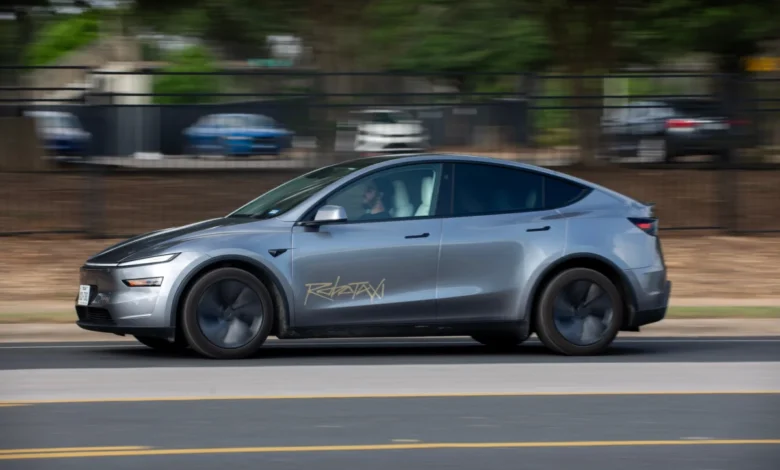
Tesla, the electric vehicle and clean energy company, has announced the expansion of its robotaxi service to Dallas and Houston, marking a significant step in the company’s long-term strategy for autonomous transportation. The announcement, made via a social media post from the official "Robotaxi" account, simply stated, "Robotaxi is now rolling out in Dallas & Houston," accompanied by a 14-second video showcasing Tesla vehicles operating without human monitors or drivers in the front seat. This latest expansion solidifies Texas as the primary proving ground for Tesla’s autonomous ride-hailing ambitions, following its initial launch in Austin last year.
A Phased Rollout in the Lone Star State
The introduction of robotaxi services in Dallas and Houston signifies a strategic move to broaden Tesla’s operational footprint beyond Austin, where it first launched its ride-hailing service in June 2025. The Austin operation initially began with human safety drivers, transitioning to fully driverless rides in January 2026. This phased approach, starting with limited deployments and gradually removing human oversight, is a common industry practice designed to build confidence in the technology and gather critical operational data. With Dallas and Houston now added to its portfolio, Tesla’s robotaxi service is exclusively available in three major Texan cities, underscoring the state’s favorable regulatory environment for autonomous vehicle testing and deployment.
While the social media announcement generated considerable buzz, crowdsourced data from the Robotaxi Tracker website suggests that the current scale of operations in Dallas and Houston is, for now, extremely limited. As of the latest reports, only a single Tesla robotaxi vehicle has been registered in each of the new cities, a stark contrast to the 46 active vehicles logged in Austin. This indicates that the Dallas and Houston rollouts are likely in their nascent stages, possibly involving initial mapping, data collection, and very restricted testing, rather than a wide-scale public launch. Such a cautious, incremental expansion is typical for autonomous vehicle companies, which often begin with a small fleet to refine algorithms and operational protocols within new geofenced areas before scaling up.
Tracing Tesla’s Autonomous Journey: From Vision to Deployment
Tesla’s journey into autonomous driving is rooted in a long-standing vision championed by CEO Elon Musk, who has consistently articulated a future where autonomous vehicles generate substantial revenue for the company. Musk’s pronouncements on achieving full self-driving capabilities have stretched back nearly a decade, with ambitious timelines often exceeding actual development. The concept of a "robotaxi network" where Tesla owners could lease out their vehicles to generate income when not in use has been a recurring theme in investor calls and public statements since at least 2016.
A pivotal moment came during Tesla’s "Autonomy Day" in April 2019, where Musk boldly predicted that Tesla would have over a million robotaxis on the road by the end of 2020. While this projection proved overly optimistic, it underscored the company’s commitment to a vision centered on Level 4/5 autonomy. Tesla’s primary technological approach relies heavily on a vision-only system, utilizing an array of cameras around the vehicle to perceive its surroundings, a stark contrast to many competitors who integrate LiDAR and radar alongside cameras. This vision-first strategy has been a point of both innovation and contention within the autonomous vehicle industry, with proponents highlighting its potential for scalability and lower cost, and critics raising concerns about its robustness in challenging environmental conditions or edge cases.
The development of Tesla’s Full Self-Driving (FSD) Beta software, which began public rollout to select customers in late 2020, has been a critical precursor to the robotaxi service. FSD Beta allows vehicles to navigate city streets, perform turns, and react to traffic signals, albeit with an active human driver ready to intervene. The transition from FSD Beta, where a human is ultimately responsible, to a fully driverless robotaxi service represents a significant leap in regulatory approval, technological maturity, and public trust.
A Chronology of Key Milestones:
- 2016-2019: Elon Musk frequently discusses the robotaxi concept and the goal of full self-driving, culminating in the "Autonomy Day" presentation in April 2019, where the vision for a million robotaxis was laid out.
- Late 2020: Tesla begins rolling out its Full Self-Driving (FSD) Beta software to a limited number of customers, allowing for real-world testing and data collection. The program gradually expands over the following years.
- June 2025: Tesla officially launches its first robotaxi service in Austin, Texas. Initially, these vehicles operate with human safety drivers present to monitor and intervene if necessary. This launch marks Tesla’s direct entry into the commercial autonomous ride-hailing market.
- January 2026: Tesla progresses its Austin robotaxi service to operate without human safety drivers in the front seat, signifying a move towards fully autonomous commercial operation within a defined geofence. This milestone is crucial for demonstrating the system’s maturity.
- February 2026: A regulatory filing by Tesla reveals that its Austin robotaxis have been involved in 14 crashes since their launch. This data, while not detailing the severity or at-fault party for each incident, underscores the ongoing safety scrutiny faced by autonomous vehicle technology. The National Highway Traffic Safety Administration (NHTSA) actively monitors such incidents across the AV industry.
- September 2025 (Pre-existing Service): Tesla is noted to offer a more limited ride service with human drivers in the San Francisco Bay Area, indicating a multi-tiered approach to ride-hailing services, potentially using FSD technology but with human oversight. This service, while not fully autonomous, helps Tesla gather data and refine its software in complex urban environments.
- Current Announcement: Tesla publicly confirms the expansion of its robotaxi service to Dallas and Houston, extending its driverless operations to two additional major Texan cities.
Navigating the Regulatory Landscape and Safety Scrutiny
The expansion into Dallas and Houston comes amidst a complex and evolving regulatory environment for autonomous vehicles across the United States. Unlike some states that have established highly prescriptive frameworks for AV testing and deployment (such as California with its rigorous permitting processes), Texas has adopted a more permissive approach. In 2017, Texas passed legislation (Senate Bill 2205) that broadly permits the operation of autonomous vehicles on public roads, placing much of the responsibility for safety and operation on the manufacturers themselves. This regulatory openness has made Texas an attractive state for companies like Tesla, Waymo, and Cruise to test and deploy their autonomous technologies.
However, regulatory permissiveness does not negate the overarching safety scrutiny from federal agencies like NHTSA. The reported 14 crashes involving Tesla’s Austin robotaxis since their launch highlight the critical importance of safety data and incident reporting. While the details of these crashes – such as whether the autonomous system was at fault, the type of collision, or the extent of damage or injury – were not immediately disclosed in the original report, such incidents inevitably draw attention from regulators, the public, and industry observers. NHTSA maintains a standing order requiring AV companies to report crashes involving their autonomous driving systems, enabling the agency to monitor performance and identify potential safety trends. The industry as a whole is under constant pressure to demonstrate a safety record superior to human drivers to gain widespread public acceptance and regulatory trust.
Comparative Approaches and Industry Context
Tesla’s entry and expansion in the robotaxi market place it in direct competition with established players and well-funded startups in the autonomous vehicle space. Companies like Waymo (an Alphabet subsidiary), Cruise (majority-owned by GM), and Zoox (an Amazon subsidiary) have been developing and deploying robotaxi services for years, often with different technological philosophies.
Waymo, for instance, operates fully driverless services in Phoenix, San Francisco, and Los Angeles, and has accumulated millions of autonomous miles. Its vehicles typically employ a robust sensor suite combining LiDAR, radar, and cameras to create a comprehensive 360-degree view of their surroundings. Cruise, which also uses a multi-sensor approach, has faced significant challenges, including a suspension of its driverless operations in California after a highly publicized incident involving a pedestrian in San Francisco. These incidents underscore the immense technical and operational hurdles in achieving true Level 4/5 autonomy in complex urban environments.
Tesla’s vision-only approach, while potentially offering cost and scalability advantages, also presents unique challenges. The reliance solely on cameras requires sophisticated AI and neural networks to interpret visual data accurately, predict behaviors, and make safe driving decisions in all conditions. Proponents argue that the human eye is a vision-only system, and advanced AI can replicate and surpass human capabilities. Critics, however, point to the limitations of cameras in adverse weather (heavy rain, fog, snow) or low-light conditions, and the potential for "blind spots" that other sensors like LiDAR and radar are designed to mitigate. As Tesla scales its operations, the real-world performance of its vision-centric system will be under continuous evaluation.
Broader Impact and Implications
The expansion of Tesla’s robotaxi service into Dallas and Houston carries significant implications for the company, the autonomous vehicle industry, and the future of urban transportation.
For Tesla: This move is critical for validating Elon Musk’s long-held vision and demonstrating the commercial viability of its FSD technology. Success in robotaxi services could unlock substantial new revenue streams, potentially transforming Tesla from primarily a vehicle manufacturer into a leading transportation-as-a-service provider. However, the path to widespread deployment is fraught with challenges, including the need to continuously improve safety, navigate diverse regulatory landscapes, and gain public trust. The scalability shown by the limited initial rollout suggests Tesla is taking a cautious, data-driven approach, learning from its Austin operations before a broader launch.
For the Autonomous Vehicle Industry: Tesla’s expansion intensifies the competition in the nascent robotaxi market. It also serves as a crucial real-world test for its vision-only approach compared to the multi-sensor strategies of its rivals. The progress and challenges faced by Tesla will inform the broader industry, influencing technological development, regulatory discussions, and investment decisions. The success of any major player in scaling autonomous services will likely accelerate the adoption curve for the entire sector.
For Urban Transportation and Society: The widespread deployment of robotaxis has the potential to fundamentally reshape urban mobility. It could lead to reduced traffic congestion (through optimized routing and potentially fewer privately owned vehicles), lower transportation costs, and increased accessibility for individuals unable to drive (e.g., the elderly, visually impaired, or those without licenses). However, it also raises questions about the future of employment for human drivers in the ride-hailing and trucking industries, the impact on public transit systems, and the ethical considerations surrounding AI decision-making in critical situations. The current limited deployment in Dallas and Houston represents an early ripple in what could become a transformative wave.
Safety, Data, and Public Trust: The ultimate success of robotaxi services hinges on public trust, which is inextricably linked to an unimpeachable safety record. The 14 crashes reported in Austin, while not necessarily indicating fault or severe incidents, underscore the ongoing need for transparency, rigorous testing, and continuous safety improvements. As autonomous vehicles become more prevalent, clear data on performance, incidents, and safety metrics will be paramount for building confidence among regulators and the general public. Tesla, like all AV companies, must commit to transparent reporting and proactive engagement with safety agencies to ensure its technology operates safely and responsibly on public roads.
In conclusion, Tesla’s expansion of its robotaxi service to Dallas and Houston marks a significant, albeit early, step in its ambitious journey towards widespread autonomous transportation. While the current scale is modest, it solidifies Texas as a key battleground for Tesla’s vision-only FSD technology and intensifies the race among autonomous vehicle developers. The coming years will be crucial for observing how Tesla addresses the technical, regulatory, and public acceptance challenges inherent in bringing driverless cars to the masses, potentially reshaping the future of mobility in major U.S. cities and beyond.