
Tag Supreme Court Page 2
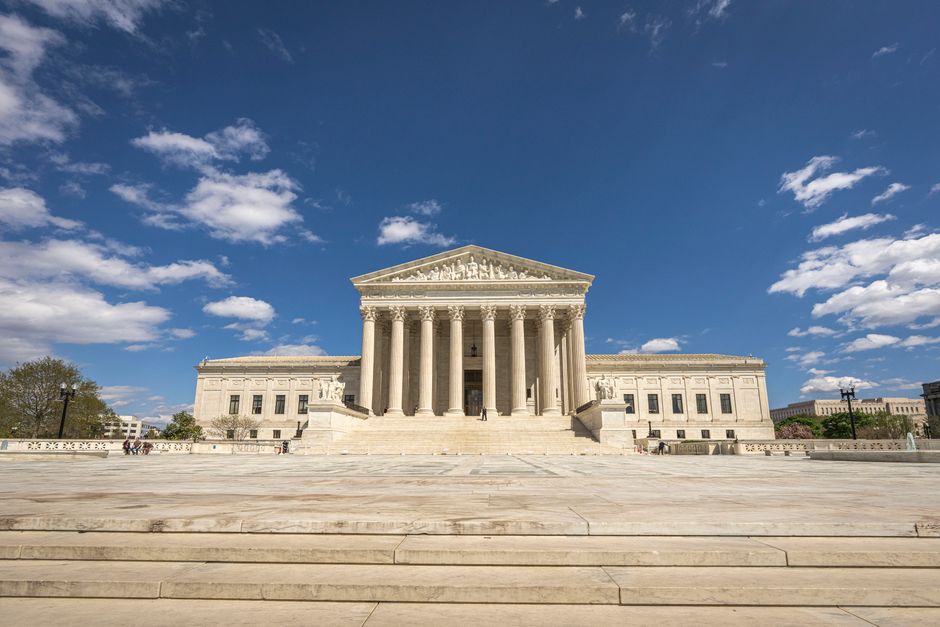
Supreme Court Decisions: A Deep Dive into Page 2 of Landmark Rulings
While the Supreme Court of the United States adjudicates cases that shape the nation’s legal and social fabric, a comprehensive understanding often necessitates examining not just the ultimate holdings but also the nuances and dissenting opinions that frequently populate the pages of its published decisions. This article focuses on "Page 2" – a conceptual marker representing the detailed arguments, concurring opinions, and dissents that flesh out the Court’s pronouncements. Understanding these often-overlooked sections is crucial for legal scholars, students, and anyone seeking a more profound grasp of constitutional interpretation, judicial philosophy, and the very evolution of American law. Page 2, in this context, is not merely a numerical designation but a gateway to the complexities and debates inherent in the highest court’s deliberations. It’s where the battle of ideas is most clearly articulated, where legal reasoning is dissected, and where the diverse perspectives of the justices are laid bare. For search engine optimization purposes, keywords like "Supreme Court rulings," "constitutional law," "judicial review," "legal analysis," "dissenting opinions," and "concurring opinions" are paramount to reaching an audience interested in detailed legal scholarship and the mechanics of the highest court in the land.
The significance of Page 2 lies in its capacity to reveal the underlying reasoning and judicial philosophy of each justice. While the majority opinion, often found on later pages, delivers the Court’s definitive judgment and the controlling legal precedent, it’s the preceding and succeeding pages that illuminate the paths not taken and the alternative interpretations considered. Dissenting opinions, in particular, serve as a vital check on majority power and offer critical perspectives that can influence future legal thinking and even lead to the overturning of precedent in later cases. These opinions are not mere academic exercises; they represent deeply held beliefs about the Constitution, the role of the judiciary, and the direction of American society. For instance, a compelling dissent in a case concerning individual liberties might not sway the current Court, but it can resonate with future generations of legal minds and contribute to a shift in legal interpretation over time. Similarly, concurring opinions, while agreeing with the outcome of a case, may offer different legal rationales or highlight specific aspects of the ruling that the concurring justice deems particularly important. These variations in reasoning can be just as instructive as the majority opinion, providing a richer tapestry of legal thought. SEO efforts targeting terms like "Supreme Court dissent analysis," "landmark cases explained," and "judicial philosophy" will attract users seeking this level of in-depth legal insight.
Examining Page 2 also provides critical context for understanding the incremental nature of legal change. Few Supreme Court decisions are revolutionary in their immediate impact. Instead, they often build upon, modify, or distinguish previous rulings. The debates on Page 2 highlight these connections, showing how justices engage with precedent, identify its strengths and weaknesses, and propose modifications or reinterpretations. This process is fundamental to the common law system, where legal principles evolve through a series of judicial decisions. For a scholar researching the evolution of a particular constitutional doctrine, such as the Fourth Amendment’s protection against unreasonable searches and seizures, delving into the concurring and dissenting opinions of multiple cases across decades can reveal the subtle shifts in judicial thinking that ultimately lead to significant doctrinal changes. These connections are precisely what users search for when they input queries like "how Supreme Court precedent evolves" or "legal history of [specific constitutional right]."
Furthermore, Page 2 serves as a repository for the legal arguments presented by the parties themselves, as well as the amicus curiae briefs submitted by interested organizations. While the Court’s opinions focus on the legal issues, they often directly engage with the briefs, quoting from them and refuting or endorsing specific arguments. This makes Page 2 a valuable resource for understanding the practical application of legal principles and the real-world implications of the Court’s decisions. For example, in a case involving environmental regulations, the amicus briefs filed by industry groups and environmental organizations will present contrasting economic and scientific data, which the justices will then grapple with in their opinions. This interplay between advocacy and adjudication is a crucial element of judicial decision-making, and its traces are most evident in the detailed discussions on the initial pages of the opinions. Researchers looking for "Supreme Court case briefs" or "amicus curiae impact on rulings" will find this aspect of Page 2 particularly relevant.
The impact of Page 2 on legal education and scholarship cannot be overstated. Law students are trained to dissect these opinions, to identify the ratio decidendi (the reason for the decision) and the obiter dicta (statements made in passing but not essential to the judgment). The ability to analyze dissenting and concurring opinions is a hallmark of a sophisticated legal mind. Academics, in turn, use these detailed analyses to develop new theories of constitutional law, to critique judicial methodology, and to predict future legal trends. The very structure of legal pedagogy often revolves around grappling with the complexities found on these initial pages of Supreme Court opinions. Therefore, content optimized for "how to analyze Supreme Court opinions," "legal reasoning in dissents," and "constitutional interpretation methods" will resonate strongly with this audience.
In the realm of specific landmark cases, the intricacies of Page 2 become even more apparent. Consider Brown v. Board of Education. While the unanimous declaration that "separate educational facilities are inherently unequal" is the headline, the preceding pages detail the historical context, the psychological studies presented as evidence, and the justices’ careful navigation of precedent like Plessy v. Ferguson. The legal maneuvering and the profound societal implications discussed in these early sections underscore the immense effort involved in overturning such a deeply entrenched legal principle. Similarly, in Miranda v. Arizona, the majority opinion’s articulation of the "Miranda rights" is well-known, but the debates on Page 2 reveal the justices’ concerns about balancing law enforcement needs with individual protections against self-incrimination, and the practical challenges of implementing such a ruling. SEO terms like "Brown v. Board legal analysis," "Miranda v. Arizona dissent," and "historical context of Supreme Court rulings" are essential for capturing user interest in these foundational cases.
The ongoing relevance of dissenting and concurring opinions is undeniable. Throughout American history, dissenting voices have often foreshadowed future legal developments. Justice Harlan’s dissent in Plessy v. Ferguson, which argued for the equal application of the law regardless of race, became a cornerstone for the eventual reversal of that decision in Brown. Likewise, Justice Brandeis’s eloquent dissents on privacy rights in the early 20th century laid the groundwork for modern privacy jurisprudence. These examples demonstrate that Page 2 is not a static historical record but a dynamic space where legal ideas are incubated and debated, with the potential to shape future legal landscapes. Researchers actively seeking "influential Supreme Court dissents" or "how dissents shaped constitutional law" will be drawn to detailed explorations of these elements.
Moreover, understanding Page 2 is crucial for appreciating the limitations of majority rule in a legal context. The Supreme Court is not simply a popularity contest; it is an institution tasked with interpreting a foundational document that demands careful deliberation and consideration of diverse viewpoints. The presence of dissenting and concurring opinions ensures that the Court’s decisions are not rubber-stamped but are subjected to rigorous scrutiny. This process, while sometimes appearing contentious, is ultimately vital for the legitimacy and durability of the Court’s rulings. The public’s engagement with these debates, often fueled by media coverage and scholarly analysis, is a testament to the importance of understanding the full spectrum of judicial thought, which is most readily accessible through a deep dive into the initial pages of published opinions. Keywords such as "checks and balances in Supreme Court," "judicial deliberation process," and "legitimacy of Supreme Court rulings" are relevant for this aspect.
The practical implications of grappling with Page 2 extend to legal practitioners as well. Lawyers preparing briefs and arguing cases before the Supreme Court must not only understand the prevailing legal doctrine but also anticipate how the current Court might interpret or distinguish existing precedent. This requires a thorough understanding of the justices’ past writings, including their concurrences and dissents, as these can offer insights into their judicial leanings and potential future directions. A lawyer who can effectively cite and differentiate previous dissenting opinions that align with their client’s arguments, or explain why a particular concurring opinion’s rationale is persuasive, demonstrates a sophisticated understanding of the law that can be instrumental in persuasive advocacy. Therefore, content targeting "Supreme Court advocacy strategies," "using dissents in legal arguments," and "predicting Supreme Court decisions" would be of immense value to this professional audience.
In conclusion, the conceptual "Page 2" of Supreme Court decisions, encompassing the detailed arguments, concurring opinions, and dissents, is an indispensable element for a complete understanding of American constitutional law. It is where judicial philosophy, legal reasoning, and the ongoing evolution of legal precedent are most vividly displayed. For SEO purposes, prioritizing keywords that reflect this depth of analysis – such as "Supreme Court legal intricacies," "depth of judicial opinions," "critical analysis of rulings," and "understanding judicial disagreements" – is essential for reaching audiences committed to a nuanced and comprehensive understanding of the nation’s highest court. This focus on the granular details, the arguments, and the counter-arguments, is what truly unlocks the profound impact of the Supreme Court’s work.
