Warming-Induced Ecosystem Emissions Create Growing Gap in Global Climate Strategies

For decades, the international scientific community has issued increasingly urgent warnings regarding "positive feedback loops"—vicious cycles within the Earth system where rising temperatures, initially triggered by the combustion of fossil fuels, catalyze natural processes that release even more greenhouse gases. While the fundamental physics of the greenhouse effect is well-understood, a significant portion of the climate equation remains dangerously underrepresented in the predictive models that guide global policy. These "warming-induced emissions" from natural ecosystems, including thawing permafrost, burning forests, and fermenting wetlands, threaten to undermine the targets set by the Paris Climate Agreement.
The core of the issue lies in the complexity of Earth System Models (ESMs). While factors such as sea ice loss and ocean thermal expansion are well-integrated into the simulations used by the United Nations Intergovernmental Panel on Climate Change (IPCC), ecosystem-based feedbacks are often omitted due to their non-linear nature and a lack of granular data. A new study by a coalition of leading climate researchers suggests that these overlooked emissions could add as much as 0.6 degrees Celsius to global average temperatures by the end of the century. This additional warming could effectively reduce the remaining "carbon budget"—the amount of CO2 humans can still emit without breaching the 2-degree Celsius threshold—by as much as 25 percent.
The Invisible Feedback Loop: Why Models Struggle
The primary challenge for climate scientists is the sheer unpredictability of biological and geological responses to heat. Unlike a power plant, which has a measurable output based on fuel consumption, an ecosystem’s emissions depend on a myriad of variables: soil moisture, microbial activity, local wind patterns, and historical land use.
Of the 11 major Earth system models utilized in the most recent IPCC assessment, none successfully integrated warming-induced emissions from all three primary sources: wildfires, wetlands, and permafrost. Only five of these models accounted for wildfires, and a mere two included permafrost degradation. This omission is not a result of negligence but of computational and scientific hurdles. Representing these processes requires simulating diverse, non-linear interactions that vary wildly from the Siberian tundra to the tropical basins of the Congo.
Brian Buma, a climate scientist at the Environmental Defense Fund, notes that the longer these emissions remain outside formal accounting frameworks, the larger the gap between policy goals and planetary reality becomes. "If you’re not including all the emissions going into the atmosphere, you’re hamstrung from the get-go," Buma stated, emphasizing that the current approach may lead nations to overstate how much fossil fuel can safely be burned.
A Chronology of Emerging Climate "Blind Spots"
The recognition of feedback loops has evolved from theoretical warnings in the late 20th century to observable phenomena in the 21st.
- The 1980s-1990s: Early climate models focused primarily on atmospheric CO2 and ocean heat absorption. Feedbacks like permafrost melt were discussed in academic circles but considered too distant to model accurately.
- 2001-2015: Global carbon emissions from wildfires began a steady ascent, eventually increasing by 60 percent over two decades. Scientists began to observe that the "carbon sink" capacity of forests was being periodically neutralized by extreme fire seasons.
- 2020: Researchers recorded an alarming spike in atmospheric methane. Subsequent analysis attributed this to warming temperatures accelerating the decomposition of organic matter in expanding wetlands across Africa and Asia.
- 2023-2024: Successive years of record-breaking global heat significantly weakened the terrestrial carbon sink. In some regions, ecosystems that had served as carbon absorbers for millennia began to emit more CO2 than they sequestered.
- 2025-2026: Projections indicate that the return of El Niño conditions will further stress tropical ecosystems. The Amazon, in particular, faces a "flip" where drought-induced tree mortality and decomposition could turn the world’s most vital carbon sink into a net source of emissions.
The Three Pillars of Natural Emissions: Wildfires, Wetlands, and Permafrost
To understand the scale of the threat, researchers have categorized the primary drivers of warming-induced emissions into three distinct but interacting systems.
1. The Permafrost Time Bomb
The Arctic is warming nearly four times faster than the global average. As the permafrost—ground that has remained frozen for thousands of years—thaws, it exposes vast stores of organic carbon to microbial action. When these microbes consume the organic matter in oxygen-poor, waterlogged environments, they release methane, a greenhouse gas with over 80 times the warming potential of CO2 over a 20-year period. The 2024 Arctic Report Card confirmed that the northern tundra has already begun to transition from a carbon sink to a carbon source.
2. The Feedback of Fire
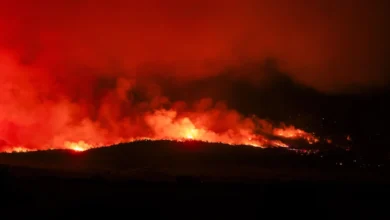
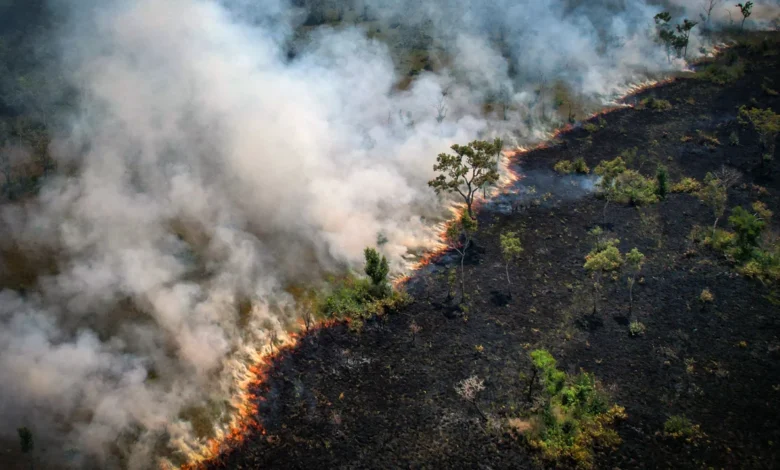
Wildfires represent a direct feedback loop: warming creates drier conditions, which lead to more frequent and intense fires. These fires release stored carbon into the atmosphere immediately, while also destroying the very trees that would have absorbed CO2 in the future. Furthermore, the soot and charcoal left behind can darken snow and ice surfaces in nearby regions, reducing the "albedo effect" and causing further local warming.
3. Wetland Methane Surges
Wetlands are the largest natural source of methane globally. As temperatures rise, the metabolic rate of methanogenic microbes increases. Simultaneously, changes in precipitation patterns can expand wetland areas, providing more territory for these microbes to thrive. Recent data from the Congo Basin and the Amazon suggests that tropical methane emissions are rising far faster than previous models anticipated.
Quantifying the Impact: A Future at Risk
The recent study led by Benjamin Poulter, a senior scientist at Spark Climate Solutions, utilized simplified climate models to project the volume of these emissions under various socio-economic scenarios. The findings are sobering.
Under a "high-mitigation" scenario—where human emissions are curtailed rapidly—ecosystem feedbacks could still add between 0.0 and 0.4 degrees Celsius of warming. However, in a "business-as-usual" or moderate-emissions scenario, where human output peaks around 2060, ecosystem emissions could contribute an additional 0.2 to 0.6 degrees Celsius.
To put this in perspective, by the year 2100, the annual contribution of warming-induced CO2 could equal the current output of the entire global power and building sectors combined. Similarly, warming-induced methane could match the current fossil fuel methane emissions from North America and Asia combined.
Official Responses and the Path to Policy Integration
The scientific community is now racing to bridge the gap between observation and policy. Spark Climate Solutions has launched a coordinated effort involving more than 20 independent modeling groups worldwide. The goal is to refine the measurements of these "blind spots" so they can be included in the next IPCC assessment, due in late 2029.
"We’ve been worried about this for a long time," says Rob Jackson, a professor at Stanford University and chair of the Global Carbon Project. "Now, we’re starting to see these feedbacks become the reality." Jackson and his colleagues are currently deploying methane sensors in remote regions, such as the Amazon and central Africa, to establish baseline data that is currently missing.
Integrating these findings into international law will be the next hurdle. Current carbon accounting frameworks, such as those used under the UN Framework Convention on Climate Change (UNFCCC), focus almost exclusively on anthropogenic (human-caused) emissions. If a forest burns due to a lightning strike exacerbated by a heatwave, that carbon is often categorized differently than emissions from a tailpipe, even though the atmospheric effect is identical.
Strategic Mitigations: Can Nature Be Managed?
While the scale of the problem is daunting, experts suggest that direct intervention may be possible. Bronson Griscom, an ecologist at Ceiba Earth, outlines three strategic "buckets" for addressing warming-induced emissions:
- Resilient Reforestation: Prioritizing tree species that can thrive in higher CO2 environments and withstand increased heat.
- Fuel Management: Proactive thinning of forests and controlled burns to prevent catastrophic, high-emission mega-fires.
- Innovative Engineering: In the Arctic, researchers are experimenting with "insulating blankets" made of native vegetation to slow permafrost slumps. In wetlands, management techniques tested in rice paddies—such as altering water chemistry or wetting-drying cycles—could potentially be adapted to reduce microbial methane production.
However, many scientists caution that these "nature-based solutions" are not a substitute for the rapid phase-out of fossil fuels. Chris Jones, a climate scientist at the UK Met Office, warns that while a coal plant can be shuttered, a melting permafrost field cannot easily be "turned off" once it reaches a tipping point.
Conclusion: The Urgency of 2029
The emergence of warming-induced emissions as a primary driver of climate change marks a new, more volatile phase of the environmental crisis. The "signal" of these emissions has now clearly emerged from the "noise" of natural variability. As the international community prepares for the next round of IPCC reports and climate negotiations, the inclusion of these feedback loops will be critical. Without a comprehensive accounting of what the Earth itself is emitting, the path to a stable climate remains obscured, and the targets of the Paris Agreement may slip further out of reach. The scientific scramble currently underway is not just about better math; it is about ensuring that global policy is based on the reality of a planet that is no longer just reacting to human activity, but is actively participating in its own warming.
Related posts: