This unprecedented auction, conducted at the Ventura County Fire Department in Thousand Oaks, California, marks a definitive shift in American resource policy. The move is designed to accelerate the domestic supply chain for critical minerals—specifically cobalt, nickel, copper, and manganese—that are foundational to the global transition toward renewable energy, electric vehicle manufacturing, and advanced defense technologies. However, the decision has ignited a firestorm of controversy, pitting the federal government against environmental coalitions, marine scientists, and the Indigenous communities of American Samoa who view the seabed as an extension of their cultural identity and ancestral heritage.
A Chronology of the Deep-Sea Mining Push
The path to this week’s auction was paved by a series of administrative actions over the last 18 months. In early 2025, the Trump administration signaled a departure from historical caution regarding seabed extraction, prioritizing the "security of supply" for critical minerals.
In response to these stated goals, the Department of the Interior established the Marine Minerals Administration (MMA). This new office was tasked with streamlining the regulatory hurdles that have historically kept deep-sea mining in the realm of theory rather than industry. Throughout the spring and summer of 2026, the administration moved to designate massive swaths of the Exclusive Economic Zone (EEZ) around American Samoa as viable for exploration.
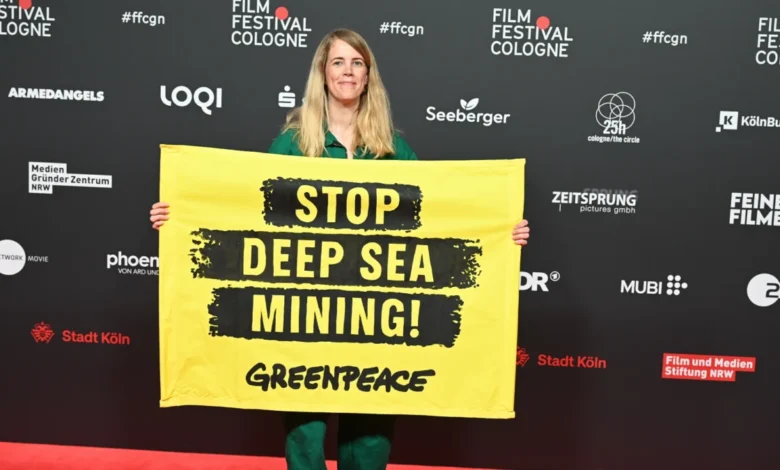
By mid-2026, the proposal faced significant legal challenges. Indigenous leaders and environmental groups, led by organizations like Earthjustice and Greenpeace, filed multiple lawsuits. The tension culminated just days before the November auction when a federal judge in Hawaiʻi ruled that the MMA had failed to adequately consult the Endangered Species Act (ESA) in its environmental impact statements. Despite this judicial rebuke, the administration proceeded with the sale, arguing that the auction was a procedural step toward "gathering information" rather than an immediate commencement of extraction.
The Auction and the Economic Stakes
The auction itself was a muted affair in terms of corporate participation, reflecting the high-risk nature of an industry that currently lacks a commercial blueprint. Only two entities, Norway-based Adepth Minerals Inc. and New York-based Wetstone US Ventures, registered to bid.
Wetstone US Ventures emerged as the provisional winner with a $6 million bid for exploration rights in two specific blocks. These sites are located in proximity to the Rose Atoll Marine National Monument. Established in 2009, the monument was designed to preserve a fragile ecosystem that acts as a refuge for threatened biodiversity.
The economic justification for the sale rests on the assumption that land-based mining is becoming increasingly carbon-intensive, geopolitically risky, and geographically constrained. Proponents argue that the polymetallic nodules found on the ocean floor—naturally occurring rocks rich in minerals—are "batteries in a rock." By securing these resources, the administration argues that the United States can reduce its reliance on foreign supply chains, particularly those controlled by geopolitical rivals.
The Scientific and Environmental Objections
The scientific community remains deeply skeptical, if not outright hostile, to the prospect of industrial activity at such depths. The deep sea is characterized by slow biological processes, where a single disturbance can take decades or even centuries to recover.
According to the Deep Ocean Stewardship Initiative (DOSI), the removal of polymetallic nodules would result in the permanent loss of habitat for specialized organisms. These organisms are the foundation of a food web that supports the very species—such as the blue whale, sperm whale, and leatherback sea turtle—that transit the waters off American Samoa.
Beyond the immediate physical removal of the seafloor, scientists warn of the "plume effect." Mining machinery is expected to kick up massive clouds of sediment that can travel for hundreds of miles, potentially smothering filter-feeding organisms and clogging the delicate respiratory systems of deep-sea marine life. With over 1,000 marine experts from 75 countries signing formal statements of concern, the consensus is that the technology for "clean" deep-sea mining does not yet exist.
Indigenous Perspectives and Human Rights
For the people of American Samoa, the ocean is not merely a resource—it is a sacred space. Sabrina Suluai-Mahuka, the founder of the youth-led environmental nonprofit Finafinau, traveled from the territory to the California auction site to voice the opposition of her people.
"Our home is not for sale," she stated during the protests. The cultural connection to the Pacific is central to the identity of Pacific Islander nations, who argue that the U.S. government’s decision to lease these waters is an act of neo-colonialism that ignores the sovereignty and the specific ecological knowledge of the local populations. The protest, which included prayers and songs, underscored the moral weight of the opposition: the belief that the "common heritage of mankind" should not be auctioned off to the highest bidder for short-term industrial gain.
Legal and Regulatory Implications
The legal battle is far from over. Earthjustice, representing the plaintiffs, has indicated that they will continue to challenge the validity of the leases. The federal judge’s recent ruling regarding the Endangered Species Act suggests that the administration’s regulatory framework is on thin ice.
A critical point of contention is whether "exploration" can be decoupled from "extraction." The government claims that exploration—mapping and surveying—is a benign activity. Critics, however, argue that these leases are a "foot in the door." Once companies invest millions in mapping and infrastructure, the political and economic pressure to allow full-scale mining will become nearly impossible for regulators to resist.
Furthermore, the lack of an international consensus on deep-sea mining adds a layer of global uncertainty. While the International Seabed Authority (ISA) regulates mining in international waters, the United States is operating within its own EEZ, setting a precedent that could be mirrored by other nations. If the U.S. successfully bypasses environmental protections to extract minerals, it may trigger a "gold rush" mentality among other nations, leading to an unregulated, competitive scramble for the deep-ocean floor.
Broader Impact on Global Energy Transitions
The tension at the heart of this issue is the paradox of the green energy transition. To build the millions of batteries required to decarbonize the global economy, the world needs more lithium, cobalt, and nickel. Mining these on land often leads to deforestation, water contamination, and human rights abuses.
However, moving that destruction to the bottom of the ocean presents a different, perhaps more irreversible, set of risks. The lack of a baseline understanding of deep-sea ecosystems means that we may be destroying biodiversity before we even have the chance to document it.
The Department of the Interior’s push into the Pacific represents a high-stakes bet that technological advancement can outpace environmental degradation. As the legal challenges move through the court system, the outcome will likely determine not only the future of American Samoa’s waters but also the global standards for how humanity treats the final, least-understood frontier on the planet. For now, the leases stand, but the legal and social resistance is only beginning to mobilize, setting the stage for a protracted struggle between the needs of the industrial future and the preservation of the oceanic past.