California Embraces Plug-In Balcony Solar: A New Frontier for Renewable Energy Access and Grid Resilience

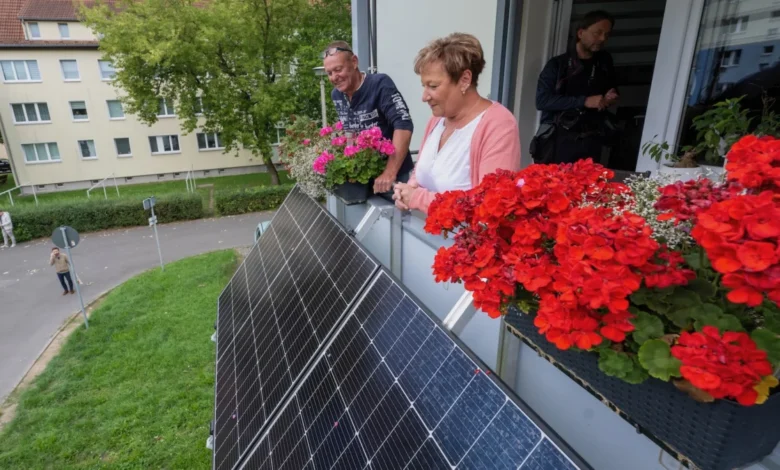
California has officially welcomed a decentralized energy revolution. On Wednesday, Governor Gavin Newsom signed landmark legislation—Senate Bill 868—permitting residents across the nation’s most populous state to adopt "plug-in" or balcony solar systems. This legislative milestone effectively dismantles a longstanding regulatory hurdle that once required consumers to navigate tedious, costly interconnection agreements with massive utility providers like Pacific Gas and Electric Company (PG&E), Southern California Edison, and San Diego Gas & Electric.
By allowing homeowners and renters alike to mount compact solar panels on balconies, railings, or backyards and connect them directly into standard electrical outlets, California joins an innovative wave of states, including Utah and Maine, that recognize the untapped potential of micro-scale clean energy. Internationally, this approach has already seen immense success. European nations, most notably Germany, have outfitted roughly half a million balconies with plug-in solar arrays, proving that small-scale photovoltaic adoption can scale rapidly when unburdened by red tape.
As energy costs continue to escalate nationwide and consumer electricity bills reach historic highs, the introduction of plug-in solar represents a fundamental shift in how residential communities interact with the power grid. Rather than viewing consumers as passive endpoints that merely consume electricity, modern energy paradigms are increasingly transforming everyday citizens into active participants in a decentralized, resilient power network.
The Mechanics and Financial Realities of Plug-In Solar
For decades, transitioning to residential solar energy required a formidable financial and logistical commitment. While the global cost of traditional rooftop solar panels has plummeted by more than 90 percent over the past decade, outfitting an entire roof still demands thousands of dollars in upfront capital. Furthermore, standard rooftop installations frequently necessitate expensive structural and electrical upgrades to a home’s main service panel.
Plug-in solar bypasses these structural barriers entirely. A typical balcony solar kit consists of one or two micro-inverters and photovoltaic panels that can be purchased for a few hundred dollars. Once secured to a balcony railing, patio, or yard, the system plugs directly into a standard 120-volt household wall outlet. Instead of feeding excess power back into the utility grid—a process that historically triggered complex net-metering regulations and utility oversight—plug-in systems instantly offset a household’s baseline electricity consumption.
Economically, the proposition is increasingly attractive to cash-strapped consumers. Studies indicate that plug-in solar arrays can save users hundreds of dollars annually, depending on local utility rates. Given the initial equipment costs, consumers can typically achieve a full return on investment within approximately four years. In states and regions burdened by exceptionally high electricity tariffs, that payback period shrinks even further. However, energy policy experts emphasize that broad adoption—particularly among low- and moderate-income households—will likely require targeted state and federal rebates to offset initial purchasing costs.
A Chronology of Decentralized Energy: From Centralized Generation to Distributed Micro-Plants
To understand the significance of California’s new legislation, one must examine the historical evolution of the American electrical grid. For more than a century, utility grids operated on a strictly centralized model. Massive power plants fueled by coal, natural gas, and nuclear fission generated the vast majority of electricity. When consumer demand fluctuated—such as when millions of workers returned home in the evening, switched on residential lighting, and powered up kitchen appliances—utility operators simply ramped up fossil fuel combustion to maintain a delicate, constant equilibrium between supply and demand.
The rapid proliferation of intermittent renewable energy sources, such as utility-scale wind and solar farms, fundamentally disrupted this linear model. Because the sun does not always shine and the wind does not always blow, grid operators could no longer rely solely on adjustable fossil-fuel turbines to match real-time demand curves. To bridge these generation gaps, utilities have increasingly deployed massive grid-scale battery storage facilities designed to capture excess renewable generation and dispatch it during peak hours.
The emergence of balcony solar introduces a new layer of complexity and efficiency to this infrastructure: distributed generation. While an individual plug-in solar panel generates only a fraction of the electricity produced by a sprawling rooftop array, the cumulative effect of thousands of apartments and homes feeding micro-wattage directly into local circuits creates a powerful distributed network.
According to Amanda Smith, a senior scientist focusing on the built environment at the climate solutions nonprofit Project Drawdown, utilizing renewable electricity precisely where it is generated is the ultimate definition of energy efficiency. "It’s really ideal to use renewable electricity exactly where it’s generated," Smith noted, highlighting how localized production minimizes transmission losses that inherently occur when electricity travels hundreds of miles across high-voltage transmission lines.
Alleviating Grid Congestion and Managing Peak Demand
One of the most pressing challenges facing modern grid operators is peak demand management. During severe heat waves, residential and commercial air conditioning units run continuously, driving electricity demand to absolute maximums. Ironically, these periods of intense heat and maximum air conditioning load coincide with peak solar generation periods, as intense sunlight beats down on utility systems.
Historically, this massive surge in daytime demand forced utilities to rely on expensive, carbon-intensive "peaker plants"—fossil fuel generators that are brought online only during times of extreme stress. Plug-in solar systems offer an elegant, decentralized solution to this systemic congestion. By allowing individual households to generate their own immediate power needs during peak daylight hours, balcony solar arrays directly reduce the overall volume of electricity drawn from the broader grid.
When multiplied across densely populated urban centers, these localized reductions accumulate significantly. Bernadette Del Chiaro, senior vice president for California at the nonprofit Environmental Working Group, praised the policy as a multi-benefit achievement during a press conference following the bill’s signing.
"This is one of the most immediate, concrete, tangible, real, and affordable things that we can do to start to get control of our high energy costs, but also save our planet," Del Chiaro stated. "So it’s really a twofer."
Furthermore, as society undergoes rapid electrification—driven by the mass adoption of electric vehicles (EVs), the replacement of natural gas appliances with high-efficiency heat pumps, and the soaring electricity demands of artificial intelligence data centers—the grid faces unprecedented strain. Plug-in solar serves as a vital shock absorber, helping to offset the incremental demand growth that threatens to overwhelm local distribution transformers.
Legislative Reactions and the Path Forward
The passage of Senate Board 868 was spearheaded by state Senator Scott Wiener, who has long championed progressive urban and environmental policies in California. During a joint press conference addressing the legislation, Wiener emphasized the critical nature of removing institutional barriers to green technology adoption.
"This technology is very important and very powerful," Senator Wiener told reporters. "And what this bill does is eliminate the massive barrier to people using plug-in solar, which is that you’d have to go and negotiate an interconnection agreement with PG&E or the other utility."
By stripping away the mandatory utility sign-off process, California has democratized solar energy access. Historically, renters living in multi-family apartment complexes, condominiums, or homes with shaded roofs were entirely excluded from the solar transition. Balcony solar shatters this urban divide, empowering tenants who possess a sunny balcony, patio, or small backyard to take direct control over their energy footprints and monthly utility budgets.
Industry analysts and environmental watchdogs agree that California’s regulatory shift will likely serve as a blueprint for other states grappling with rising energy costs and grid reliability concerns. Because California historically dictates national regulatory and environmental standards—ranging from automotive emissions guidelines to appliance efficiency mandates—its embrace of plug-in solar is anticipated to accelerate legislative discussions nationwide.
"The big reason this is a big deal really is because it’s the most affordable way for people to actually participate with solar PV," Amanda Smith observed. "Whatever happens in California is going to influence, I think, a lot of other future state markets. So it’s going to be a key one to watch."
As utilities and regulators adjust to this new era of decentralized micro-generation, the humble balcony solar panel is poised to transition from a European novelty into a cornerstone of American residential energy policy. By empowering millions of citizens to generate their own clean electricity with the simple flip of a plug, states like California are proving that the future of the power grid may well rest in the hands of everyday consumers.