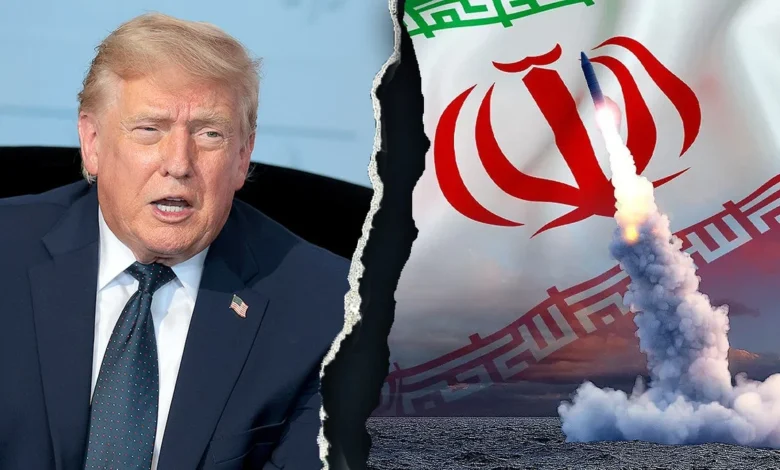
A comprehensive Fox News survey conducted in July 2026 has unveiled a significant decline in public approval for President Donald Trump’s handling of Iran, reaching a new record low. The poll indicates widespread voter opposition to U.S. military action against the Islamic Republic and a growing expectation that any conflict would be protracted, lasting at least a year. Concurrently, the survey highlights a notable shift in public perception regarding immigration, with Democrats now holding a competitive edge over Republicans on the issue, signaling a potential realignment in voter priorities as a crucial midterm election cycle approaches.
Deepening Discontent Over Iran Policy
The poll’s most striking finding concerning foreign policy is the substantial disapproval of President Trump’s approach to Iran. Just 34% of voters expressed approval, while a decisive 66% registered their disapproval, marking his lowest recorded approval rating on this specific issue to date. This sentiment is deeply rooted in a prevailing reluctance among the electorate to engage militarily. A significant 56% of respondents oppose U.S. military action against Iran, with a robust 40% indicating "strong" opposition. The partisan divide on this matter is stark: 84% of Democrats oppose military intervention, a figure that significantly outweighs the 76% of Republicans who support it. This suggests that even within the Republican base, there isn’t universal enthusiasm for military engagement.
The escalating tensions between the United States and Iran have been a persistent feature of the geopolitical landscape since President Trump’s administration. Following the U.S. withdrawal from the Joint Comprehensive Plan of Action (JCPOA), commonly known as the Iran nuclear deal, in May 2018, the Trump administration reimposed and intensified sanctions on Tehran, initiating a "maximum pressure" campaign aimed at curtailing Iran’s nuclear ambitions, ballistic missile program, and support for regional proxy groups. This strategy led to a series of confrontations, including attacks on oil tankers in the Persian Gulf, the downing of a U.S. drone, and the assassination of Iranian General Qassem Soleimani in January 2020, which brought the two nations to the brink of war.
In the period leading up to July 2026, diplomatic efforts remained largely stalled, with both sides maintaining firm stances. Iran continued to enrich uranium beyond JCPOA limits and expand its regional influence, while the U.S. insisted on a more comprehensive agreement addressing a broader range of concerns. The continuous cycle of threats and counter-threats, coupled with ongoing regional instability in areas like Yemen, Iraq, and Syria, has likely contributed to public weariness and skepticism about the efficacy of current policies. Voters’ apprehension is not merely about the initiation of conflict but also its duration and outcome. The survey reveals that 64% of voters now expect any conflict with Iran to last a year or more, a substantial 13-percentage-point increase since a similar poll conducted in May. This growing pessimism about the conflict’s timeline underscores a deep-seated concern about the potential for a prolonged and costly engagement, reminiscent of previous Middle East conflicts. While supporters of military action are more optimistic, with 56% believing it would conclude in weeks or months, a vast majority of opponents (80%) foresee a conflict extending beyond a year.
Furthermore, there is considerable doubt that the protracted conflict would yield a favorable diplomatic resolution. Approximately half of the voters surveyed believe the U.S. will fail to reach any deal with Iran. Among those who do anticipate a deal, opinions are sharply divided: 27% expect a "good" deal, while 25% anticipate a "bad" one. This skepticism about a diplomatic breakthrough is shared across the political spectrum, with roughly half of Democrats, Republicans, and independents predicting no agreement. The partisan lens, however, significantly influences the perception of any potential deal, with Democrats 20 points more likely to expect a "bad" outcome and Republicans 27 points more likely to foresee a "good" one, reflecting the entrenched political polarization surrounding U.S. foreign policy.
Overall Presidential Approval and Demographic Shifts
Beyond Iran, President Trump’s overall job approval ratings remain underwater, with 39% approving and 61% disapproving. This figure has remained unchanged for the past three months, tying a previous high for disapproval and matching a record high of 49% who "strongly" disapprove. Historically, President Trump’s best approval rating was 49% in April 2020. His current standing of 39% approval places him in a challenging position, comparable to former President Joe Biden’s 40% in July 2022 and former President Barack Obama’s 42% in July 2014, both during the summer of midterm election years when incumbents typically face headwinds.
While President Trump continues to enjoy robust support from his core base, particularly MAGA Republicans (97% approval) and conservatives (72%), the poll indicates notable erosion of support among other critical demographics. Approval among rural voters has declined by 7 points since June, settling at 44%, a near-record low. Similarly, support among White voters has reached an all-time low of 41%, down 3 points. The most significant shift, however, is observed among non-MAGA Republicans, whose approval has plummeted by 13 points since last month to 51%. This decline is particularly stark when contrasted with their 70% approval at the beginning of President Trump’s second term, suggesting growing disillusionment or strategic distancing within a segment of the Republican Party.
These shifts underscore potential vulnerabilities for President Trump and the Republican Party as they navigate the political landscape. The economy and inflation continue to be major concerns for voters, reflected in President Trump’s significantly underwater ratings on these issues: 33% approval on the economy versus 67% disapproval, and a stark 27% approval on inflation versus 73% disapproval. The persistent economic anxieties, coupled with a perceived lack of progress on critical policy fronts, are likely contributing to the softening of support among these key demographic groups.
Immigration: A Shifting Political Battlefield
In a significant development for the domestic political agenda, the Republican Party’s historical advantage on immigration has eroded, with voters now almost evenly divided on which party is better equipped to handle the issue. The poll shows 50% favoring Democrats and 49% favoring Republicans, a meaningful shift from April, when the GOP held a clear 8-point lead. This realignment suggests that the Democratic Party’s messaging and policy stances on immigration may be resonating more effectively with certain segments of the electorate, or that the Republican approach is losing some of its appeal.
The shift is particularly pronounced among women and voters under age 45, who now prefer Democrats on immigration. Conversely, men and those aged 45 and older continue to favor Republicans. This demographic split highlights a generational and gender-based divergence in how immigration is perceived and prioritized. According to Republican pollster Daron Shaw, who collaborates on the Fox News Poll, "During the Biden administration years, immigration attitudes were often defined by border security considerations. Today, immigration enforcement and ICE often dominate, eroding the GOP’s edge on the issue." This observation suggests a tactical shift in the public discourse surrounding immigration, moving beyond mere border control to encompass broader questions of enforcement, integration, and the role of agencies like Immigration and Customs Enforcement (ICE).
Despite the overall shift, immigration remains President Trump’s best-performing issue in the survey, though his rating is still negative: 42% approve versus 57% disapprove. Views of ICE follow a similar pattern, with 41% approval, unchanged since early this year but down from 49% last September. The agency faces significant partisan division: 90% of Democrats and 68% of independents disapprove of ICE, while 79% of Republicans approve. Notably, 78% of Democrats and 50% of independents "strongly" disapprove, contrasting sharply with 53% of Republicans who "strongly" approve. This deep polarization surrounding ICE reflects fundamental disagreements about immigration enforcement philosophies and the role of government in managing undocumented populations.
Regarding the fate of undocumented immigrants, the poll indicates a nuanced public opinion that defies simplistic categorization. A mere 7% of voters support allowing all undocumented immigrants to remain in the U.S., with limited support even among Democrats (11%). Instead, a substantial 62% favor a policy that would deport those charged with crimes while allowing others to stay and eventually qualify for citizenship. This pragmatic approach garners majority support across nearly all demographic groups, except for Republicans (39%), conservatives (41%), and White evangelical Christians (48%), indicating a broad desire for a balanced solution that combines enforcement with pathways to legal status. Conversely, 31% of voters advocate for deporting all undocumented immigrants, with support for this hardline stance highest among MAGA Republicans at 68%.
Voters’ primary concerns regarding illegal immigration are diverse but coalesce around the strain on government services (39%). Smaller shares cite crime (19%), job losses for U.S. citizens (14%), changes to the country’s culture (13%), and terrorism (10%). The concern over overburdened government programs is consistent across various demographic groups, including college graduates, high-income households, suburban voters, and independents. This highlights a practical concern about the fiscal and logistical impacts of immigration on local and state resources.
The immigration findings also reveal a consistent and pronounced divide within the Republican Party itself. ICE approval stands at 91% among MAGA Republicans but drops to 59% among other Republicans, one of the widest gaps recorded in the survey. A similar split is evident in ratings of President Trump’s handling of immigration, with 91% of MAGA Republicans approving compared to 63% of other Republicans. Furthermore, MAGA Republicans are nearly 30 points more likely to favor deporting all undocumented immigrants (68% vs. 41%), underscoring the ideological chasm between the party’s populist base and its more traditional conservative wing. This internal division within the Republican Party could have significant implications for its ability to forge a cohesive immigration platform and appeal to a broader electorate.
Broader Implications for the Political Landscape
The findings from this July 2026 Fox News survey paint a challenging picture for President Trump and the Republican Party as the midterm elections loom. The record disapproval of the Iran policy, coupled with growing public apprehension about military intervention and a desire for diplomatic resolution, suggests that foreign policy could become a more salient issue than perhaps anticipated. An administration perceived as overly aggressive or lacking a clear strategy could face significant electoral headwinds, particularly if the public views the potential for conflict as high. The skepticism about reaching a deal with Iran also indicates a lack of confidence in the administration’s diplomatic capabilities, which could translate into broader doubts about its governance.
Domestically, the erosion of the Republican advantage on immigration marks a critical development. Immigration has long been a wedge issue that the GOP has effectively leveraged to mobilize its base and attract certain independent voters. The current shift indicates that the Democrats may be successfully reframing the debate or that the public is becoming more receptive to alternative approaches, possibly driven by the perceived severity of the border situation, humanitarian concerns, or the economic impact of enforcement policies. The internal divisions within the Republican Party on immigration, particularly between MAGA and non-MAGA factions, could also hinder their ability to present a united front and capitalize on the issue. This divergence could force Republican candidates to walk a tightrope, attempting to appease both their base and more moderate voters.
President Trump’s overall underwater approval ratings, consistent for several months, and the decline in support among key demographic groups like rural, White, and non-MAGA Republican voters, signal potential vulnerabilities that could impact down-ballot races. While his core MAGA base remains steadfast, the softening of support among other segments of the electorate suggests that economic concerns, particularly inflation, are weighing heavily on voters’ minds. The ability of the Republican Party to address these economic anxieties, along with navigating complex foreign policy and immigration debates, will be crucial in determining their success in the upcoming elections. The poll results suggest a volatile political environment where public opinion is fluid, and traditional party advantages are being challenged, setting the stage for a highly contested election season.
Conducted July 17–20, 2026, under the direction of Beacon Research (D) and Shaw & Company Research (R), this Fox News survey includes interviews with a sample of 1,003 registered voters randomly selected from a national voter file. Respondents spoke with live interviewers on landlines (70) and cellphones (681) or completed the survey online after receiving a text (252). Results based on the full sample have a margin of sampling error of ±3 percentage points. The survey includes an oversample of 200 voters aged 18–29, bringing the sample size for that subgroup to 350 (±5). Sampling error for results among subgroups is higher. In addition to sampling errors, question wording and order can influence results. Weights are generally applied to age, race, education, and area variables to ensure the demographics are representative of the registered voter population. Sources for developing weight targets include the most recent American Community Survey, Fox News Voter Analysis, and voter file data.