The Architect of the New Election Order: Cleta Mitchell and the Reshaping of American Democracy

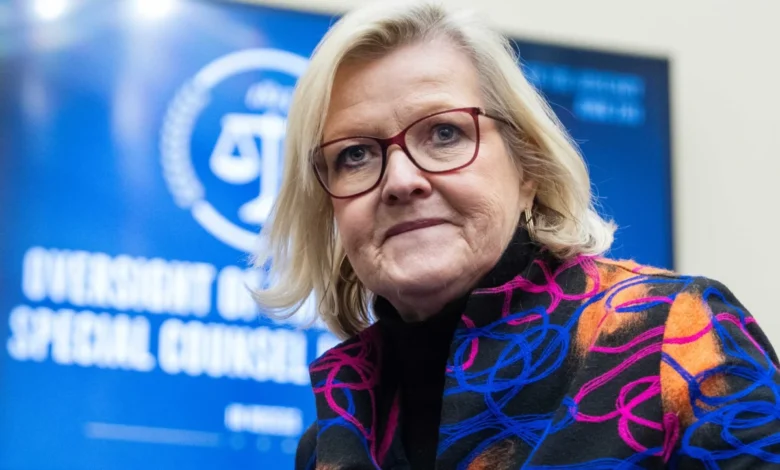
In July, mere days before President Donald Trump delivered a primetime address casting doubt on the sanctity of American electoral processes, conservative attorney Cleta Mitchell held a private video briefing that served as a quiet demonstration of her profound influence within the corridors of power. With nearly two dozen associates in attendance, the session signaled the degree to which Mitchell—who holds no official title in the federal government—has become a central figure in the administration’s strategy to overhaul the American voting system. This briefing was not an anomaly; it was an acknowledgment of her role as the primary strategist behind the movement to codify restrictive election laws and influence the bureaucratic machinery of the second Trump administration.

The rise of Mitchell, a veteran conservative lawyer, marks a significant shift in American political life. Since the 2020 election, she has moved from the margins of election-integrity advocacy to the very center of federal policymaking. Her organization, the Election Integrity Network (EIN), has successfully transitioned from a grassroots operation into a powerful clearinghouse for policy, personnel, and political strategy, effectively bridging the gap between populist sentiment and federal executive action.
A Chronology of Influence: From 2020 to the Second Term
Mitchell’s trajectory began long before her current prominence. A former Democratic state legislator in Oklahoma who underwent a political metamorphosis in the 1990s, Mitchell has spent decades refining her approach to the "art of political war." Her role in the 2020 election cycle was characterized by her intense efforts to challenge results in key swing states, most notably Georgia.

The turning point for her current influence occurred after the 2020 loss, when many mainstream Republican strategists sought to distance themselves from election-related conspiracy theories. Mitchell did the opposite. She founded the Election Integrity Network, creating a robust infrastructure designed to identify, mobilize, and direct activists toward local election boards and administrative positions. By the time of the 2024 election, this network had expanded its reach, successfully placing associates in critical roles across various states and, eventually, within the federal bureaucracy under the second Trump administration.
The Mechanics of the Election Integrity Network
The EIN operates as a sophisticated ecosystem. According to financial disclosures and tax filings analyzed by independent watchdogs, Mitchell has directed or influenced the distribution of more than $70 million into conservative policy shops, research firms, and legal advocacy groups between 2021 and 2025. This funding has been instrumental in normalizing the narrative that U.S. voting systems are fundamentally compromised, transforming once-fringe claims into a cornerstone of contemporary conservative platforming.

The network’s methodology relies on two pillars: technical expertise and grassroots mobilization. On regular video calls, EIN members discuss the nuances of voter roll maintenance, the security of voting machines, and the mechanics of ballot certification. While critics, including several former members, describe these meetings as echo chambers prone to hyperpartisan rhetoric, the practical output of the network has been significant. EIN-aligned activists have successfully lobbied for the banning of private election funding—a practice critics derisively label "Zuckerbucks"—and have pushed for the adoption of model legislation across multiple states that emphasizes documentary proof of citizenship for registration.
The Legislative Push: The SAVE America Act
The centerpiece of Mitchell’s current strategy is the Safeguard American Voter Eligibility (SAVE) America Act. The bill, which requires voters to provide documentary proof of citizenship to register, represents the legislative embodiment of Mitchell’s long-term goals. While initial iterations of the bill faced insurmountable hurdles in a divided Congress, the 2026 political landscape provided a more favorable climate.

The act serves as a primary tool for the administration’s broader agenda. By mandating that states utilize Department of Homeland Security (DHS) databases to verify voter eligibility, the legislation aims to shift the burden of proof from the state to the individual. Legal experts and voting rights advocates have warned that the high bar for documentation—such as requiring certified birth certificates or passports—could disenfranchise millions of eligible voters, particularly those in marginalized communities. Despite these warnings, the administration has doubled down, with the President identifying the bill as a top legislative priority.
Personnel and Policy: The "Through Line" of Governance
Mitchell’s influence is not limited to legislation; it extends to the very people tasked with implementing the administration’s policies. ProPublica’s review of federal appointments indicates that at least 25 officials in the current administration have direct ties to Mitchell or her network. These appointments are not incidental. They are strategically placed in departments—such as the Department of Homeland Security and the Department of Justice—that oversee the administration’s election-related investigations.

One prominent example is the appointment of Heather Honey, a former leader of the EIN’s Pennsylvania chapter, to a high-ranking position within the DHS. Her role has been central to the agency’s efforts to search for and prosecute alleged instances of noncitizen voting. Administration officials have defended these hires, citing the appointees’ expertise, but critics argue that the criteria for selection were rooted primarily in ideological alignment with Mitchell’s movement.
The Broader Impact and Existential Framing
The implications of Mitchell’s strategy are far-reaching. By framing the integrity of the voting process as an existential battle, she has successfully motivated a base of "election believers" who view the bureaucratic minutiae of election administration as the front line of a national conflict. This framing has made it difficult for moderate Republicans to find middle ground, as any deviation from the "integrity" agenda is frequently met with accusations of weakness or complicity.

However, the strategy has not been without its setbacks. Several court challenges have blocked the implementation of executive orders tied to Mitchell’s initiatives. Furthermore, the search for widespread noncitizen voting and the reinvestigation of 2020 irregularities have, to date, failed to produce the systemic evidence that the movement’s rhetoric suggests should exist. In Ohio, for example, a push for a version of the SAVE Act resulted in a gubernatorial veto, illustrating the limits of the "all-or-nothing" approach in states where legislative and executive priorities do not perfectly align.
The Future of the Movement
As the midterms approach, Mitchell’s urgency appears to be increasing. At 76, she has signaled to her network that the current political window is a "once-in-a-generation" opportunity. Her calls for the President to utilize emergency powers to secure voting infrastructure—powers she argues are already available under existing statutes—suggest a move toward even more aggressive, unilateral action.

For the observers who have tracked her career, Mitchell’s persistence is the most notable element of her legacy. Whether she is maneuvering through the state legislature in Oklahoma or coordinating with senior White House advisors, her methodology remains consistent: if one path is blocked, another is immediately pursued. As one voting advocate noted, she is not merely a lawyer or a lobbyist; she is a political operator who has successfully institutionalized a new approach to election administration that centers on skepticism and rigorous state-led verification.
The ultimate impact of this movement remains to be seen. If the goal is a complete overhaul of how ballots are cast and verified in the United States, Mitchell has already achieved a level of success that few in the field of election law ever reach. However, if the goal is to resolve the deep-seated disputes over the legitimacy of election results, the effect of her work may be to deepen the divides that have characterized American politics for the past decade. For now, the administration’s "blueprint" for election policy remains inextricably linked to her vision—a vision that prioritizes the, at times, volatile process of questioning the machinery of democracy over the preservation of existing norms.