Gerald R. Molen the Oscar-winning producer behind Steven Spielbergs Schindler’s List has died at age 91

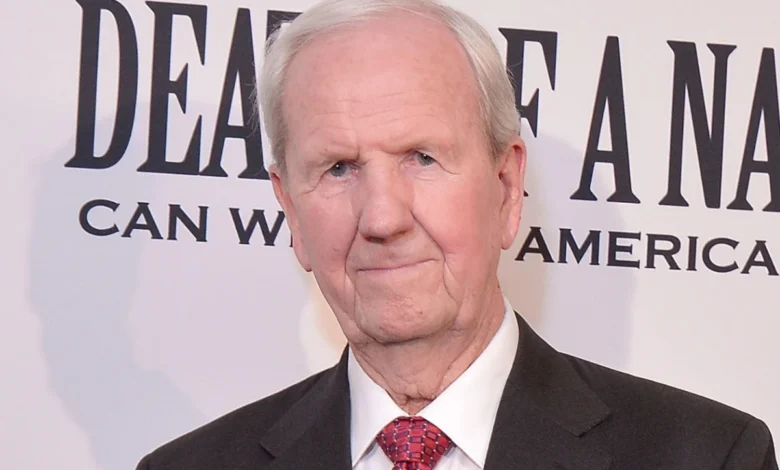
The motion picture industry is mourning the loss of Gerald R. Molen, a legendary producer whose career spanned decades and helped define the aesthetic and commercial success of modern American cinema. Molen, best known for his long-standing collaboration with director Steven Spielberg and his pivotal role in bringing some of the most iconic films of the 1990s to the screen, passed away at the age of 91. His death was confirmed on Sunday by his great-niece, Rachel Lorraine Pullan, who shared the news via a poignant post on social media.
“This morning my great-uncle, Gerald R. Molen, passed on to join my great-grandma and his dear wife Pat on the other side of the veil,” Pullan wrote. “I am so happy for him, and also so very sad. Uncle Jerry was a man of great moral character and high integrity. He started doing work, moving set pieces and driving at a movie studio and worked his way up to the position of producer.”
A Journey from the Lot to the Academy Stage
Born in Montana in 1935, Molen’s connection to the film industry was forged at a young age. In 1947, his family relocated to North Hollywood, where his parents, Gerald Sr. and Edith, operated a café located strategically adjacent to the Republic Pictures lot in Studio City. This proximity provided young Molen with an early look at the mechanics of Hollywood. Rather than entering through the traditional academic pipeline, he pursued a career in the trenches of film production, starting in entry-level roles as a driver and set laborer.
This hands-on experience provided him with a comprehensive understanding of logistics, a skill set that would later prove invaluable as he transitioned into the complex world of high-budget film production. His rise through the ranks is a testament to the classic Hollywood success story, moving from the physical labor of set maintenance to the executive decision-making roles that define the modern producer.
The Spielberg Partnership: A Defining Collaboration
Molen’s professional trajectory shifted dramatically in 1985 when he served as a unit production manager on Steven Spielberg’s The Color Purple. This engagement marked the beginning of a creative partnership that would dominate the box office for the next two decades. Impressed by Molen’s organizational acumen and dedication, Spielberg continued to work with him, first as an associate producer on the 1987 film batteries not included, which Spielberg executive produced.
The partnership reached its zenith in 1994 when Schindler’s List secured the Academy Award for Best Picture. As a producer, Molen shared the prestigious statue with Spielberg and Branko Lustig. The film is widely regarded as one of the most important cinematic explorations of the Holocaust, and its commercial and critical success solidified Molen’s reputation as a producer capable of balancing profound artistic sensitivity with the demands of large-scale production.
Following the success of Schindler’s List, Molen became a cornerstone of the Amblin Entertainment brand. He served as the primary producer for many of the studio’s most significant hits, including Jurassic Park (1993), which revolutionized the use of computer-generated imagery in cinema, and its sequel, The Lost World: Jurassic Park (1997). His portfolio with Amblin also included family-friendly staples and genre films such as Hook, The Flintstones, The Little Rascals, Little Giants, Casper, and Twister.
Chronology of a Prolific Career
Molen’s career can be categorized into three distinct phases: his early years of ground-level production, his mid-career ascent into executive production alongside Spielberg, and his later years as an independent producer and industry mentor.
- 1947–1984: The formative years in North Hollywood and initial roles in film production.
- 1985: Joined the crew of The Color Purple, establishing his relationship with Amblin Entertainment.
- 1993–1994: The watershed period featuring the releases of Jurassic Park and the Academy Award-winning Schindler’s List.
- 2000s–2010s: Continued to produce diverse projects including Minority Report (2002), Just Like Heaven (2005), and the recent The Meg (2018) and Meg 2: The Trench (2023).
- 2024: The passing of his wife, Pat, in January, followed by his own death later that year.
Beyond the Amblin Brand
While his name is synonymous with the Spielberg era, Molen’s filmography reflects a broad range of interests. He contributed to the success of Barry Levinson’s Rain Man (1988), a film that won the Academy Award for Best Picture and established a new standard for character-driven dramas in the late 1980s. He also collaborated on Tony Scott’s high-octane Days of Thunder (1990), demonstrating his versatility across different genres.
In the latter part of his career, Molen remained active, moving into modern action and family entertainment. His work on the Meg franchise showcased his ability to adapt to the evolving demands of global box office markets, proving that his foundational knowledge of film production remained relevant even as the industry shifted toward heavy digital effects and international distribution models.
Industry Impact and Legacy
The passing of Gerald R. Molen signals the end of an era for many who worked in the studio system during the late 20th century. As a producer, he was often credited with maintaining stability on set, a role that is frequently invisible to audiences but essential to the successful delivery of complex motion pictures.
The logistical complexity of films like Jurassic Park required a producer with immense discipline. During the mid-1990s, the production of films with massive budgets and heavy reliance on emerging technology was fraught with risk. Molen’s ability to navigate these challenges helped pave the way for the current era of blockbuster cinema. By managing the friction between creative vision and budgetary reality, he ensured that projects were not only finished but were also executed with high production values.
Personal Context and Final Reflections
The loss of Molen comes shortly after the passing of his wife, Pat, who died in January 2024 at the age of 86. Their marriage, which lasted nearly 70 years, was described by those close to the family as a source of immense strength for the producer. The sentiment expressed by his great-niece, Rachel Lorraine Pullan, underscores a life defined not just by professional accolades but by the personal values of integrity and hard work.
In the industry, Molen was often described as an "old-school" producer—someone who understood the value of every dollar spent on a production and the importance of supporting the creative staff, from the carpenters building sets to the directors behind the camera. His life, moving from the café next to the Republic Pictures lot to the stage of the Dolby Theatre, mirrors the aspirational arc of the film industry itself.
The Broader Implications for Hollywood
The death of figures like Molen provides a moment for the film industry to reflect on the changing nature of production. As cinema moves toward more automated and digitally driven workflows, the role of the traditional producer—one who manages the human and physical elements of a film set—is evolving. Molen represented a generation of producers who balanced the artisanal aspects of filmmaking with the industrial requirements of a global studio system.
The films he produced—Schindler’s List, Jurassic Park, Rain Man—remain touchstones of cultural history. Schindler’s List continues to be used in educational settings to convey the gravity of the Holocaust, while Jurassic Park remains a masterclass in tension and special effects. These films are part of the permanent record of global cinema, and Molen’s contribution to their existence is a significant part of his enduring legacy.
As the industry moves forward, the "Molen model" of collaborative, hands-on production will likely continue to serve as a standard for future generations of filmmakers. His journey from a studio driver to an Oscar-winning producer is a narrative that remains central to the identity of Hollywood: a place where, theoretically, anyone with enough dedication and integrity can influence the global cultural landscape.
Gerald R. Molen’s contributions to the art and business of film are indelible. While the industry continues to evolve, the impact of his work will persist through the enduring popularity of the films he shepherded and the standard of professional excellence he set for his peers and successors. He leaves behind a legacy of high-stakes filmmaking that prioritized both the moral weight of historical storytelling and the sheer wonder of the cinematic experience.
Related posts: