Colleges and K-12 Schools Across the United States Pivot Toward Counter-Narratives and Alternative Programming on Thanksgiving

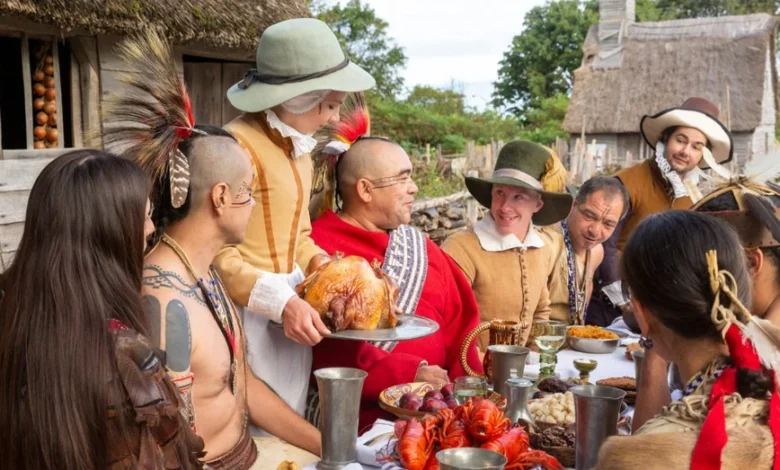
For generations, Thanksgiving has occupied a central space in the American cultural calendar, traditionally celebrated as a national holiday dedicated to family gatherings, gratitude, and a shared historical reflection on the early interactions between European settlers and Indigenous peoples. However, a growing ideological shift is underway across educational institutions in the United States. Rather than focusing exclusively on the traditional narrative of the 1621 Plymouth harvest feast, an increasing number of colleges, universities, and K-12 school districts are utilizing the November holiday to re-examine American history through an intersectional and post-colonial lens.
In academic settings from coast to coast, official campus programming, administrative resource guides, and student-led events are increasingly framing Thanksgiving not merely as a day of national unity, but as a complex commemoration tied to settler colonialism, cultural erasure, and historical trauma. While proponents of these alternative events argue that inclusivity requires acknowledging the darker chapters of American expansion, critics contend that the systematic framing of Thanksgiving as a day of mourning or guilt undermines shared national traditions and fosters unnecessary division.
The Rise of Alternative Campus Programming
Throughout November, coinciding with both Native American Heritage Month and the approach of the Thanksgiving holiday, higher education institutions have introduced a wave of alternative events, panel discussions, and curriculum guides that challenge the traditional historical consensus.
On November 18, George Washington University served as the host for a student-life event titled "Breaking Bread: The Cost of Celebration." According to university documentation, the program was designed to encourage students to analyze major American holidays—specifically Thanksgiving, Christmas, and Independence Day—through an intersectional framework. The event’s curriculum directed participants to explore themes of belonging, exclusion, cultural erasure, and historical harm. Through facilitated dialogue and shared reflections, organizers stated that students engaged in discussions regarding historical memory and the social responsibilities inherent in celebrating cultural traditions within a diverse society.
Similarly, the University of Wisconsin at Milwaukee hosted an event on November 17 organized by the American Indian Student Center and the Electa Quinney Institute for American Indian Education. Titled "AlterNative Giving," the community gathering was established to offer an alternative to the conventional Thanksgiving narrative. Organizers emphasized that rather than focusing on colonial histories, the gathering sought to honor Indigenous ways of knowing, being, and giving.
Other institutions have gone a step further by officially designating or promoting the holiday as a "Day of Mourning." Salem State University in Massachusetts published statements on its official website explicitly acknowledging that the campus occupies the traditional and ancestral homeland of the Massachusett tribe. The university’s communication noted historical grievances, pointing directly to the forced removal and what it termed the genocide of the local Indigenous population from their seasonal home in Nêmkek, linking these historical realities directly to the period surrounding the national holiday.
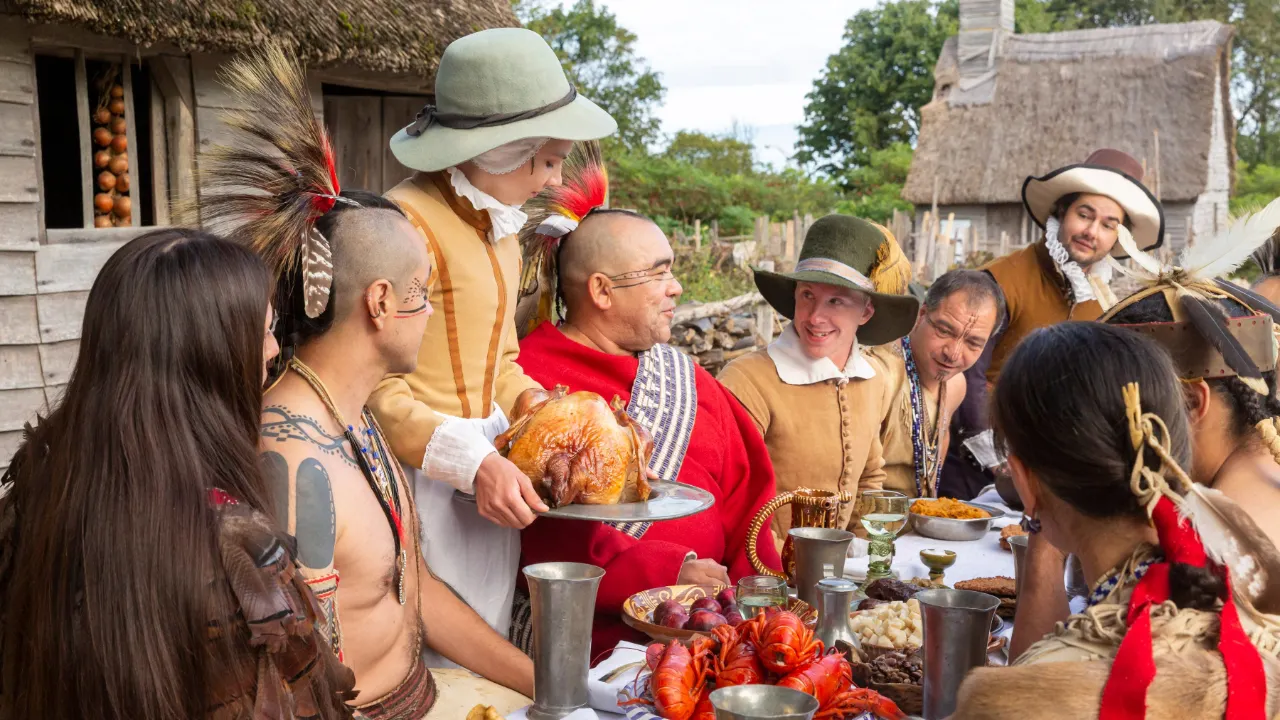
In a similar vein, Occidental College’s resource guides for religious and spiritual holidays characterize Thanksgiving as a direct reminder of settler colonialism and its devastating long-term impacts on Indigenous individuals, communities, and sovereign tribes. The Pratt Institute in New York and the University at Albany have likewise integrated references to the "National Day of Mourning" into their institutional calendars, either alongside or in place of traditional Thanksgiving observances.
Expansion into K-12 Education and Public School Districts
The re-evaluation of Thanksgiving is not confined to institutions of higher learning; it has increasingly permeated public K-12 education, generating significant debate among parents, school boards, and local communities.
In Loudoun County, Virginia, public school lesson plans have recently drawn intense public scrutiny. Local parents voiced strong objections during school board meetings and media interviews regarding classroom materials that introduce young students to concepts framing Thanksgiving as a day associated with mourning rather than celebration. Critics argue that introducing such complex historical guilt to elementary school children is developmentally inappropriate and distances students from foundational civic narratives.
Conversely, public education authorities in various other jurisdictions have defended the integration of diverse perspectives. The San Diego County Office of Education published guidance noting that while November is recognized as Native American Heritage Month—a time to honor the history and living cultures of Native peoples—it also coincides with Thanksgiving, a holiday that "carries very different meanings for different people, including many Native communities."
In Oregon, the Bethel School District has incorporated resources such as "Decolonizing Thanksgiving: A Toolkit for Combatting Racism in Schools" directly into its official Equity, Access, and Inclusion web pages. The toolkit is provided as a professional development and teaching resource for educators seeking to address historical narratives surrounding the holiday.
Historical Context and the Evolution of the Holiday
To understand the current ideological friction surrounding Thanksgiving, it is necessary to examine the historical evolution of the holiday itself. The modern concept of Thanksgiving draws heavily from the autumn of 1621, when English colonists—commonly referred to as Pilgrims—at the Plymouth Colony in present-day Massachusetts shared a harvest feast with members of the Wampanoag Nation, who had provided crucial agricultural and survival assistance to the struggling settlement.
For centuries, the holiday was observed sporadically and on varying dates, championed largely by figures like magazine editor Sarah Josepha Hale, who campaigned for decades to make it a unified national observance. In 1863, at the height of the American Civil War, President Abraham Lincoln issued a national proclamation establishing Thanksgiving as a regular holiday to be observed on the final Thursday of November, explicitly framing it as a time for national healing, gratitude, and unity.
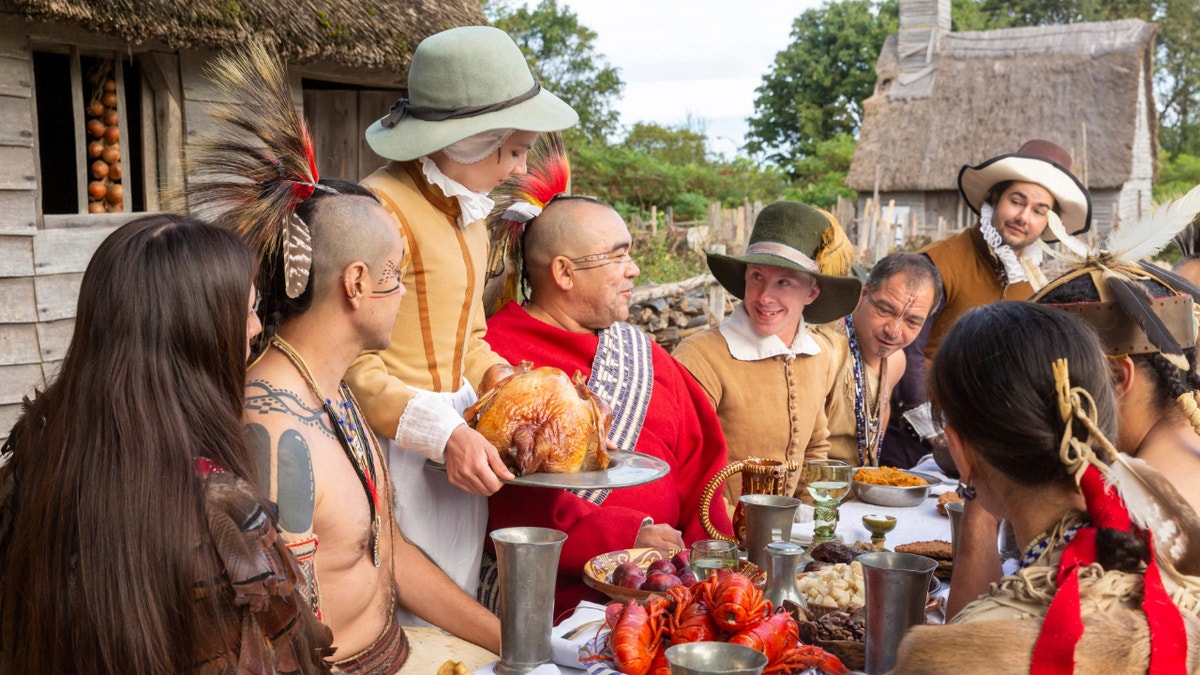
In 1970, amidst the rise of modern Indigenous activism and the Red Power movement, the United American Indians of New England declared the Thanksgiving holiday a "National Day of Mourning," holding an annual protest at Cole’s Hill in Plymouth, Massachusetts. Over the subsequent decades, this perspective has gradually transitioned from external political activism into mainstream institutional frameworks, finding a receptive audience within the diversity, equity, and inclusion (DEI) structures of contemporary American universities and school districts.
Broader Implications and Public Debate
The growing prevalence of alternative Thanksgiving narratives has ignited a broader national debate concerning cultural identity, institutional neutrality, and the primary functions of public education.
Supporters of these institutional shifts argue that modern historical scholarship requires a comprehensive and unvarnished examination of America’s past. Proponents maintain that recognizing the displacement, disease, and conflict experienced by Indigenous populations following European contact does not necessarily negate gratitude, but rather deepens historical literacy by incorporating marginalized perspectives into the national consciousness. From this viewpoint, fostering critical discussions on campuses and in classrooms is essential for building a more inclusive and historically accurate society.
On the other hand, critics and conservative commentators argue that the pervasive institutional critique of Thanksgiving represents an ideological overreach that undermines national cohesion. Organizations and watchdogs monitoring higher education have increasingly pointed to these events as evidence of a lingering, partisan-driven shift within university administrations that prioritizes grievance over shared cultural traditions. Critics assert that framing foundational national holidays through an exclusively negative lens alienates students, erodes civic pride, and replaces traditional shared values with divisive political frameworks.
As these alternative observances continue to expand across school calendars and university syllabi, the cultural battleground over Thanksgiving illustrates a deeper, ongoing struggle regarding how Americans interpret their shared history, define national identity, and transmit cultural heritage to future generations.