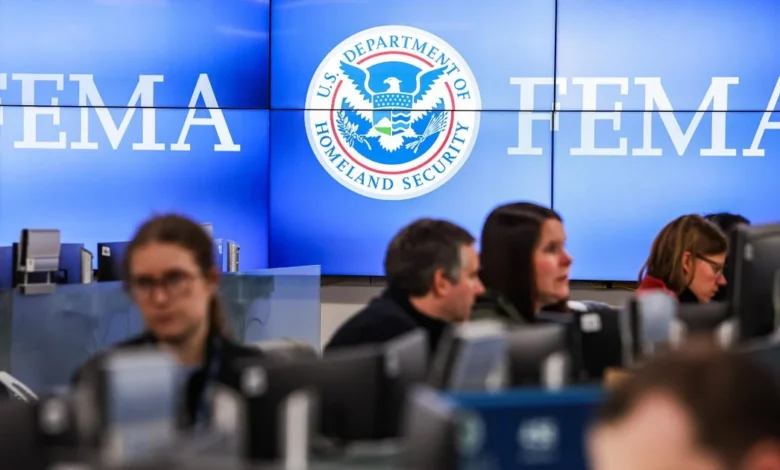
A formidable coalition of 25 states and the District of Columbia has launched a federal lawsuit against the Federal Emergency Management Agency (FEMA) and the Department of Homeland Security (DHS), accusing the Trump administration of leveraging hundreds of millions of dollars in critical disaster-preparedness and homeland security grants to coerce states into adopting its contentious policies on election administration and immigration enforcement. Filed on July 23, 2026, the complaint alleges a calculated pressure campaign that threatens to undermine public safety and state sovereignty by unlawfully withholding funds explicitly allocated by Congress for emergency response and security initiatives.
The legal challenge centers on a series of new conditions unilaterally imposed by the federal agencies on the Homeland Security Grant Program (HSGP) awards. These mandates, which states argue are largely extraneous to the core objectives of the grants, include requirements for states to verify voter citizenship through a federal database, transition towards the exclusive use of hand-marked paper ballots in elections, conduct federally prescribed election audits, and significantly enhance cooperation with federal immigration enforcement efforts. The plaintiffs contend that these conditions represent an unprecedented federal overreach, blurring the lines between federal funding for emergency management and politically charged policy directives.
The Heart of the Dispute: Conditional Funding and Federal Overreach
The lawsuit articulates that the Trump administration, through FEMA and DHS, has fundamentally altered the long-standing framework of federal-state partnerships in critical security areas. The HSGP, a cornerstone of national preparedness, provides essential funding for a diverse array of programs crucial for safeguarding communities. This includes, but is not limited to, supporting first responders, funding bomb squads, enhancing cybersecurity defenses, bolstering disaster response capabilities, and ensuring security at houses of worship and other vulnerable sites. The estimated financial impact of the administration’s new conditions is substantial, with the plaintiff states alone facing a potential withholding of at least 20% of their HSGP awards, totaling approximately $148 million. Furthermore, the complaint warns that continued non-compliance could lead to the complete termination of entire grant awards, a prospect that emergency management officials across the nation view with grave concern.
The states argue that the imposition of these conditions not only constitutes an unlawful attempt to dictate state policy but also jeopardizes the very programs designed to protect American citizens from a range of threats, from natural disasters to acts of terrorism. Rhode Island Attorney General Peter F. Neronha, a co-leader of the case, encapsulated this sentiment in a powerful statement announcing the suit. He accused the Trump administration of "threatening to jeopardize public safety by unlawfully withholding billions in critical funding." Neronha emphasized, "Congress allocated these funds to the states for preparing for and responding to emergencies including counterterrorism and natural disasters, and the executive branch has no legal say in the matter. Federal emergency funding cannot and will not be held hostage from states."
Beyond the specific mandates, the lawsuit also targets language within the new federal guidelines that would grant FEMA the authority to cancel grants that no longer align with the administration’s "changing priorities" or its evolving view of the "national interest." The states contend that such broad, discretionary power would render multi-year federal awards unreliable, injecting an unacceptable level of uncertainty into long-term planning for critical infrastructure and emergency services. They further argue that this authority would effectively give the executive branch unchecked power to redirect spending that has already been approved and appropriated by Congress, thereby circumventing legislative intent and control.
Financial Stakes and Programmatic Impact
The potential loss of $148 million from the plaintiff states, representing just a fraction of the total national HSGP allocation, underscores the significant financial leverage the federal government is attempting to exert. For many states, HSGP funds are indispensable, forming the backbone of their emergency preparedness and response strategies.
- First Responders: A substantial portion of HSGP funds supports training, equipment, and personnel for police, fire, and emergency medical services. Reduced funding could mean fewer specialized units, outdated equipment, and slower response times during crises.
- Cybersecurity: In an era of escalating digital threats, these grants are vital for protecting state and local government networks, critical infrastructure, and election systems from cyberattacks. A 20% reduction could leave states more vulnerable to data breaches, ransomware, and electoral interference.
- Disaster Response: From hurricanes and wildfires to floods and pandemics, states rely on HSGP for resources to plan for, mitigate, and recover from natural and man-made disasters. Withholding these funds could directly impact the speed and effectiveness of relief efforts, potentially costing lives and exacerbating economic damage.
- Anti-Terrorism Measures: HSGP supports counterterrorism intelligence sharing, specialized tactical teams, and security enhancements for high-risk targets. Cuts could weaken a state’s ability to prevent and respond to terrorist threats.
- Community Security: Funds allocated for security at houses of worship, community centers, and other public venues are critical for protecting vulnerable populations and fostering a sense of safety.
The chilling prospect of entire grant terminations looms large, threatening to dismantle years of accumulated preparedness capacity. State emergency management agencies, already operating on tight budgets, would be forced to make impossible choices, potentially cutting essential services or deferring critical upgrades.
Legal Framework of the Challenge: APA and the Spending Clause
The lawsuit grounds its arguments in two fundamental pillars of administrative and constitutional law: the Administrative Procedure Act (APA) and the Spending Clause of the U.S. Constitution.
- The Administrative Procedure Act (APA): The APA governs the process by which federal agencies develop and issue regulations. States argue that FEMA and DHS likely failed to adhere to the APA’s requirements for public notice and comment when implementing these new conditions. If the agencies bypassed these procedural safeguards, the states could successfully argue that the conditions are arbitrary, capricious, an abuse of discretion, or otherwise not in accordance with law, making them legally invalid. This challenge typically focuses on the process of rulemaking rather than the substance.
- The Spending Clause of the U.S. Constitution: Article I, Section 8, Clause 1 of the Constitution grants Congress the power to "lay and collect Taxes, Duties, Imposts and Excises, to pay the Debts and provide for the common Defence and general Welfare of the United States." This power allows Congress to attach conditions to the receipt of federal funds by states, influencing state policy in areas where Congress might not have direct regulatory authority. However, this power is not unlimited. The Supreme Court has established several tests for valid spending conditions, most notably in South Dakota v. Dole (1987). These conditions must:
- Be in pursuit of the general welfare.
- Be unambiguous, allowing states to knowingly accept or reject them.
- Be related to the federal interest in the particular national projects or programs being funded.
- Not violate other constitutional provisions (e.g., the Bill of Rights).
- Not be unduly coercive, effectively forcing states to accept federal policy against their will, as established in NFIB v. Sebelius (2012) regarding Medicaid expansion.
The plaintiff states contend that the Trump administration’s conditions – particularly those pertaining to election administration and immigration enforcement – fail the crucial "relatedness" test. They argue that requiring states to verify voter citizenship through a federal database or adopt specific ballot types bears little direct relation to the federal interest in ensuring states are prepared for natural disasters or terrorist attacks, which are the explicit purposes of the HSGP. Furthermore, they may argue that the magnitude of the threatened withholding (up to 20% or even 100% of critical funds) rises to the level of "undue coercion," infringing upon states’ sovereign right to manage their own elections and determine their level of cooperation with federal immigration policies. This legal battle promises to be a significant test of federalism and the limits of executive power in leveraging federal funds.
A Coalition of States: The Plaintiffs’ Stand
The lawsuit, filed in a federal court in Rhode Island, reflects a broad and diverse coalition of states, albeit one predominantly led by Democratic attorneys general and governors. The plaintiffs include the attorneys general from Arizona, California, Colorado, Connecticut, Delaware, Hawaii, Illinois, Maine, Maryland, Massachusetts, Michigan, Minnesota, Nevada, New Jersey, New Mexico, New York, North Carolina, Oregon, Vermont, Virginia, Washington, Wisconsin, and the District of Columbia. Notably, the governors of Kentucky and Pennsylvania have also joined the suit, indicating bipartisan concern over the federal mandates, especially regarding the impact on critical state services.
This collective action underscores a deep-seated apprehension among state leaders regarding the erosion of state autonomy and the politicization of essential federal aid. Attorney General Neronha’s assertion that federal funding "cannot and will not be held hostage" resonates with a broader principle of cooperative federalism, where the federal government provides resources without dictating internal state governance on unrelated matters. The states are asking a federal judge to block the conditions, void them nationwide as applied to the plaintiffs, and compel FEMA and DHS to release the funding documents without the contested stipulations.
The Administration’s Defense: "Common-Sense Measures"
In response to the lawsuit, a FEMA spokesperson swiftly issued a statement to CBS News, dismissing the legal challenge as "partisan pushback" from "left-wing politicians." The spokesperson defended the new requirements as "common-sense measures designed to protect election security and safeguard the integrity of American democracy." The statement further clarified, "This year, states must take critical, common-sense steps to protect U.S. elections before receiving their full Homeland Security Grant Program awards. These new requirements will preserve election integrity."
This official response clearly frames the administration’s position as a necessary action to address perceived vulnerabilities in the nation’s electoral systems and to ensure consistent immigration enforcement across all states. The language employed – "election security," "integrity of American democracy," "preserve election integrity" – aligns with recurring themes from the Trump administration regarding voter fraud allegations and the need for stricter controls. From the administration’s perspective, the federal interest in securing national elections and enforcing immigration laws is paramount, and therefore, attaching conditions to federal grants, even those primarily focused on disaster preparedness, is a legitimate exercise of executive authority. They would likely argue that a robust democracy and secure borders are foundational elements of national security, thus making the conditions sufficiently "related" to the overall mission of homeland security.
Background and Context: Federalism in Flux
The current legal confrontation is not an isolated incident but rather the latest flashpoint in a long-standing tension between federal power and state sovereignty, a dynamic known as federalism. Throughout U.S. history, federal grants-in-aid have been a primary mechanism for the federal government to encourage states to adopt policies aligned with national objectives, from highway construction standards in the 1950s to environmental regulations in the 1970s and healthcare expansion in the 21st century. While the Supreme Court has generally upheld Congress’s ability to attach conditions to federal funds, it has also set limits, particularly against coercion.
The Trump administration’s tenure has been marked by a consistent effort to assert federal authority, particularly in areas like immigration and election administration, often clashing with states that have adopted divergent policies. The push for voter citizenship verification, hand-marked paper ballots, and federally prescribed audits aligns with a broader national debate, frequently fueled by unsubstantiated claims of widespread voter fraud, that has sought to reform election processes. Similarly, the demand for increased cooperation with federal immigration enforcement reflects the administration’s aggressive stance on border security and interior enforcement, often placing states and localities in direct conflict with federal mandates, especially those operating "sanctuary" policies.
This lawsuit thus represents a critical test of whether the executive branch can unilaterally impose such wide-ranging policy conditions on unrelated federal grants, or if such actions constitute an overreach that violates constitutional principles of federalism and the separation of powers.
Potential Implications and Broader Impact
The outcome of this lawsuit carries profound implications for the future of federal-state relations, public safety, and the balance of power within the American governmental system.
- Public Safety Risks: Should the states fail to secure an injunction and the funding cuts proceed, the immediate consequence could be a tangible degradation of public safety services. State and local agencies, already stretched thin, would be forced to divert resources, potentially compromising their ability to respond effectively to emergencies, protect against cyber threats, or prepare for natural disasters. This could have real-world impacts on citizens’ lives and safety.
- Precedent for Federalism: A ruling in favor of the administration could establish a dangerous precedent, emboldening future federal administrations to use funding leverage to dictate state policy across an even wider array of issues, regardless of direct programmatic relevance. Conversely, a victory for the states would reinforce the limits of federal conditional spending power and bolster state autonomy.
- Political Ramifications: The lawsuit deepens the political chasm between the administration and a significant bloc of states. It could intensify partisan disputes over election administration and immigration, potentially leading to further legal battles and legislative stalemates. The judicial system is increasingly becoming the battleground for these fundamental political disagreements.
- Judicial Review and Appeals: Given the high stakes, any initial ruling is likely to face appeals, potentially reaching the Supreme Court. The ultimate decision could reshape the interpretation of the Spending Clause and the APA for decades to come, affecting how federal funds are distributed and conditioned across all sectors.
- Future of Grant Programs: The dispute may prompt Congress to review and potentially revise the language and structure of federal grant programs to prevent similar weaponization of funds in the future, perhaps by adding explicit prohibitions against conditions unrelated to the grant’s core purpose.
Chronology of Events Leading to the Lawsuit (Inferred)
While the exact timeline of policy development is not fully detailed, a plausible sequence of events leading to the July 23, 2026, filing can be inferred:
- Late 2025 / Early 2026: The Trump administration, through DHS and FEMA, likely announced the new conditions for the Fiscal Year 2026 Homeland Security Grant Program awards. These announcements would typically come with guidance documents or policy directives.
- Spring 2026: States, upon reviewing the new conditions, begin to raise concerns internally and with federal agencies. Initial objections and attempts at negotiation or clarification likely occurred, revealing the federal government’s firm stance on the new mandates.
- Early Summer 2026: As the deadlines for grant applications or fund disbursements approach, and with federal agencies indicating a willingness to enforce the conditions through withholding, states realize the impasse. The coalition of attorneys general and governors begins to coalesce, strategizing a unified legal response.
- July 23, 2026: The coalition of 25 states and the District of Columbia formally files the lawsuit in a federal district court in Rhode Island, seeking immediate relief to block the conditions and secure the release of vital funds.
This legal battle represents a critical moment for American federalism, challenging the boundaries of executive authority and the integrity of a system designed to ensure national security and emergency preparedness through cooperative federal-state action. The outcome will undoubtedly have lasting repercussions on how federal aid is disbursed and whether it can be used as a tool to dictate state policy on unrelated matters.