Chiwetel Ejiofor Reflects on a Storied Career and the Unpredictable Nature of Cinema at the Torino Film Festival

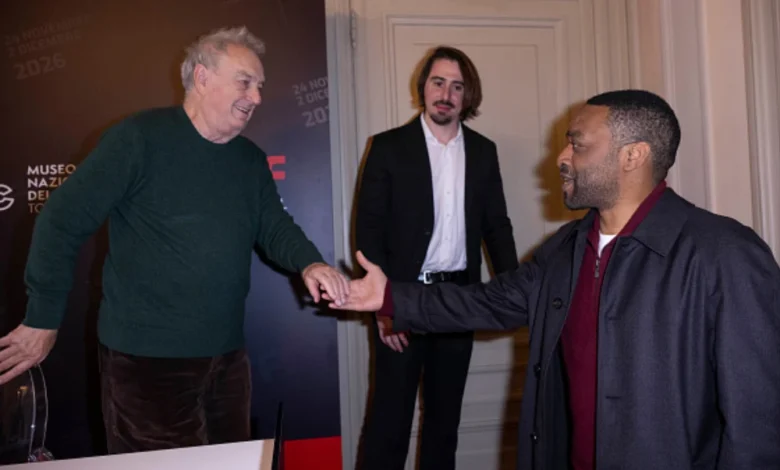
The trajectory of an acting career is rarely a straight line, a reality that British performer Chiwetel Ejiofor understood from the very moment he stepped onto a professional film set. While many actors spend decades working toward a high-profile debut, Ejiofor’s introduction to the cinematic medium was as prestigious as it was daunting. His inaugural film credit came under the direction of Steven Spielberg in the 1997 historical drama Amistad. For a young actor, such a commencement could easily be perceived as a career-long hurdle—a peak reached before the climb had truly begun.
During a recent appearance at the Torino Film Festival, where he was honored with the Stella della Mole award for his significant contributions to the arts, Ejiofor opened up about the existential anxiety that defined his early years. Addressing an audience in Italy, he noted that the experience of working with a legendary filmmaker immediately out of the gate forced him to reconcile with the inherent volatility of the entertainment industry.
The Paradox of an Early Peak
"I was definitely worried about it at the time," Ejiofor admitted regarding his debut. "You feel that there are stages to how you develop as an actor and the opportunities you get, and you think they might follow a very linear path. But of course, my first film role was with Steven Spielberg. I realized then, very early on, that it’s a deeply unpredictable profession."
This realization—that success in film is neither guaranteed nor strictly progressive—became a guiding philosophy for Ejiofor. Rather than succumbing to the anxiety of "peaking too soon," he adopted a perspective of flexibility. He describes the profession as a series of sporadic opportunities emerging from unpredictable angles. The capacity to "roll with it" has allowed him to navigate a career that spans gritty independent thrillers, massive blockbusters, and intense Shakespearean drama.
A Foundation in Theater
Despite the early success of Amistad, Ejiofor did not immediately pivot toward a full-time career in front of the camera. For much of the late 1990s and early 2000s, he remained firmly rooted in the British theater circuit. His training and early professional identity were forged in the National Theatre and various West End productions.
This devotion to the stage culminated in a landmark achievement in 2008, when he received the Laurence Olivier Award for Best Actor for his portrayal of Othello. This period of his life is essential to understanding his craft; his theater background instilled a discipline and a respect for the "rhythm and poetry" of performance that he would later translate to film.
The Cinematic Turning Point: Dirty Pretty Things
The shift in Ejiofor’s self-perception from "theater actor who does film" to "cinematic storyteller" occurred in the early 2000s, largely due to his collaboration with director Stephen Frears on the 2002 thriller Dirty Pretty Things. The film, which also screened at this year’s Torino Film Festival alongside a tribute to Frears, served as a catalyst for Ejiofor’s creative evolution.
"I think it was around that time when I started to fall in love with film as well, with film acting and the rhythm and poetry of cinema," Ejiofor explained. "A lot of that had to do with Stephen Frears and Chris Menges, who was the cinematographer on that film. It became something that I started to pursue."
This period represents a critical juncture in the actor’s timeline. By balancing high-caliber stage work with increasingly complex film roles, Ejiofor established himself as one of the most versatile actors of his generation. His filmography began to swell with performances that demanded both intellectual depth and emotional vulnerability.
Expansion into Writing and Directing
In recent years, Ejiofor has transitioned from a purely interpretive role to a creative one, taking on the responsibilities of writing and directing. His directorial efforts—The Boy Who Harnessed the Wind (2019) and Rob Peace (2024)—signal a new phase in his career. This move behind the camera has naturally impacted his availability for stage work, as the production demands of feature films are significant.
"It was when I became more involved in writing and directing that it started taking up a lot of my time outside of acting in films," he noted. "Historically, this would have been the time I spent on stage." Despite this, he maintains that his passion for the theater remains undiminished. He is currently in negotiations for a return to the stage, which he hopes to materialize by late 2025.
The Cultural Impact of 12 Years a Slave
No retrospective of Ejiofor’s career would be complete without addressing his performance as Solomon Northup in Steve McQueen’s 2013 masterpiece, 12 Years a Slave. The film, which was also featured at the Torino Film Festival, serves as a testament to the actor’s ability to shoulder the weight of profound historical narratives.
Recalling the script, Ejiofor stated, "I hadn’t heard of his story at all. When I was sent the script, I was incredibly moved and shocked by it. Then I read Northup’s own memoir. I thought it was an extraordinary story, an extraordinary tale."
The film, which garnered universal acclaim and won the Academy Award for Best Picture, provided a platform for Ejiofor to examine a "tragic period of absence of humanity." His partnership with Steve McQueen proved to be a defining moment in both men’s careers. Ejiofor lauded the director’s "phenomenal" attention to detail and his "cinematic heart," emphasizing that despite the horrific subject matter, the film’s core message was one of "human respect and human dignity."
Analysis: A Career of Sustained Excellence
Fact-based analysis of Ejiofor’s career trajectory reveals a deliberate avoidance of typecasting. While many actors who debut in massive studio productions like Amistad are often funneled into similar roles, Ejiofor’s choices have been characterized by geographical and genre-based diversity. From his work in the Marvel Cinematic Universe as Mordo to his intimate portrayals in British independent cinema, he has maintained a high degree of artistic autonomy.
The Torino Film Festival’s decision to honor him with the Stella della Mole is a recognition of this sustained excellence. The award, named after the iconic Mole Antonelliana building in Turin, is given to individuals who have made an indelible mark on the film industry. Ejiofor’s inclusion in this group highlights his transition from a promising newcomer to a global cultural figure.
Future Implications and Professional Outlook
As Ejiofor moves into the next phase of his career, the industry is watching to see how he manages the balance between his directorial ambitions and his acting commitments. His ability to move seamlessly between the intimacy of the theater, the precision of film directing, and the demands of global blockbusters is a rare skill set.
His upcoming plans to return to the stage, combined with his continued work as a filmmaker, suggest that he is entering a period of "creative synthesis." Rather than choosing between the stage and the screen, he is increasingly integrating the lessons learned from each.
The predictability of an actor’s path may be a myth, but as Chiwetel Ejiofor’s career demonstrates, that lack of predictability can be an asset. By embracing the "journey of it," he has managed to build a body of work that is as coherent in its quality as it is diverse in its execution. As he looks toward his next theater project and his future directorial endeavors, he remains a figure defined not by his early peak, but by his consistent ability to reach new heights of performance.
Related posts: