Garth Brooks and Sevens Network LLC to Acquire Nashville’s 100.1 FM Frequency for New Country Radio Venture

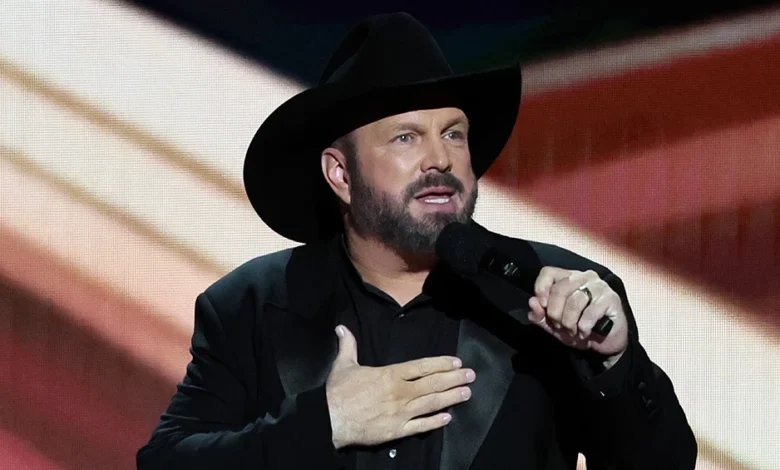
In a significant shakeup of the Nashville broadcast landscape, country music icon Garth Brooks has announced that his company, Sevens Network, LLC, has reached an agreement to acquire the broadcast frequency currently held by the legendary independent station WRLT-FM, known as Lightning 100. The move marks a pivotal shift for the Nashville airwaves, as Brooks intends to launch a new, community-focused country music station on the 100.1 FM dial. This transition, which remains subject to Federal Communications Commission (FCC) approval, is designed to preserve the legacy of Lightning 100 while simultaneously creating a platform that aims to redefine how country music is curated and presented to both local residents and a global audience.
The Genesis of the Acquisition: A Misunderstood Digital Plea
The impetus for this deal is as unusual as it is serendipitous. According to Brooks, the idea for the acquisition was sparked in 2025 after he encountered an old social media post from Lightning 100 that carried the urgent headline: "Save Our Station." While the plea was originally circulated during the height of the COVID-19 pandemic nearly six years prior, Brooks initially believed the distress call to be current.
Driven by a desire to establish a radio presence that could serve as a vital information hub for Nashville’s growing population and its steady influx of tourists, Brooks began exploring the possibility of acquiring the signal. Upon realizing the nuance of the situation—that he was essentially a country music star looking to purchase a station synonymous with indie-rock—Brooks sought a solution that would serve both his vision and the existing station’s future. The resulting plan allows Tuned In Broadcasting, the current owners of Lightning 100, to divest the 100.1 frequency while migrating their respected adult-alternative format to new signals under a partnership with Cromwell Media, specifically 106.3 FM and 102.5 FM HD3.
Strategic Vision for the New Frequency
The forthcoming station, colloquially referred to as FM-100, is positioned as a departure from the traditional industry-standard radio model. Brooks has explicitly stated that his station will not function as a "reporting" station. In the radio industry, a reporting station is one that tracks its playlist and airplay metrics to submit to trade publications and chart-tracking services. By opting out of this system, Brooks intends to bypass the rigid, often repetitive playlist structures that dominate contemporary commercial country radio.
Instead, the station aims to serve as a comprehensive, human-curated service for Music City. The programming philosophy is built on three pillars: community integration, gender equity in airplay, and the celebration of the genre’s entire historical timeline. Brooks emphasized that the station is designed to be a "service to Music City and its businesses," prioritizing local information, emergency updates, and the needs of the Nashville community over the pressures of industry chart-topping hits.
Addressing the Gender Imbalance in Country Radio
A central component of Brooks’ mandate for the new station is the active correction of the gender disparity that has long plagued country music radio. Academic studies and industry reports have consistently shown that female artists receive significantly less airplay on mainstream country radio than their male counterparts. This trend, often referred to as "radio’s glass ceiling," has been a point of contention for activists and artists within the genre for years.
Brooks’ statement on the matter is clear: "We need both sides telling the story of country music." The station’s programming will intentionally feature female artists spanning from the 1960s to contemporary stars. By weaving the work of trailblazing women alongside the current generation of female talent, the station seeks to normalize a balanced listening experience, ensuring that listeners are exposed to the full breadth of the genre’s history and future potential.
The Role of Live Radio in an Automated Age
Beyond the music, Brooks has expressed frustration with the prevalence of pre-recorded, nationalized programming that has become a staple of modern FM radio. In many markets, listeners are greeted by syndicated shows that lack local relevance, particularly during times of crisis. Brooks views the new FM-100 as a necessary antidote to this trend, emphasizing the importance of "live information in real time from actual humans."
This commitment to live broadcasting is a direct response to the needs of local residents who require immediate, accurate, and localized information during emergency situations. By anchoring the station in Nashville, Brooks intends to foster a sense of connection that automated, non-local broadcasts cannot replicate. While the immediate goal is to "super-serve" the residents of Nashville and its visitors, Brooks holds long-term aspirations of scaling the project into a 24-hour global entity that expands the reach of country music to international markets that have yet to fully embrace the format.
Regulatory Hurdles and the Path Forward
The transition is currently in a holding pattern as it awaits formal authorization from the FCC. The sale of a broadcast license is a complex regulatory process that requires the agency to evaluate the transaction against public interest standards. Until such approval is granted, Lightning 100 will continue to operate from its current home on 100.1 FM.
For the staff at Lightning 100, the move to the Cromwell Media frequencies is seen as an opportunity to continue their long-standing mission of supporting indie-rock and alternative music. The station has been a cornerstone of the Nashville music scene for decades, known for its eclectic programming and strong ties to the local arts community. The transition to 106.3 FM and 102.5 FM HD3 is intended to keep the station’s format, talent, and culture intact, effectively creating a win-win scenario for the two divergent musical formats.
Analytical Perspective: Implications for the Radio Industry
The acquisition represents a significant moment of disruption in the radio sector. As digital streaming services continue to erode the market share of traditional terrestrial radio, the model of the "local, human-curated" station is being tested as a viable business strategy. Brooks’ move into the space is a high-profile validation of the idea that terrestrial radio still holds value, provided it can offer something that algorithms and global playlists cannot: intimacy, locality, and curation.
Furthermore, the decision to ignore the "reporting" aspect of the industry indicates a shift toward a direct-to-consumer relationship. By focusing on listeners rather than industry metrics, the station may set a precedent for how independent or artist-led ventures operate in the future. Should the station succeed, it could serve as a case study for other artists or investors looking to use radio as a community-building tool rather than a promotional engine for corporate interests.
Conclusion: The Future of FM-100
As Nashville continues to grow, both in population and as a global cultural capital, the demand for high-quality, relevant local media is increasing. Garth Brooks, through Sevens Network, is positioning himself not just as a radio owner, but as a curator of the Nashville experience. By blending the heritage of the past with a progressive approach to programming and gender representation, the upcoming launch of FM-100 is poised to become one of the most closely watched developments in the radio industry. Whether the station can successfully bridge the gap between a local information hub and a global country music beacon remains to be seen, but the intent behind the project reflects a deep-seated respect for the medium of radio and the city of Nashville itself.