Nicolas Cage gives his professional blessing to Ryan Gosling as the new face of Marvel Studios Ghost Rider franchise

The cinematic landscape of the Marvel Universe is poised for a significant transformation as the supernatural anti-hero Ghost Rider prepares to make his long-awaited return to the big screen. In a recent display of industry camaraderie, Nicolas Cage, who famously portrayed the hell-bound bounty hunter Johnny Blaze in the 2007 original and its 2012 follow-up, has officially offered his support to his successor, Ryan Gosling. This passing of the proverbial flaming skull comes as Marvel Studios looks to integrate the darker, more occult corners of its comic book history into the modern blockbuster era under the direction of filmmaker Shawn Levy.
A Legacy of Flames: The Ghost Rider Chronology
To understand the weight of this transition, one must look at the historical trajectory of the character in live-action cinema. The 2007 Ghost Rider film, directed by Mark Steven Johnson, arrived during a pivotal era for superhero movies, predating the formation of the current Marvel Cinematic Universe (MCU) as it is known today. The film grossed approximately $228 million at the global box office, proving that there was a substantial appetite for horror-tinged superhero narratives. Nicolas Cage’s performance was noted for its signature intensity, blending the actor’s idiosyncratic style with the tragic elements of a man bound to Mephistopheles.
Following the moderate success of the first film, Cage returned for the 2012 sequel, Ghost Rider: Spirit of Vengeance. While that installment faced mixed critical reception, it reinforced the character’s position as a cult favorite. For over a decade, the franchise remained dormant, existing in a state of cinematic limbo while the rights transitioned back to Marvel Studios. The announcement at this year’s Comic-Con that Ryan Gosling would be taking the mantle under the helm of director Shawn Levy represents a strategic shift for Marvel, signaling a move toward more mature, stylized genre storytelling.
The Passing of the Torch: Industry Mutual Respect
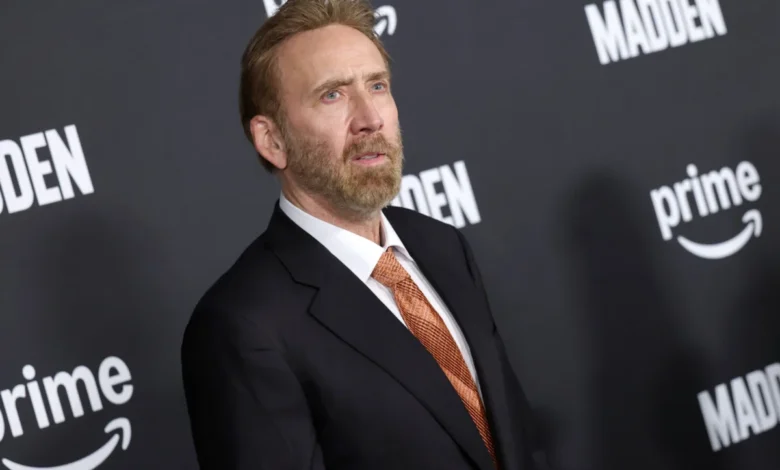
The interaction between the veteran actor and the incoming star occurred during the promotional circuit for Cage’s latest project, the David O. Russell-directed biopic Madden. While discussing his portrayal of the legendary football coach and broadcaster John Madden, Cage took a moment to address the inevitable questions regarding the future of the Ghost Rider character.
"Ryan’s going to do his thing with it and I’m looking forward to seeing it," Cage remarked to reporters. He emphasized that the transition is not merely a business transaction but a collegial hand-off. "Ryan knows how I feel about him as an actor; we’ve had nice conversations and we stay in touch. I was happy for him and wished him best of luck on his adventures."
This sentiment of mutual respect is bolstered by personal connections within the industry. Eva Mendes, who played the lead female role of Roxanne Simpson in the 2007 original, is married to Gosling. This unique intersection of past and present cast members adds a layer of continuity to the project. Reports indicate that Mendes has been vocal in her support of her husband taking on the iconic role, effectively closing the loop on a character that helped define a chapter of her own early career.
Production Roadmap and Casting Developments
The new Ghost Rider film, which is currently slated for a theatrical release on July 28, 2028, is being developed with a high degree of anticipation. The inclusion of Shawn Levy as director is particularly telling; known for his work on the Stranger Things series and the blockbuster hit Deadpool & Wolverine, Levy brings a sensibility for balancing high-concept action with character-driven narrative arcs.
Beyond the lead casting, the production is already filling out its supporting roster. Recent industry reports confirm that Connor Storrie, recognized for his breakout performance in the project Heated Rivalry, is currently in advanced talks to portray the film’s primary antagonist. The inclusion of rising talent alongside established stars like Gosling suggests that Marvel Studios is aiming to build a grounded, character-focused entry that can stand independently while potentially setting the stage for future supernatural team-ups within the MCU.
Analytical Implications: The Shift Toward the Supernatural
The return of Ghost Rider is not an isolated development but rather part of a broader trend within Hollywood to revisit and reinvigorate classic intellectual property with prestige talent. By casting an actor of Gosling’s caliber—who has historically been selective about his roles, leaning into arthouse and high-end dramatic projects—Marvel is signaling a desire to elevate the prestige of its darker, more supernatural assets.
This shift has several implications for the industry:
- Genre Blending: Marvel’s willingness to entrust a director like Shawn Levy with the Ghost Rider property indicates that the studio is prioritizing tone over formula. The success of horror-adjacent superhero films suggests that audiences are increasingly receptive to stories that push the boundaries of the traditional hero’s journey.
- Legacy Casting: The positive reception of the transition from Cage to Gosling highlights the value of "legacy support." When an original actor provides a public endorsement, it mitigates fan backlash and fosters a sense of communal investment in the new version of the story.
- The "Madden" Connection: Interestingly, the cycle of news has Cage transitioning from a supernatural anti-hero to an American cultural icon in Madden. This juxtaposition underscores the diversity of roles that modern performers are expected to navigate. Cage’s current project, which explores the life of John Madden and his deep-rooted professional partnership with Raiders owner Al Davis, serves as a grounded counterweight to the fantastical world of Ghost Rider, demonstrating the breadth of his career at this stage.
Looking Ahead to 2028
As production moves into its pre-visualization and scripting phases, the industry will be watching closely to see how Levy’s vision for Johnny Blaze translates to the screen. The 2028 release date offers the production team a generous window to develop the project without the pressures of a rushed timeline, which has been a point of contention for other recent blockbuster releases.
For fans of the character, the promise of a new iteration is a significant development. The original Ghost Rider films were instrumental in testing the viability of darker, more violent comic book adaptations. By building upon that foundation, the new team has the opportunity to refine the mythology, improve the visual representation of the Rider’s hellfire, and provide a deeper exploration of the character’s internal moral conflict.
Nicolas Cage’s blessing provides a stabilizing force for the project. In an era where online discourse can often turn hostile toward reboots and recasting, the veteran actor’s graciousness serves as a reminder that the evolution of characters is a natural part of the cinematic cycle. With a clear director, an established star, and the backing of the previous generation, the road ahead for the Ghost Rider franchise appears to be paved with both professional respect and significant creative potential. As the industry looks toward the 2028 horizon, the return of the Spirit of Vengeance stands as a testament to the enduring power of these characters to capture the public imagination across generations.