Vermont Was Supposed to Get an Audit of Its Lake Champlain Cleanup. It Never Happened.

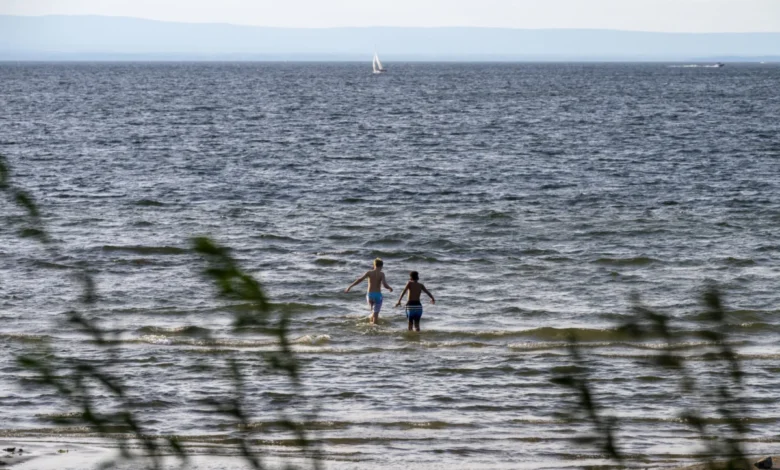
As the state’s Clean Water Board recently celebrated a decade of significant financial commitment, a glaring accountability gap has emerged: the independent, third-party audit mandated by the state legislature to evaluate the efficacy of these projects was never conducted. Despite nearly $1 billion flowing into various environmental initiatives—ranging from farm runoff mitigation to municipal sewer upgrades—the state lacks an empirical, external verification that these funds are being deployed effectively or achieving the intended water quality improvements.
A Decade of Spending and Legislative Mandates
The origins of Vermont’s current clean water strategy trace back to the landmark 2015 Clean Water Act. This legislation was a direct response to decades of ecological degradation in Lake Champlain, which has been plagued by phosphorus-laden runoff from agricultural lands, aging urban sewer systems, and road erosion. This nutrient loading fuels toxic blue-green algae blooms, which have become a recurring public health hazard and a significant drag on the regional tourism economy.
To address the crisis, the legislature established a dedicated Clean Water Fund and an oversight board. Since 2016, the state has disbursed $928 million toward water quality. This total consists of $755 million in state appropriations bolstered by $173 million in local and federal contributions. To put this figure in perspective, the state has invested nearly as much in water quality projects as it has in the maintenance and paving of its entire state highway network over the same period.

However, the 2015 law included a critical oversight mechanism: a requirement for a comprehensive, third-party program audit to be completed by January 2021. The audit was designed to serve two primary purposes. First, it was intended to assess whether the specific projects funded were effectively reducing phosphorus levels. Second, it was tasked with evaluating whether the state’s agriculture and natural resource agencies were adequately enforcing environmental regulations on farms, which represent the largest source of phosphorus pollution in the lake.
The Failure of Oversight: A Chronology of Missed Deadlines
The path to the missing audit is marked by bureaucratic inertia and a lack of follow-through. When the state first issued a request for proposals (RFP) in 2020, it received zero responses from environmental consulting firms. Rather than investigating why firms were hesitant to bid, the legislature simply extended the deadline to 2023. When that deadline also passed without a single bid, the process effectively stalled.
Douglas Farnham, the chair of the Clean Water Board, noted that firms informally signaled the audit’s scope was far too broad and technically complex. However, the Board never re-initiated the RFP process, nor did it return to the legislature with a formal request to refine the audit’s parameters. For years, the matter remained in a state of administrative limbo until recent inquiries brought the oversight failure back into the public eye.
Former state Representative David Deen, a primary sponsor of the 2015 legislation, expressed profound disappointment upon learning that the audit was never completed. "Personally, I find it amazing that they haven’t done that audit and that somebody in the legislature did not hold them to account," Deen stated. The failure suggests a breakdown in the legislative oversight process, as lawmakers tasked with monitoring the executive branch seemingly lost track of a key statutory requirement.

Transparency vs. Independent Verification
In defense of the status quo, state officials argue that existing internal reporting mechanisms have become sufficiently robust to render an outside audit unnecessary. Emily Bird, director of the Department of Environmental Conservation’s (DEC) Water Investment Division, points to the department’s annual performance reports and its online Clean Water Portal as evidence of transparency. According to this view, the state’s ability to track projects and provide public data on spending serves as a functional substitute for an external review.
"We’ve got enough eyes coming at it from different angles that I think that mutes the need for that comprehensive audit," Farnham argued.
However, this perspective is not shared by the state’s own auditor. Doug Hoffer, who has served as Vermont’s state auditor since 2013, remains highly critical of the lack of independent oversight. In a 2019 report, Hoffer’s office identified a significant misalignment in spending priorities, noting that the state was pouring disproportionate funds into wastewater treatment plants—which contribute a relatively small fraction of total phosphorus pollution—while underfunding agricultural programs that constitute the primary source of the runoff.
That fiscal mismatch persists today. Despite agriculture being the leading contributor to phosphorus pollution, agricultural water quality programs receive less than one-third of the total clean water budget. "I’d like to think they’re getting something done," Hoffer said. "But the only way to know that is to hire someone who is independent to study that. And it’s really concerning that hasn’t been done."

The Technical Gap: Why an Audit Matters
The distinction between internal agency reports and an independent audit is critical, according to experts. Tee Thomas, a former water finance director for Vermont, explains that current department reporting relies heavily on predictive models to estimate the phosphorus-reduction impact of specific projects. An independent audit would do something the state currently does not: it would cross-reference those model-based estimates against actual, raw water-quality monitoring data taken from rivers and the lake itself.
An independent firm would also be able to conduct an objective management review—assessing not just whether money was spent, but whether it was spent with maximum efficiency. With the state facing a multi-billion-dollar, 20-year commitment—estimated at $2.3 billion in total—the lack of an independent check on return-on-investment leaves policymakers operating in a vacuum.
The Path Forward: Economic and Political Stakes
The fiscal environment for future water cleanup is increasingly precarious. As state government spending faces pressure from stagnant tax revenues, and as volatility in the housing and tourism sectors threatens the streams of funding (such as the rooms and meals tax) that support the Clean Water Fund, the urgency for fiscal accountability has never been higher.
The upcoming legislative session, scheduled for January, is expected to address this oversight. State Senator Anne Watson, who chairs the Committee on Natural Resources and Energy, has signaled that the audit issue will be a priority. "If we value having a clean lake, then we need to put our resources toward places that are going to make a difference," Watson said. "It’s unclear to me right now that what we’re doing is effective."

The implications of this inaction extend beyond mere bureaucracy. For the citizens of Vermont, the health of Lake Champlain is an economic engine, a critical source of drinking water, and a central pillar of the state’s identity. The recurring, and sometimes dangerous, cyanobacteria blooms in locations like St. Albans serve as a daily reminder that the current cleanup trajectory may not be sufficient.
Whether the state will successfully pivot to implement an independent audit remains to be seen. What is clear, however, is that after ten years and nearly a billion dollars, the question of whether Vermont’s environmental strategy is delivering the intended results remains an open one. As the state enters the second half of its 20-year EPA-mandated cleanup initiative, the lack of an independent audit represents not just a failure of process, but a risk to the future of one of the most vital ecosystems in the Northeast. Without the rigorous verification that only an independent audit can provide, the state remains vulnerable to the criticism that it is investing heavily in a strategy without truly knowing if the water is getting any cleaner.
Related posts: