When Climate Reality Shatters the Picket Fence: How the American Dream of Homeownership is Being Reshaped by Disasters

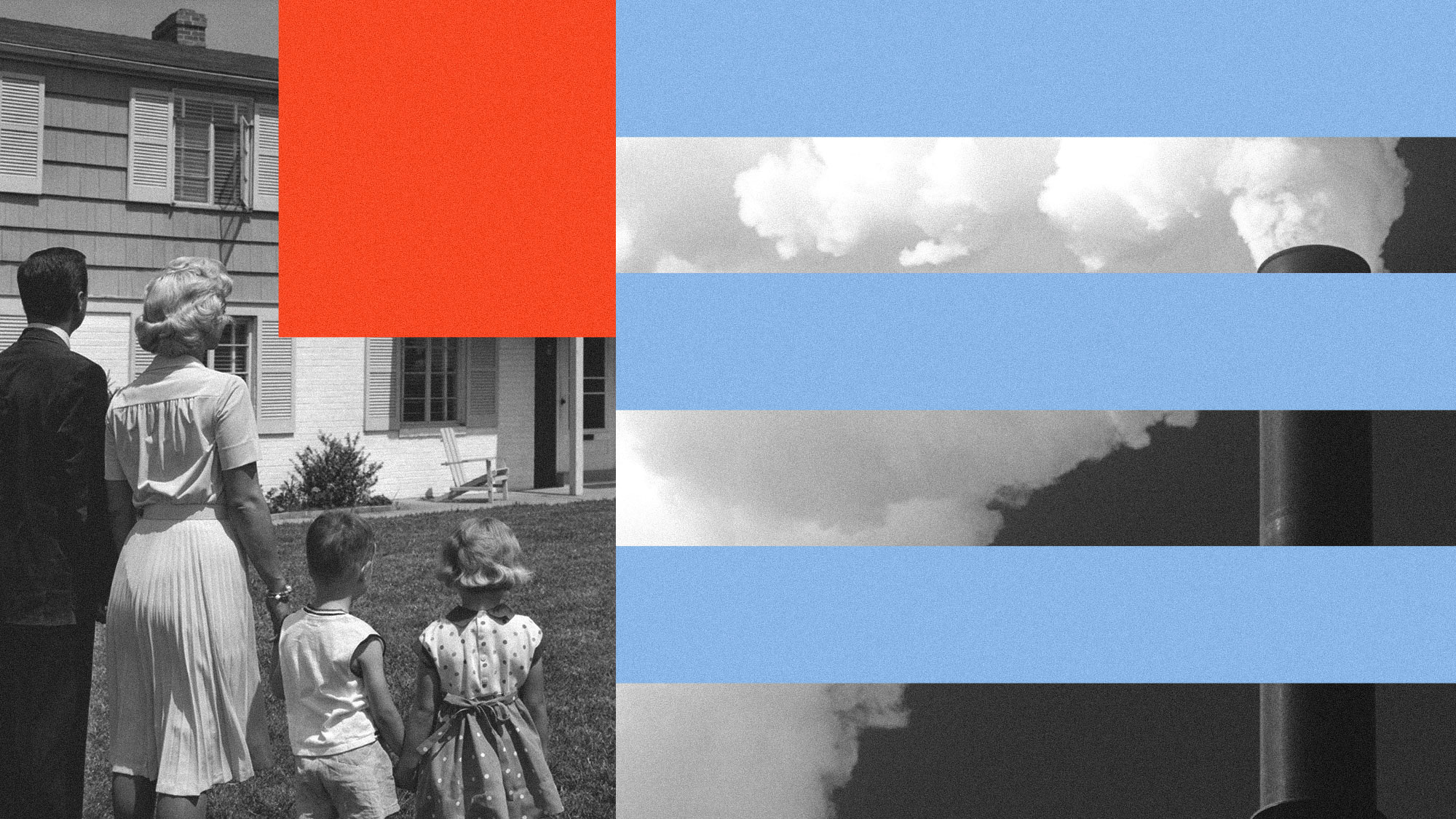
The traditional architectural emblem of the American Dream—a single-family home outlined by a pristine white picket fence—has long served as the ultimate benchmark of financial security and personal independence in the United States. For generations, this milestone was marketed as the primary engine of generational wealth, a concrete investment meant to fund a comfortable retirement and higher education for children. However, as extreme weather events driven by climate change accelerate across the country, this foundational pillar of American society is undergoing a profound structural and psychological transformation. Rising insurance costs, property devaluation in high-risk zones, and catastrophic natural disasters are fundamentally altering what it means to build a life and secure a future in the United States.
The Shattered Sanctuary: An Asheville Case Study
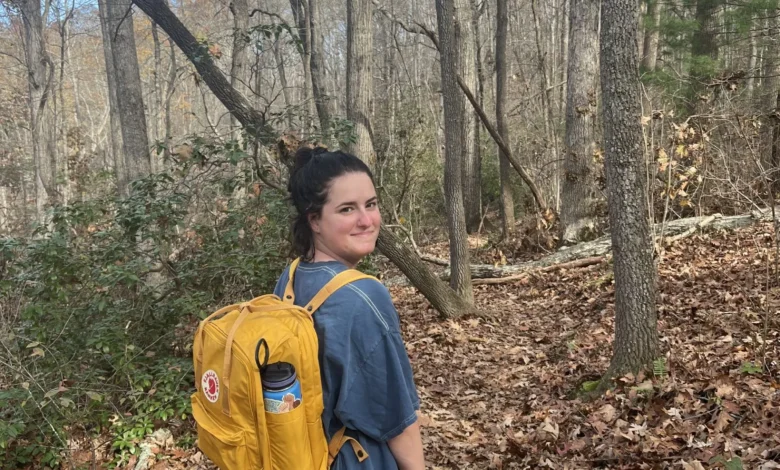
For 26-year-old Sierra Isley, the concept of homeownership was an implicit promise of adulthood, an ambition shaped by cultural norms and media representation. Moving from Philadelphia to Asheville, North Carolina, alongside her girlfriend, Jamie, Isley believed she was stepping onto the predictable path of domestic stability. With financial assistance from their families, the couple placed a deposit on a charming three-bedroom brick house boasting ample natural light and a sprawling tree in the front yard. Their offer was accepted, setting the stage for their transition into property owners.
However, a legal complication abruptly halted the transaction just moments before the closing papers were signed: a substantial lien was discovered on the property. Following legal consultations, Isley and Jamie made the difficult decision to void the contract and pivot to renting an apartment in the city.
That administrative hurdle proved to be a critical turning point. Exactly one month later, while the couple was still settling into their new rental, the remnants of Hurricane Helene struck western North Carolina. The storm transformed Asheville into a catastrophic disaster zone. While their apartment’s basement flooded, their losses were eclipsed by those of neighbors whose residences were entirely obliterated. Revisiting the home they nearly purchased after the storm, Isley noted the hidden vulnerabilities that could have instantly become their financial burden. The experience fundamentally rewired her perspective on real estate, replacing the aspiration of homeownership with a heightened awareness of environmental risk.
Chronology of an Emerging Housing Crisis
The intersection of housing markets and climate vulnerability is not a sudden phenomenon, but rather the culmination of decades of environmental shifts and economic trends.
- Pre-2012: The conventional real estate market largely discounted long-term climate vulnerabilities, prioritizing geographic appeal, job markets, and school districts over localized ecological threats.
- October 2012: Superstorm Sandy devastates parts of New York City and the New Jersey coast, leaving thousands of homeowners stranded with underwater mortgages and properties they could neither sell nor repair economically.
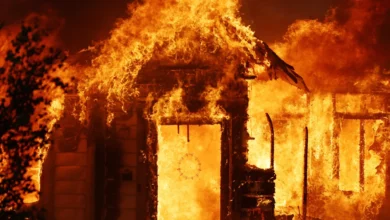
- September 2018: The Woolsey Fire tears through Southern California, leaving behind scorched foundations and forcing a reevaluation of suburban expansion into wildfire-prone wildland-urban interfaces.
- September 2024: Hurricane Helene drops nearly 14 inches of rain on Asheville, North Carolina, over three days, causing the French Broad River to overflow and damaging more than 74,000 homes in the region. Only about 4 percent of these damaged properties were covered by flood insurance, resulting in approximately $9.5 billion in uninsured residential losses.
- 2025–2026: Property insurance premiums nationwide experience unprecedented spikes, rising by nearly 80 percent since 2020 and placing severe financial strain on both single-family homeowners and multi-family renters.
Economic Pressures: Devaluation, Insurance, and the Cost of Living
The financial architecture supporting American real estate is buckling under the weight of climate-related liabilities. According to a 2023 study published in Nature Climate Change, properties located within Federal Emergency Management Agency (FEMA) high-risk flood zones already sell at an average discount of 2.8 percent compared to equivalent homes in safer areas. Yet, researchers estimated that homes exposed to flood risks remained systemically overvalued by $121 billion to $237 billion, identifying regions like Appalachia as significant hotspots of overvaluation well before Hurricane Helene made landfall.
This overvaluation correction unfolds unevenly, creating severe economic disparities. Real estate data indicates that average home prices in Asheville have declined by approximately 5 percent over the past year, contrasting sharply with positive national growth averages.
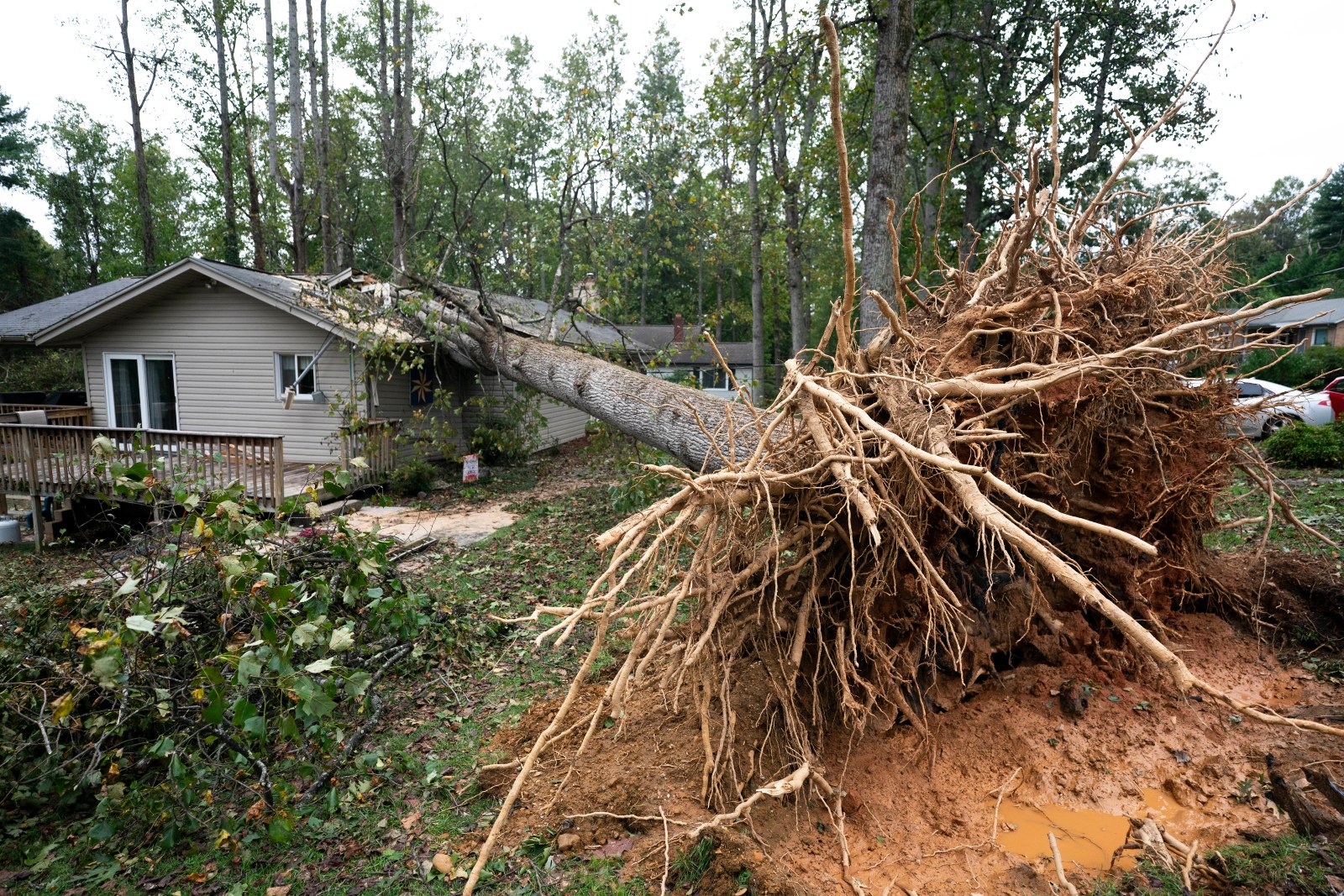
Compounding the issue of property devaluation is the crisis in the property insurance market. Douglas Heller, director of insurance at the Consumer Federation of America, describes insurance as the essential "safety net for the American Dream." However, that safety net is fraying. National property insurance costs have surged by nearly 80 percent since 2020, with the average single-family mortgage holder now paying $209 per month just for coverage. In high-risk zones, these premiums are exponentially higher.
In California, homeowners in wildfire-prone regions face dropped policies and skyrocketing homeowners association (HOA) fees. Andrew Engler, founder and CEO of Rock Rose Risk, notes that fixed-income residents, such as seniors relying on Social Security benefits near Lake Tahoe, are particularly vulnerable. Burdened by ballooning HOA fees required to maintain collective fire insurance, many find their properties severely devalued and unsellable. Economists estimate that rising insurance expenses tied to disaster risks have suppressed home price appreciation by more than $40,000 in the most vulnerable ZIP codes.
Renters are similarly insulated from neither direct impacts nor indirect costs. Landlords pass surging insurance premiums onto tenants through higher monthly rents, complicating the ability of younger generations to accumulate down-payment savings. Caroline Nagy, associate director of housing policy at Americans for Financial Reform, emphasizes that whether citizens own or rent, the broader populace is actively subsidizing the escalating costs of climate vulnerability.
Sociological Implications and Public Sentiment
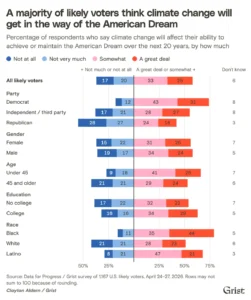
The growing realization of these systemic risks is reshaping public opinion and political discourse. Exclusive polling conducted by Data for Progress reveals that 58 percent of likely U.S. voters believe climate change will hinder their ability to achieve the American Dream over the next two decades, a sentiment shared by 42 percent of surveyed Republicans.
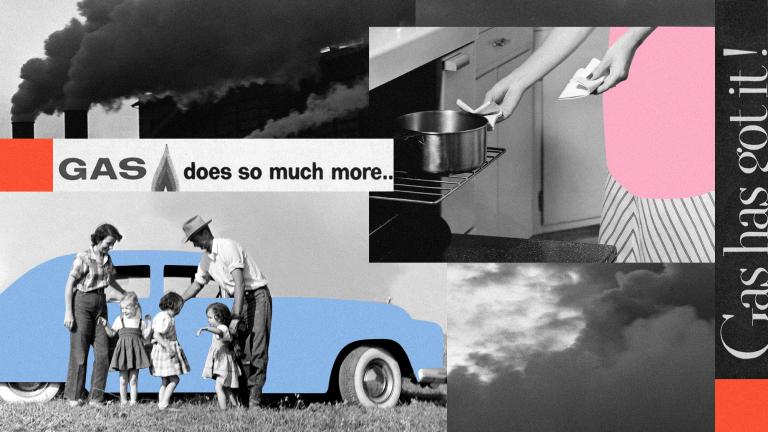
This anxiety directly contrasts with historical messaging from the fossil fuel industry and sympathetic political administrations. For over a century, oil and gas entities have successfully marketed carbon-intensive lifestyles as synonymous with American prosperity. Recent political actions, such as federal rollbacks of vehicular emissions standards and EPA climate regulations, have frequently been framed by officials as measures aimed at "restoring the American Dream."
However, sociologists argue that the traditional paradigm is becoming untenable. Rebecca Elliott, a sociologist at the London School of Economics and Political Science, writes that for an increasing number of citizens, the ideal of homeownership risks transforming into a financial liability. Properties in vulnerable coastal regions, floodplains, and wildfire zones face the distinct possibility of becoming economically obsolete long before they are physically destroyed.
Demographic shifts further reflect this ideological evolution. Polling data published by Ipsos indicates a stark generational divide: while 46 percent of Baby Boomers explicitly associate homeownership with the American Dream, only 13 percent of Generation Z share that direct association. Younger demographics are increasingly decoupling personal success from permanent real estate acquisition, favoring geographic mobility and financial liquidity over tied-down assets.
Community Resilience and the Redefinition of Success
Despite the profound economic and environmental challenges, lived experiences in disaster zones often reveal unexpected forms of social cohesion. In the immediate aftermath of Hurricane Helene, with municipal infrastructure crippled and communication networks severed, Asheville residents forged deep communal bonds. Neighbors converged on local fire stations for fresh water, organized resource-sharing networks, and leaned on one another for survival.
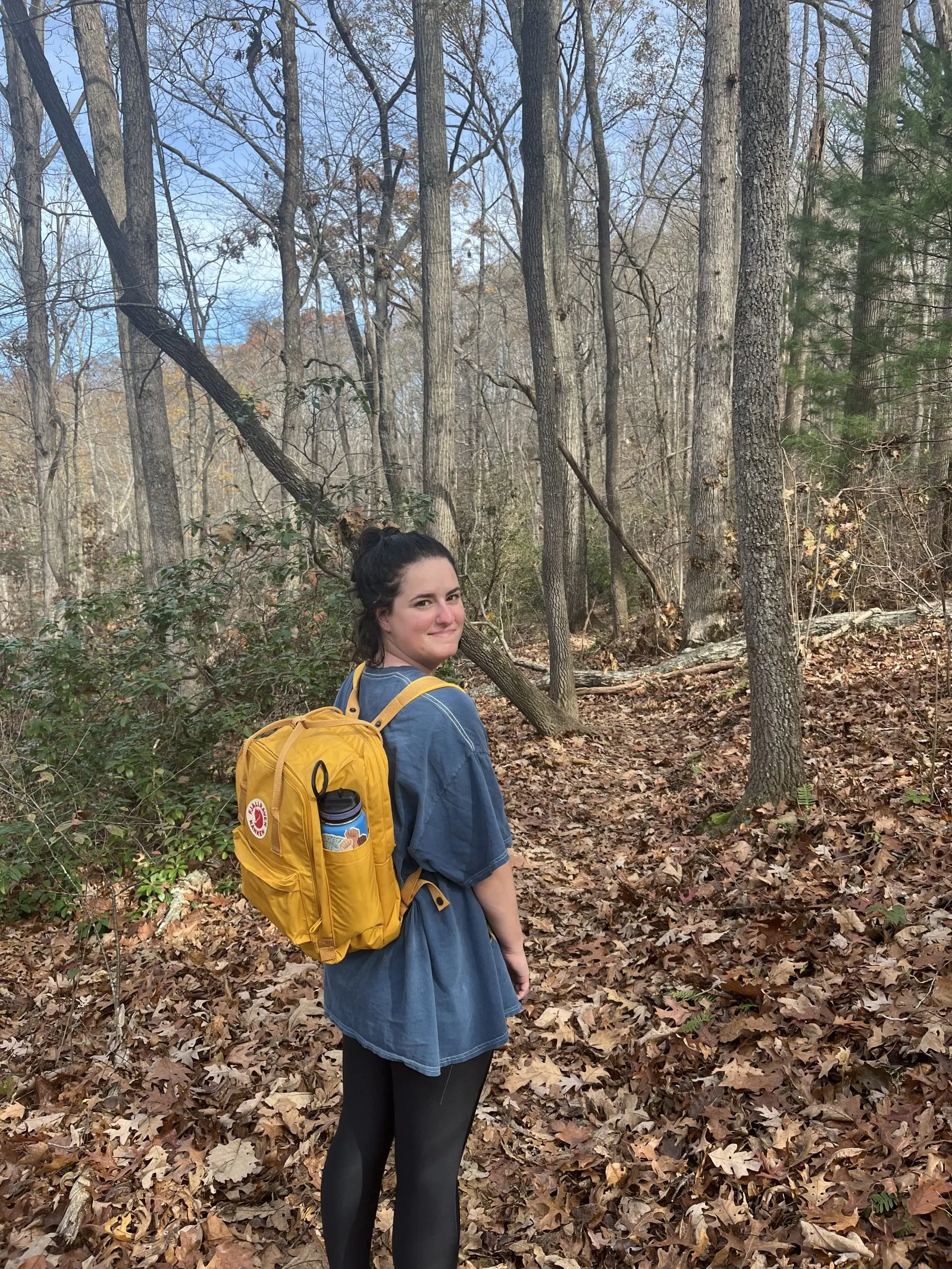
Nick Tinoco, a sociology doctoral researcher at the University of California, Los Angeles, who studied survivors of the 2018 Woolsey Fire, notes that disasters frequently challenge the hyper-individualistic ethos of the traditional American narrative. Survivors often respond by doubling down on collective defense, establishing volunteer brigades, and committing to local resilience rather than abandoning their communities entirely.
This shift in perspective is evident in the personal trajectory of Sierra Isley. Rather than deterring her from civic engagement, surviving Hurricane Helene galvanized her dedication to public welfare. She is currently pursuing graduate studies in public health, aiming to direct her career toward emergency preparedness and climate resilience.
As extreme weather events continue to challenge the viability of historical "climate havens," experts emphasize that structural adaptation must replace simple relocation strategies. Reimagining the American Dream away from carbon-dependent vulnerability and single-asset economic exposure is no longer merely an academic discussion—it is an economic and social necessity for the future of American communities.