Unlocking the Secrets of Ancient Embalming: Researchers Discover Aloe in Egyptian Mummies and Medieval Medicinal ‘Mumia’

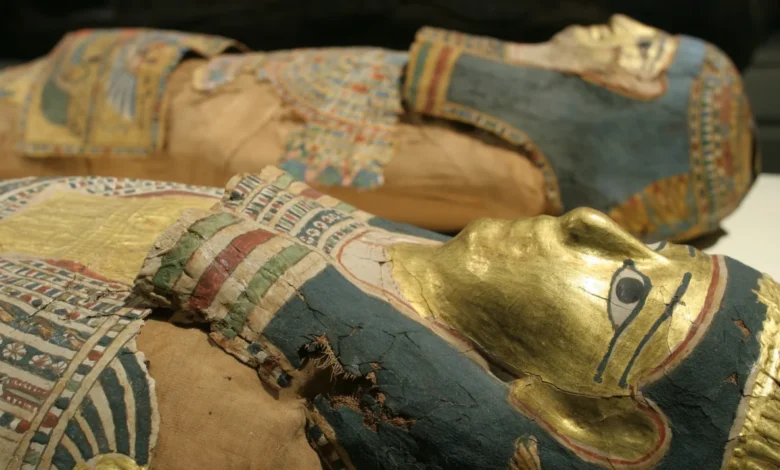
Archaeologists and molecular scientists at Germany’s Marburg University have identified a previously undocumented botanical ingredient utilized in ancient Egyptian mummification processes, shedding new light on a macabre chapter of medieval European pharmacology. Through advanced biochemical analysis of 2700-year-old human remains and centuries-old apothecary preparations, researchers detected traces of aloe-associated plant material. This groundbreaking discovery not only expands modern understanding of ancient funerary customs but also clarifies the bizarre historical trajectory of "Mumia," a medicinal substance once widely prescribed across Europe.
The findings, published in the peer-reviewed journal Proceedings of the National Academy of Sciences, provide the first definitive molecular evidence connecting ancient Egyptian embalming recipes directly to the ingredients found in medieval apothecary remedies derived from mummy remains. By bridging a millennium-spanning gap between ancient funerary rites and medieval medicine, the study offers vital insights into how ancient knowledge was transmitted, misinterpreted, and repurposed across different civilizations.
A Complex Legacy of Ancient Funerary Practices
Mummification was never a monolithic or static practice. Throughout thousands of years of human history, postmortem preservation techniques varied widely across the globe, evolving continuously even within a single culture. Ancient Egyptian priests and embalmers honed their craft over millennia, adapting their methods according to shifting religious beliefs, regional resource availability, and the socioeconomic status of the deceased. Despite decades of intense archaeological study, researchers continue to unearth artifacts, papyri, and organic residues that challenge established assumptions about ancient postmortem procedures.
Historically, Western fascination with ancient Egypt accelerated dramatically during the late 18th century, sparked largely by Napoleon’s campaigns and the subsequent decipherment of the Rosetta Stone. However, European engagement with Egyptian mummies began centuries earlier—not out of archaeological curiosity, but for commercial and medical purposes.
The bizarre trade in "Mumia," a class of medicinal treatments created from the ground remains of ancient mummies, originated from a linguistic misunderstanding in the 12th century. Persian and Arabic physicians frequently utilized a dark, petroleum-based mineral pitch known as mumiya for its purported healing properties in wound care and fracture management. When medieval European scholars translated Arabic medical texts into Latin, they mistook the word mumiya for the blackened organic and resinous materials coating Egyptian mummies.
This mistranslation catalyzed a centuries-long trade network. European merchants imported thousands of preserved human remains from Egypt, which were subsequently pulverized by apothecaries and sold across the continent as a universal cure-all. Believed to cure everything from headaches and tuberculosis to plague, and occasionally marketed as an aphrodisiac, Mumia vera aegyptiaca (true Egyptian mummy) remained a staple of European pharmacopoeias well into the early modern era, appearing in official medical textbooks until the 18th century.
Molecular Analysis and Methodological Breakthroughs
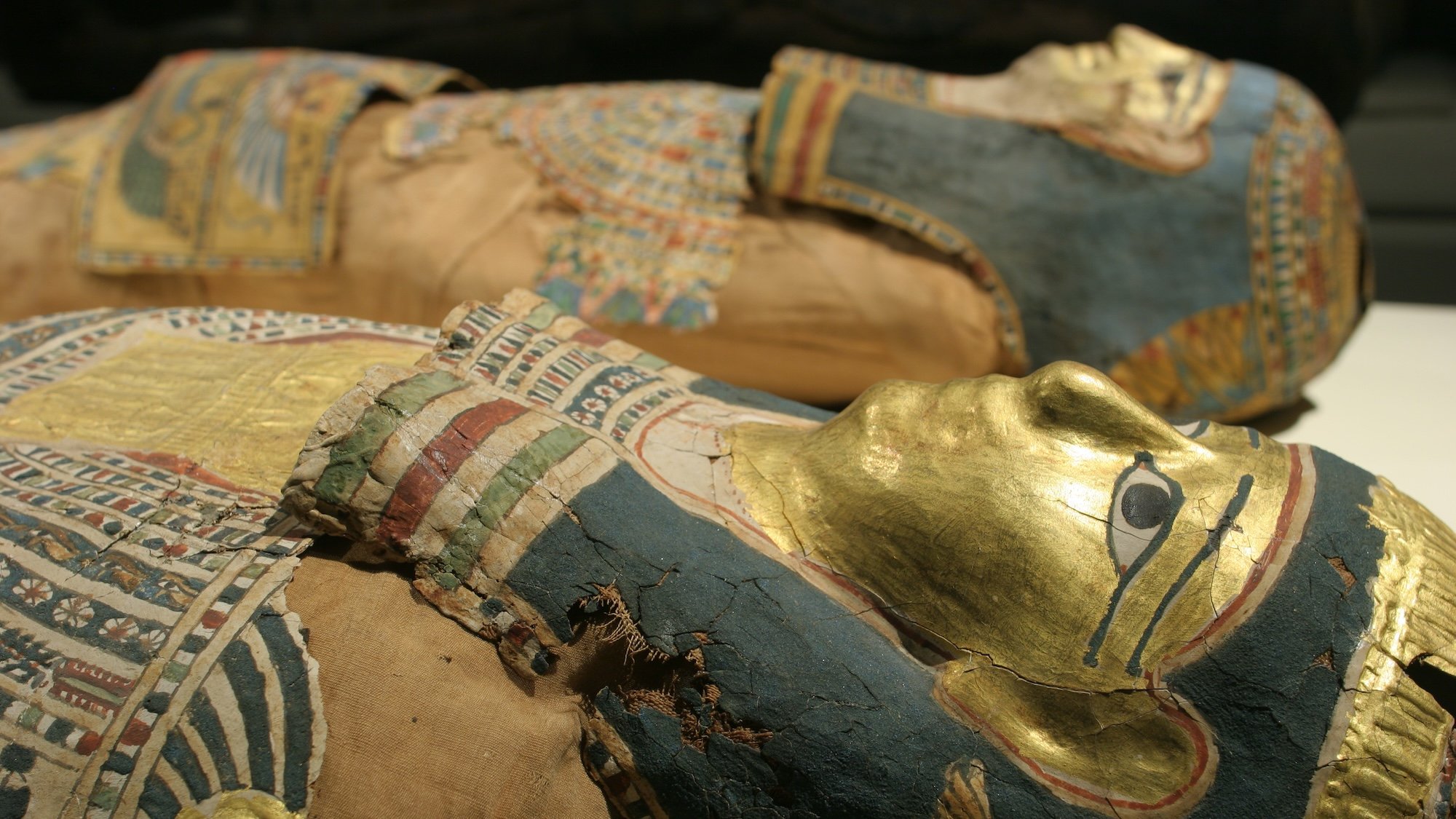
To better understand the chemical composition of both ancient embalming agents and medieval pharmaceutical preparations, the Marburg University research team assembled and analyzed a collection of 24 historically significant objects housed in various international institutions. The sample set included an Egyptian mummified skull dating back to the 8th century BCE, alongside an 18th-century preparation of Mumia preserved at the Heidelberg Pharmacy Museum.
Modern analytical techniques, such as gas chromatography-mass spectrometry (GC-MS) and liquid chromatography-mass spectrometry (LC-MS), allow scientists to identify trace organic compounds that have degraded over thousands of years. Previous archaeological investigations had successfully cataloged numerous embalming ingredients derived from minerals, animals, and plants. These included a diverse array of coniferous tars, resins, vegetable oils, animal fats, beeswax, bitumen, and rare regional plant distillations such as dammar and elemi.
Despite this wealth of chemical data, the identification of aloe remained elusive until now. The detection of aloe-associated plant material in both the 2,700-year-old skull and the medieval Mumia sample provides concrete molecular proof of its inclusion in ancient Egyptian mortuary practices.
Historical Context and Biblical Parallels
The discovery carries significant weight for historians of science and medicine. Historically, the term "aloe" has been a source of taxonomic confusion. Outside of the strict botanical genus Aloe, the word frequently referred to other aromatic woods and plants, such as agarwood, in ancient and medieval texts.
Tanja Pommerening, co-author of the study and director of Marburg University’s Institute for the History of Pharmacy and Medicine, emphasized the broader implications of the discovery. Prior to this research, many historians of medicine operated under the assumption that medieval writers formulated their recipes for Mumia based primarily on scriptural references rather than actual empirical knowledge of ancient Egyptian methods.
A prominent example of this is found in the New Testament—specifically in the Gospel of John (19:39), which references a burial mixture composed of "myrrh and aloes." Scholars previously debated whether medieval apothecary recipes mentioning aloe were merely theological appropriations of biblical passages or genuine reflections of historical embalming practices.
"The new findings suggest that this association may have deeper historical roots," Pommerening explained in a statement released by the university. The presence of actual aloe compounds in ancient Egyptian cranial remains indicates that embalmers utilized these specific botanical resources long before medieval scribes translated and reinterpreted the texts.
Limitations and Future Research Directions
While the identification of aloe represents a major milestone in archaeochemical research, the study also highlights the complexities of ancient manufacturing processes. Out of the 24 historical artifacts examined by the Marburg team, only two yielded detectable traces of aloe. Consequently, the exact frequency and geographical distribution of aloe utilization in ancient Egypt remain open questions.
Researchers suggest several potential explanations for the scarcity of the compound. It is entirely possible that embalmers utilized aloe selectively—perhaps restricting the ingredient to specific historical dynasties, elite social classes, or particular ritual contexts. Alternatively, the availability of aloe, which was often imported from regions outside the immediate Nile Valley, may have fluctuated due to trade disruptions or economic shifts.
Building upon these initial findings, the research team at Marburg University plans to expand its analytical scope. Future investigations will target a broader array of historical artifacts, mummified remains, and early modern pharmaceutical collections.
Raphael Reher, a co-author of the study and a biologist at Marburg University, outlined the overarching mission of the ongoing research initiative. "Our goal is not only to analyze the chemical composition of ancient medicines and embalming materials, but also to gain a deeper understanding of their production, use, historical transmission, and cultural context," Reher stated.
Broader Implications for Archaeology and Pharmacology
The integration of molecular chemistry with historical text analysis represents a transformative approach in modern archaeology. By moving beyond visual inspections and destructive physical sampling toward high-resolution chemical profiling, scientists can reconstruct the complex supply chains, trade networks, and pharmacopeias of antiquity.
Furthermore, this research underscores the intricate pathways through which scientific and medical knowledge evolved. What began thousands of years ago as a specialized ritualistic formulation by Egyptian embalmers was later adopted, misunderstood, and commodified by medieval European traders and apothecaries. By systematically decoding these historical artifacts, modern science continues to unravel the fascinating, and occasionally bizarre, intersections between ancient human rituals and the history of medicine.