Bleecker Street Drops First Trailer for Guy Nattiv’s Dramatic Thriller The Liberation, Fueling Early Oscar Buzz for Carrie Coon

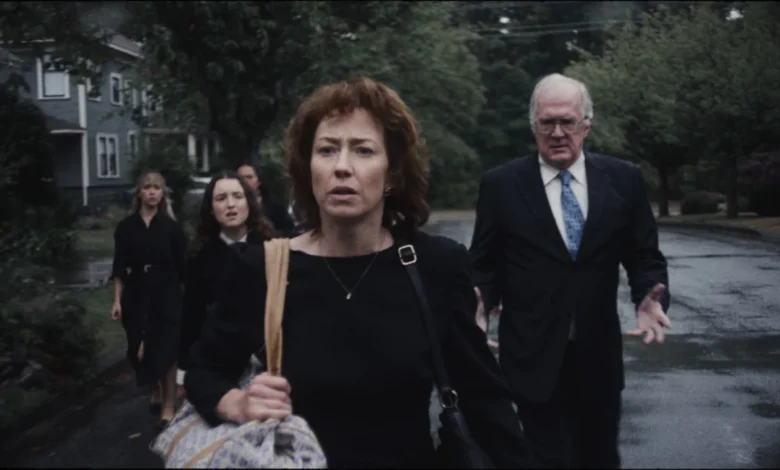
Independent distributor Bleecker Street has officially unveiled the first official trailer for The Liberation, an emotionally charged dramatic thriller written, directed, and produced by Academy Award-winner Guy Nattiv. The film, which has been generating significant awards-season chatter since its acclaimed world premiere at the Telluride Film Festival, features a powerhouse lead performance by Emmy and Tony nominee Carrie Coon. As audiences get their first visual taste of the tense narrative through the newly released promotional footage, anticipation is mounting for what industry analysts are predicting could be a major player in the upcoming film awards cycle.
The Liberation explores deeply psychological territory, blending historical trauma with the complex dynamics of isolation, family obligation, and the desperate search for spiritual salvation. Backed by Bleecker Street’s strategic distribution rollout, the feature is positioned to capture both critical acclaim and specialized box office attention as it enters the competitive winter release window.
Plot and Character Dynamics
Set against the backdrop of 1980s New Jersey, The Liberation centers on Rita, portrayed by Carrie Coon. Rita is a dedicated housewife and a survivor of the Holocaust whose daily life is quietly overshadowed by the persistent, suffocating weight of her past. Despite building a seemingly stable domestic existence with her husband—played by acclaimed stage and screen actor Tracy Letts—Rita remains fundamentally unmoored by her historical trauma.
The narrative shifts dramatically when Rita encounters a charismatic and magnetic spiritual leader, brought to life by Lily James. Drawn in by the promise of inner peace and collective healing, Rita makes the staggering decision to abandon her family, leaving behind her domestic responsibilities to follow the leader to an isolated, all-female commune.
The psychological tension escalates when Rita’s daughters, portrayed by rising stars Bella Ramsey and Odessa Young, take it upon themselves to locate and rescue their mother. However, upon infiltrating the commune, the daughters themselves become gradually ensnared by the hypnotic allure and insular culture of the group. This turn of events forces Rita into an agonizing moral dilemma: she must choose between the traditional family ties she abruptly severed and the radical, transformative community she believes holds the key to her personal salvation.
Chronology and Distribution Strategy
The journey of The Liberation from conception to theatrical rollout follows a carefully orchestrated festival and distribution timeline designed to maximize prestige and visibility. Following its splashy debut at the prestigious Telluride Film Festival, the film has traveled through the autumn festival circuit, generating positive critical notices for its performances, direction, and unflinching thematic exploration.
Capitalizing on this momentum, Bleecker Street has mapped out a two-tier release strategy tailored for an awards contender. The distributor has scheduled a qualifying theatrical run commencing this Friday in the major metropolitan markets of New York and Los Angeles. This limited engagement ensures that the film meets all eligibility requirements for consideration by the Academy of Motion Picture Arts and Sciences ahead of the upcoming Academy Awards deadlines.
Following the initial qualifying run, Bleecker Street plans to expand The Liberation into a wider theatrical release on January 8. This post-holiday release window allows the distributor to capitalize on word-of-mouth momentum, critical reviews, and any potential precursor nominations as the industry heads deeper into awards season.
Personal Roots and Creative Inspiration
Behind the intense fictional narrative of The Liberation lies a deeply personal narrative rooted in writer-director Guy Nattiv’s own childhood. Speaking at Deadline’s Contenders London event, Nattiv opened up about the autobiographical origins of the film, revealing that the story draws directly from his family history.
Nattiv recounted that when he was just eight years old, his family took him on visits to see his grandmother, where he participated in meetings that he was too young to fully understand at the time. It was only years later that he came to recognize the gatherings as part of a cult, and that his grandmother had made the drastic decision to permanently sever ties with his grandfather and the rest of the family.
Years after these childhood memories faded, Nattiv returned to the site of the commune with a camera to investigate and seek deeper answers about his grandmother’s choices. Approaching the complex subject matter with what he described as "a lot of empathy," Nattiv discovered that the group had functioned, in part, as an environment that "tried to free" his grandmother from the paralyzing, lingering trauma of her Holocaust experiences.
"She had the courage to do something very uncommon: To leave your family, say goodbye to your daughters and your husband and go into the unknown and try to save yourself," Nattiv shared during the panel discussion. This nuanced perspective forms the emotional core of The Liberation, preventing the film from sliding into simplistic villainy and instead presenting a morally grey exploration of survival at all costs.
Cast and Crew Accolades
The creative forces behind The Liberation represent a formidable assembly of contemporary cinematic talent. Guy Nattiv, who won an Academy Award for his 2018 live-action short film Skin before transitioning to feature-length biographical and dramatic storytelling, brings a steady, empathetic hand to the director’s chair. His ability to navigate sensitive historical and psychological themes is complemented by a stellar ensemble cast accustomed to high-profile prestige projects.
Carrie Coon, celebrated for her acclaimed television work in HBO’s The Gilded Age and The White Lotus, as well as standout cinematic turns in films like Gone Girl and The Nest, anchors the film with a layered performance that has dominated early awards buzz. Industry pundits have frequently singled out her portrayal of Rita as a masterclass in internalized grief and emotional awakening.
Co-star Lily James steps far away from her traditional period-drama personas to embody the charismatic and enigmatic spiritual leader, providing a fascinating foil to Coon’s grounded vulnerability. Meanwhile, the younger tier of the cast brings fierce emotional intensity to the screen. Bella Ramsey, widely recognized for breakout turns in Game of Thrones and The Last of Us, alongside Odessa Young, known for Mothering Sunday and Shirley, round out the central family dynamic as the determined daughters caught in the crossfire of their mother’s existential crusade. Tracy Letts rounds out the principal cast as the steadfast, bewildered husband, adding further dramatic gravitas to the domestic fallout.
Broader Impact and Industry Implications
The release of the trailer for The Liberation arrives at a critical juncture for independent cinema and specialty distributors like Bleecker Street. As major studios increasingly concentrate their marketing budgets on massive intellectual property franchises and superhero blockbusters, mid-budget dramatic thrillers with complex thematic underpinnings rely heavily on festival launches, targeted platform releases, and strong critical positioning to carve out space in the cultural conversation.
By tackling heavy intersectional themes—specifically, the transmission of historical trauma, the psychology of religious or ideological insularity, and the heavy toll of maternal self-preservation—The Liberation speaks to contemporary anxieties surrounding autonomy, belief systems, and family fragmentation. The film’s willingness to examine the allure of cults not merely as sites of malicious control, but as flawed attempts at radical healing for survivors of unimaginable historical atrocities, elevates the material beyond standard thriller tropes.
Furthermore, the film contributes to a broader cinematic conversation regarding how second- and third-generation descendants process the residual impacts of the Holocaust. Through Nattiv’s lens, the personal becomes universal, prompting viewers to question the boundaries of duty, the price of individual survival, and whether true liberation can ever be achieved without collateral damage.
As Bleecker Street rolls out its theatrical campaign beginning this weekend, all eyes will be on how audiences and critics respond to the harrowing journey depicted in the trailer. With a strong ensemble cast, a deeply personal visionary director at the helm, and a plum release schedule designed to court awards voters, The Liberation stands poised to make a significant impact on the cinematic landscape as the winter awards season heats up.
Related posts: