The Los Angeles Lakers are entering a pivotal NBA campaign with a roster that has undergone a dramatic transformation. Following a tumultuous offseason defined by massive roster turnover, financial commitments, and high-profile departures, the franchise’s championship aspirations now rest almost entirely on the shoulders of a newly minted core. For the Purple and Gold to transition from fringe playoff hopefuls into legitimate Western Conference contenders, their dynamic primary trio—featuring Luka Doncic, Austin Reaves, and newly acquired center Walker Kessler—must deliver at an elite, cohesive level from the opening tip-off.
The stakes could not be higher for a franchise accustomed to perennial contention. With LeBron James having departed via free agency to join the Philadelphia 76ers during the offseason, the organizational hierarchy has decisively shifted. Luka Doncic has firmly established himself as the undisputed centerpiece of the franchise, stepping into the primary leadership role. Alongside him, the front office has doubled down on supporting cast members by allocating unprecedented financial resources and vital future draft capital. How this radically reconstructed group meshes in a fiercely competitive Western Conference will dictate the trajectory of the Lakers’ immediate future.
The Financial Commitment and the Kessler Gamble
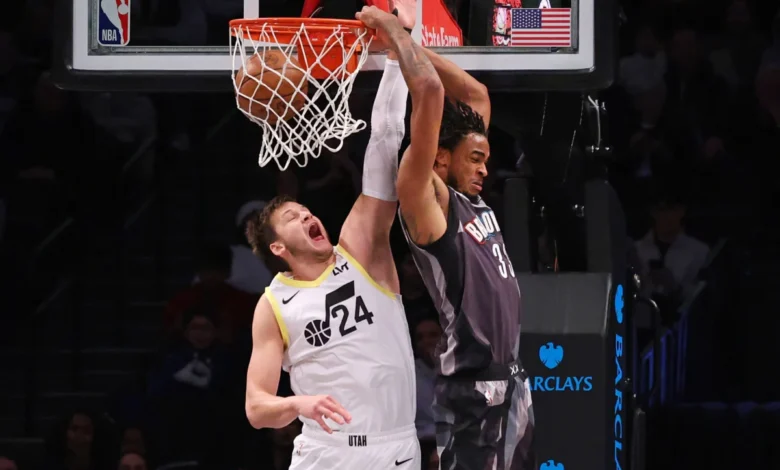
The cornerstone of the Lakers’ offseason strategy—and the ultimate wild card for their upcoming campaign—is 25-year-old center Walker Kessler. Acquired via a high-stakes sign-and-trade with the Utah Jazz, Kessler commanded a substantial investment. To secure the young rim protector, Los Angeles mortgaged significant future flexibility, surrendering two unprotected first-round draft picks and two first-round pick swaps. Consequently, the franchise finds itself without a tradable first-round selection for the next seven years.
To justify this aggressive gamble, the front office rewarded Kessler with a lucrative four-year, $130 million contract extension. The financial and asset-based commitment reflects the team’s desperate need for a specialized archetype: a defensive anchor who can simultaneously operate as an efficient screen-setter and rim-runner to unlock Doncic and Reaves on the offensive end.

However, questions persist regarding Kessler’s durability and readiness for the spotlight. The former Utah Jazz big man played just five games during the previous season before suffering a torn labrum in his left shoulder, an injury that necessitated season-ending surgery. Over his first three professional seasons with a rebuilding Jazz franchise that failed to reach the postseason, Kessler flashed elite defensive instincts. According to official NBA tracking data from the 2024–25 season, he contested 7.5 shots per game at the rim, tying him for the fifth-highest mark in the league.
Now operating within the pressure cooker of a 17-time championship organization, Kessler faces a steep developmental curve. He must evolve into the defensive equivalent of elite modern anchors like Rudy Gobert of the Minnesota Timberwolves or Chet Holmgren of the Oklahoma City Thunder. Speaking on his arrival in Los Angeles, Kessler acknowledged the weight of the expectations, expressing fierce loyalty to a franchise that laid its cards on the table for him.
The Evolution of the Doncic-Reaves Partnership
While Kessler represents the great unknown, the partnership between Luka Doncic and Austin Reaves has already proven its mettle under duress. The synergy between the two guards was heavily tested during previous seasons when extended absences by LeBron James forced the coaching staff to lean heavily on the backcourt duo.
During a stretch early in a prior campaign when James was sidelined due to a lingering sciatica issue, Doncic and Reaves orchestrated a brilliant 15-4 run. They replicated this success later in March when James missed time due to various minor ailments. Those stretches silenced any lingering skepticism regarding their fit, as the duo systematically dismantled elite defensive units, securing statement victories over the Indiana Pacers, New York Knicks, and Minnesota Timberwolves.
The fluidity with which Doncic and Reaves orchestrated the offense even sparked widespread media and fan debate regarding the team’s offensive rhythm without James on the floor. When James eventually returned, he adapted by functioning primarily as the team’s third offensive option—a novel role for a player who had dominated the ball for 23 historic seasons.

With James now in Philadelphia, the offense belongs entirely to Doncic, who personally advocated for Reaves and Kessler to be his primary running mates. Reaves justified that faith during the summer by signing the richest contract ever awarded to an undrafted player: a four-year, $180 million extension. Together, the Doncic-Reaves pick-and-roll game is expected to form the engine of the Lakers’ offensive scheme, placing immense pressure on opposing perimeter defenders.
Navigating a Brutal Western Conference Landscape
Even if the Lakers’ new primary trio meets expectations, the path to the Larry O’Brien Trophy is fraught with peril. The Western Conference remains a gauntlet populated by established, battle-tested cores that boast continuity and championship pedigree.
The Oklahoma City Thunder enter the season as the defending champions, returning their powerhouse core of Shai Gilgeous-Alexander, Jalen Williams, and Chet Holmgren. Meanwhile, the San Antonio Spurs have ascended rapidly, reaching the NBA Finals last season behind the otherworldly brilliance of Victor Wembanyama, newly acquired guard De’Aaron Fox, and defensive stalwart Stephon Castle. Additionally, the Denver Nuggets remain a perennial threat, anchored by the championship-winning trio of Nikola Jokic, Jamal Murray, and Aaron Gordon, who captured a title together in 2023.
Unlike the Lakers, who are still navigating the turbulent waters of chemistry-building and role adaptation, these rival contenders feature rosters that have played alongside one another for years.
Fact-Based Analysis of Implications
The strategic implications for the Lakers are profound. By tying up significant salary cap space in extensions for Reaves and Kessler—while surrounding Doncic with complementary pieces—the front office has firmly closed the window on rebuilding. There is no intermediate tier for Los Angeles; the franchise must contend immediately to validate the enormous asset expenditure required to build this roster.

For the team to succeed, the internal development of chemistry must happen on an accelerated timeline. Kessler must quickly regain his pre-injury defensive form to mask any perimeter vulnerabilities, while Doncic must maintain an MVP-caliber baseline of production across an 82-game schedule. If these foundational elements coalesce, the Lakers possess the raw talent to challenge the conference’s elite. Should the experiment falter, however, the organization faces a challenging multi-year recovery period devoid of draft pick capital and financial flexibility.
As training camp approaches, the narrative surrounding the storied franchise has shifted away from the twilight of the LeBron James era and toward a high-risk, high-reward future. Whether this newly forged Big Three can answer the call and restore championship glory to Los Angeles remains one of the most compelling storylines of the upcoming NBA season.