Trump Loses At SCOTUS As High Court Reject California Noncitizens Voting Request On Midterms Eve

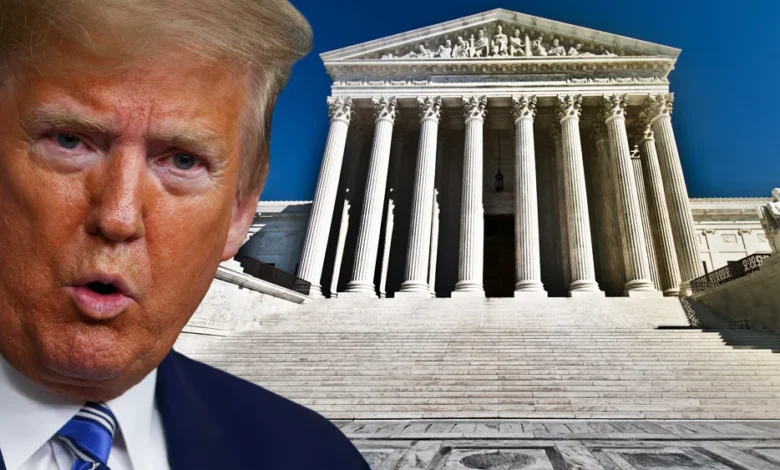
The Supreme Court of the United States issued an unsigned order dealing a decisive legal blow to the federal administration’s eleventh-hour emergency petition aimed at invalidating approximately 20,000 mail-in ballots in California. The high court’s unanimous refusal to grant an injunction pending appeal halts an aggressive Justice Department initiative attempting to force the separation and potential discarding of ballots in the nation’s most populous blue state right on the eve of the midterm elections.
The emergency filing, spearheaded by the Trump administration, alleged widespread irregularities and claimed that noncitizens were attempting to exploit the electoral apparatus. However, federal lower courts roundly rejected the administration’s claims prior to the Supreme Court’s intervention. Legal scholars and voting rights advocates noted that the contested list of voters presented by federal authorities contained significant data discrepancies, including names of individuals who were not even registered to vote alongside residents who had long since relocated out of the state. With no public dissents recorded among the nine justices, the high court’s decision preserves the integrity of the ballots in question and ensures that every verified, eligible vote cast through the state’s robust mail-in system will be processed and tabulated.
Chronology of the Legal Battle
The legal showdown unfolded over a compressed and frantic timeline in the weeks leading up to the November midterms. The Trump administration’s Justice Department initiated its challenge by demanding that California election officials immediately segregate and halt the processing of roughly 20,000 mail-in ballots. The administration argued that emergency judicial intervention was necessary to prevent what it characterized as systemic vulnerabilities regarding noncitizen voting participation.
California’s state government, led by Governor Gavin Newsom and supported by a coalition of civil rights organizations and legal defenders, immediately pushed back against the federal directive. State attorneys filed expedited motions in lower federal courts, condemning the DOJ’s actions as an unprecedented and partisan overreach into traditional state-administered election processes. District and circuit judges repeatedly ruled against the federal government, determining that the administration had failed to present credible, verifiable evidence of widespread noncitizen voting or administrative malfeasance that would justify upending a state election procedure so close to polling day.
Failing in the lower courts, the Justice Department escalated the matter to the Supreme Court, submitting an emergency application just days before the election. Because emergency petitions are geographically distributed among the justices, the application was initially presented to Justice Elena Kagan, who oversees the Ninth Circuit, and subsequently referred to the full bench. The high court acted swiftly, issuing an unsigned order denying the injunction and effectively ending the administration’s bid to disrupt the vote-counting protocols in California.
Scrutiny of the Disputed Voter Lists
At the core of the legal dispute was a list of approximately 20,000 voters flagged by federal authorities. The Trump administration insisted that the roster contained a high concentration of noncitizens attempting to scam the electoral system. However, independent election experts, state officials, and judicial examiners quickly poked holes in the data integrity of the federal list.
Anomalies within the data included individuals who were entirely unregistered to vote, as well as persons who had moved out of California months or years prior and therefore could not realistically cast a ballot in the state’s midterms. California election officials maintained that the state’s multi-layered verification protocols—which cross-reference voter registration databases with Department of Motor Vehicles records and vital statistics—are fully equipped to identify and weed out ineligible participants without requiring top-down federal intervention.
Lower court judges expressed skepticism during oral arguments regarding the speculative nature of the federal government’s claims, noting that halting the processing of tens of thousands of legitimate ballots based on flawed and unverified administrative lists would cause irreparable harm to the voting franchise of lawful citizens.

Official Responses and Political Repercussions
The Supreme Court’s rejection of the emergency petition sparked immediate, high-stakes political reactions from major figures on both sides of the aisle. The ruling was hailed as a monumental victory for Democrats, voting rights groups, and state-level officials who had spent weeks battling the federal government’s legal maneuvers.
California Governor Gavin Newsom, whose administration has consistently positioned itself as a primary legal firewall against federal encroachments on state policies, issued a fierce public statement following the high court’s decision. Taking to social media platform X, formerly known as Twitter, Newsom emphasized the state’s readiness to defend its electoral sovereignty.
"Donald Trump is trying to throw out 20,000 California ballots and intimidate election workers," Newsom wrote. "Let me be CLEAR: If you interfere with our elections, California WILL come for you. No presidential pardon will save you. We are READY. Every eligible vote WILL be counted."
Newsom’s defiant rhetoric underscored the broader constitutional tensions at play regarding states’ rights and the federal government’s authority over federal versus state elections. As a prominent national figure often discussed as a potential presidential contender for 2028, Newsom’s aggressive posture framed the legal victory not merely as a local administrative win, but as a defense of democratic norms against executive overreach.
Conversely, representatives for the Trump administration and aligned MAGA organizations expressed deep frustration with the Supreme Court’s decision, maintaining that federal oversight is essential to guarantee election integrity across all jurisdictions, regardless of state-level resistance. While no official retreat from broader national election integrity messaging was signaled, the legal defeat effectively closed the door on using the judiciary to alter California’s midterm outcome.
Broader Impact and Implications for Future Elections
The Supreme Court’s handling of the California voting dispute carries significant implications for the future landscape of American election law, federalism, and the boundaries of executive power. By declining to intervene, the high court reinforced the traditional principle that states hold primary authority over the administration and regulation of elections within their borders, provided they comply with federal constitutional standards and statutory mandates like the Voting Rights Act.
Legal analysts point out that the swift, unanimous denial of the emergency petition demonstrates a high threshold required for federal agencies to successfully halt state-level election procedures through emergency injunctions. Courts continue to demand concrete, substantiated evidence of systemic harm rather than speculative allegations when deciding whether to interfere with ongoing voting processes.
Furthermore, the episode highlights the ongoing polarization surrounding mail-in voting, voter registration lists, and the role of the Department of Justice in electoral disputes. As the United States moves past the midterm elections, battles over voter data verification, list maintenance, and state autonomy are expected to persist in both federal and state courts. However, for California’s electorate, the Supreme Court’s ruling guarantees that the 20,000 contested ballots remain secure within the tabulation pipeline, ensuring that the voices of eligible voters are heard without federal disruption.