Midterm Election Pulse: President Trump Rallies in South Carolina Amid Shifting Senate Landscapes and Campaign Controversy

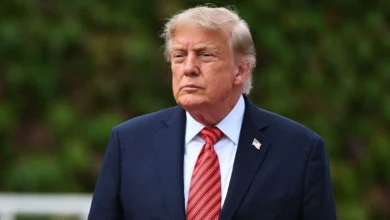
The political landscape across the United States is rapidly intensifying as the November 3 midterm elections approach, with President Donald Trump intensifying his travel schedule to secure Republican majorities in both chambers of Congress. As the nation pivots toward the final days of campaigning, the President is set to visit South Carolina to bolster the re-election bid of Senator Darline Graham. This late-stage intervention follows a troubling internal poll from The New York Times/Siena College, which indicates that Graham is currently polling less than one percentage point ahead of her Democratic challenger, Annie Andrews. Despite South Carolina’s history as a staunchly Republican stronghold—where a Democrat has not secured a Senate seat since 1998 and the President won by a 17-point margin in 2024—the tightening race has forced the GOP to commit significant resources to a state that was previously considered safe.
The Volatile Senate Map and Regional Hotspots
The scramble for the Senate majority has narrowed down to ten critical battlegrounds. Republicans currently hold a 53-47 advantage, but the path to maintaining control is fraught with challenges. The current map includes competitive races in Maine, North Carolina, Ohio, Kansas, Iowa, Texas, and Alaska for the GOP, while Democrats are fighting to hold onto seats in New Hampshire, Michigan, and Georgia.
In New Hampshire, the contest between Democratic Representative Chris Pappas and Republican former Senator John E. Sununu has become a focal point for the debate over the future of the party. During a recent televised debate, the two candidates clashed over economic policy, the ongoing conflict in Iran, and the influence of national figures on local issues. Sununu, while carrying the endorsement of President Trump, has attempted to carve out an independent identity, frequently citing Maine Senator Susan Collins as a model for bipartisan governance. Pappas, conversely, has leaned into the national Democratic narrative, emphasizing the need for a shift in Senate power and criticizing Sununu’s alignment with Trump-era trade policies, which he argues have stifled New Hampshire’s economy.
Alaska’s Ranked-Choice Controversy
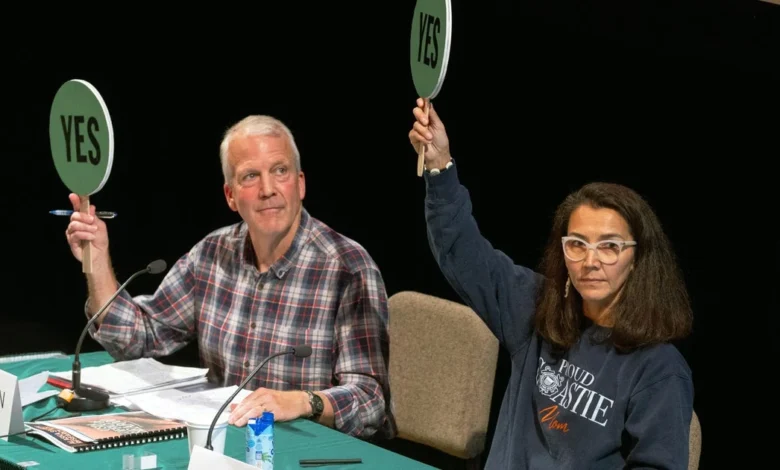
The most unusual development in this election cycle has emerged from Alaska, where Governor Mike Dunleavy has ordered a formal investigation into the campaign of Democratic Senate candidate Mary Peltola. The investigation follows reports that individuals aligned with the Peltola campaign allegedly participated in the recruitment of a "spoiler" candidate, Daniel J. Sullivan Jr., who shares the same name as the incumbent Republican Senator, Dan S. Sullivan.
The presence of a second Dan Sullivan on the ranked-choice ballot has become a source of significant litigation. While the Alaska Supreme Court ruled that the candidate could remain on the ballot, the Justice Department has filed suit to prevent the certification of the election if the incumbent loses, citing concerns over voter integrity. President Trump has weighed in forcefully on the matter, calling the alleged scheme "election fraud" and suggesting that Peltola should be disqualified. Peltola has dismissed the allegations as a distraction, maintaining that her campaign is focused on healthcare affordability and economic relief for Alaskans.
Michigan: A House Divided and a Tightening Race
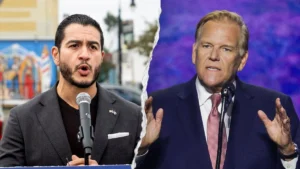
In Michigan, the Senate race between Democrat Abdul El-Sayed and Republican Mike Rogers has been marked by personal friction and ideological polarization. Representative Haley Stevens, who lost the Democratic primary to El-Sayed, has reaffirmed her support for the party ticket, even as her fiancé, Jason Turkish, publicly announced his support for Rogers. Turkish cited concerns regarding El-Sayed’s past critiques of Israeli policy as his primary motivation, labeling them "reckless."
The political rhetoric in the Great Lakes State has reached a fever pitch. Senator Ted Cruz, campaigning for Rogers, recently referred to El-Sayed as a "jihadist leprechaun," an inflammatory remark that underscores the GOP’s aggressive closing strategy. El-Sayed has repeatedly and categorically denied any ties to the Muslim Brotherhood, a claim that Republican opponents continue to push as a centerpiece of their campaign messaging. Despite the intense negative campaigning, recent polling from Mitchell Research & Communications shows El-Sayed widening his lead over Rogers to 7 percentage points, suggesting that the nationalization of local races may be yielding diminishing returns for the Republican Party in the Midwest.
Ohio: Trump’s Influence and the "Pretend I’m on the Ballot" Strategy
Ohio remains a crucial test of President Trump’s enduring influence. During recent rallies, the President has urged voters to "pretend I’m on the ballot" to boost Senator Jon Husted and gubernatorial candidate Vivek Ramaswamy. These races have become increasingly complicated by the conduct of the campaigns. Ramaswamy has faced a wave of bipartisan backlash over a campaign advertisement featuring the estranged mother of his opponent, Amy Acton, which alleged Acton was a "liar." The ad has alienated several prominent Ohio Republicans, and Ramaswamy’s absence from a recent joint rally with other statewide GOP candidates has sparked rumors of a deepening rift within the Ohio Republican party.
Meanwhile, the President’s commentary on Senator Husted’s physique—a recurring theme in his recent campaign stops—has prompted lighthearted dismissals from the Senator, who told CBS News that he and his wife possess a "good sense of humor" regarding the President’s fixation on his athletic build. Beyond the spectacle, the President’s promise to establish a new U.S. Space Academy in Ohio, contingent upon a Republican victory, reflects the high stakes placed on the Buckeye State by the White House.
Legal Challenges and Election Integrity
As the election approaches, the judicial system is playing an increasingly prominent role in election administration. In a significant victory for California election officials, U.S. District Judge David Carter rejected a request from the Trump administration to force the state to segregate approximately 20,000 mail-in ballots from individuals the administration claimed were non-citizens. Judge Carter’s ruling emphasized that the federal government does not have the constitutional authority to coerce state-level election procedures on the eve of a national vote, describing the attempt as a fundamental overreach. This ruling provides a temporary reprieve for election officials in California, though it is widely expected that litigation regarding mail-in ballot procedures will continue well beyond Election Day.
The National Outlook: House and Senate Control
The House of Representatives remains in a state of flux, with 47 battleground districts set to determine the majority. Currently, the GOP holds a razor-thin margin of 218 seats, compared to 214 held by Democrats, with two vacancies complicating the math. The CBS News Battleground Tracker indicates a path for Democrats to reclaim the House, estimating that they are currently on track to secure up to 229 seats. However, a narrow path to victory remains for the Republican Party, with models suggesting a range that could leave the GOP with a majority of 215 seats.
The outcome of these elections will ultimately hinge on the effectiveness of national parties in mobilizing their respective bases amid persistent economic anxieties. Rising gas prices, the ongoing war in Iran, and concerns over government transparency are the primary issues driving voter sentiment. As Barack Obama and other Democratic surrogates campaign on the platform of restoring stability, the Trump-led Republican ticket continues to frame the election as a referendum on the administration’s handling of the economy and national security.
As the final countdown begins, both parties are operating with a sense of urgency. The mobilization efforts in states like South Carolina, Michigan, and Ohio serve as a microcosm of the national divide. With margins razor-thin in multiple chambers, the electoral map of 2026 is shaping up to be one of the most contested in modern American history, with the balance of power likely to be decided by the narrowest of margins in a handful of suburban and rural battlegrounds. The coming days will be defined by an intense focus on get-out-the-vote efforts, as both candidates and voters prepare for a pivotal moment that will set the legislative agenda for the remainder of the decade.