If measure had passed, adult-use pot shops would have been forced to close by the start of 2028

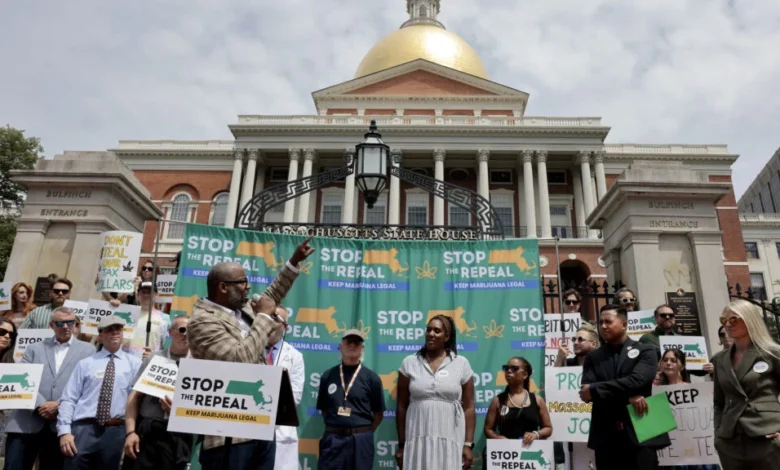
The Massachusetts recreational marijuana industry has secured a decisive victory, effectively silencing the most significant legislative challenge to its existence in nearly a decade. On Election Day, November 3, 2026, voters overwhelmingly rejected Question 8, a ballot initiative that sought to roll back the legalization of adult-use cannabis in the Commonwealth. With approximately 90% of the vote tallied by the following morning, the initiative faced a crushing defeat, with roughly 76% of the electorate voting against the repeal and only 24% in favor. Had the measure succeeded, the state’s burgeoning cannabis sector—a market that has generated billions in economic activity and significant tax revenue—would have been dismantled, with all adult-use dispensaries mandated to cease operations by January 1, 2028.
The Context of the 2026 Ballot Initiative
The attempt to repeal recreational marijuana in Massachusetts was a significant outlier in an era where cannabis normalization has largely become the status quo across the United States. Since Massachusetts voters first legalized recreational possession and sales via a 2016 ballot measure, the state has built a robust regulatory framework overseen by the Cannabis Control Commission (CCC).
The movement to repeal the law was spearheaded by a coalition of community activists and conservative-leaning advocacy groups who argued that the rapid commercialization of cannabis had led to unforeseen public health consequences. Proponents of the repeal cited concerns regarding youth access, the potency of modern cannabis products, and the perceived impact on public safety, particularly regarding traffic incidents. Despite these concerns, the “Stop the Repeal” campaign, led by prominent local business owners like Tito Jackson, successfully framed the initiative as an existential threat to an industry that had already become deeply integrated into the state’s economy.
A Chronology of the Cannabis Debate in Massachusetts
To understand the weight of the November 2026 vote, one must look at the timeline of cannabis policy in the Commonwealth:
- November 2016: Massachusetts voters approve Question 4, legalizing the possession, cultivation, and sale of marijuana for adults 21 and older.
- July 2017: The state legislature signs a bill into law that creates the Cannabis Control Commission (CCC) to regulate the new industry.
- November 2018: The first licensed recreational dispensaries open their doors in Leicester and Northampton.
- 2020–2024: The industry experiences exponential growth, with the CCC reporting record-breaking sales figures and the state collecting hundreds of millions in excise and sales tax revenue.
- Early 2026: A group of activists successfully gathers the necessary signatures to place a repeal initiative on the November ballot, citing concerns over public health data.
- June 2026: The “Stop the Repeal” campaign officially launches in front of the State House, emphasizing job retention and the success of the regulated market over the illicit, unregulated market.
- November 3, 2026: Voters head to the polls, resulting in a 76% to 24% rejection of the repeal measure.
Supporting Data and Economic Impact
The economic arguments presented by the opposition to the repeal were central to the campaign’s success. According to data provided by the Cannabis Control Commission, the Massachusetts marijuana industry has created over 30,000 jobs across cultivation, manufacturing, testing, and retail sectors.
Furthermore, the fiscal impact of the industry has been substantial. Since the inception of legal sales, the state has collected significant revenue that is earmarked for public health, public safety, and local community impact funds. In fiscal year 2025 alone, the industry contributed over $200 million in tax revenue to the state’s general fund. Analysts noted that had Question 8 passed, the state would have faced an immediate budget deficit, not only from the loss of tax revenue but also from the significant legal challenges that would have inevitably followed from industry stakeholders.
Stakeholder Reactions and Official Responses
Following the announcement of the results, the mood among industry leaders was one of cautious celebration. Tito Jackson, a former Boston City Councilor and a central figure in the anti-repeal effort, emphasized the importance of the outcome for small business owners and social equity applicants. "Today, voters recognized that the genie is out of the bottle, and that the state has successfully transitioned from an underground market to a safe, regulated, and tax-contributing industry," Jackson stated in an address to supporters.
Public health advocates who had been critical of the industry’s expansion expressed disappointment but signaled a shift in strategy. Representatives from several advocacy groups noted that while they failed to repeal the law, they would continue to lobby for stricter labeling requirements, more rigorous testing for contaminants, and enhanced public awareness campaigns regarding the effects of high-potency THC products.

Legislative leaders in the State House, many of whom had remained neutral throughout the campaign, suggested that the decisive nature of the vote provides a clear mandate to focus on refining existing regulations rather than reconsidering the legality of the substance.
Broader Implications for Cannabis Policy
The failure of Question 8 in Massachusetts serves as a bellwether for the state of cannabis politics in the United States. As the nation moved through the 2026 midterm cycle, the broader political landscape was characterized by a “blue wave” in many regions, signaling a trend toward more progressive social policies. The rejection of the repeal initiative confirms that, for the vast majority of voters, the transition to a legal cannabis market is considered a settled matter.
The implications for the industry are profound. With the threat of total repeal removed, institutional investors and ancillary businesses—such as law firms, security companies, and construction firms that cater to the cannabis sector—are expected to increase their footprint in Massachusetts. The stability provided by the election result allows for long-term capital investment that was previously stalled due to the uncertainty surrounding the ballot measure.
Furthermore, the Massachusetts case provides a blueprint for other states facing similar challenges. By proactively organizing coalitions that highlight the economic and public safety benefits of a regulated market, industry advocates can effectively counter arguments based on prohibitionist ideologies. The focus, according to industry analysts, will now shift toward "Cannabis 2.0"—a phase characterized by product diversification, interstate commerce discussions, and the potential for federal rescheduling, which remains a key long-term goal for the industry.
Analyzing the Future Regulatory Landscape
Despite the victory, the industry remains subject to strict oversight. The CCC is expected to introduce new rules in 2027 focused on the environmental impact of cultivation facilities and the further development of social equity programs intended to repair the harms of the historical War on Drugs.
The failure of the repeal also signals that voters are increasingly distinguishing between "legalization" and "regulation." The electorate in Massachusetts demonstrated a high level of sophistication, viewing the cannabis industry not as a moral issue, but as a regulated consumer goods market that requires oversight rather than elimination.
As the state moves toward 2028—the date that would have marked the effective end of the industry—the conversation will likely turn toward expansion. Discussions regarding social consumption lounges, home delivery services, and the integration of cannabis into the state’s tourism sector are likely to dominate the legislative agenda in the coming years.
In summary, the 2026 election has solidified the role of the cannabis industry in Massachusetts. By overwhelmingly voting down the repeal, the public has opted for the stability of a regulated market over the uncertainty of prohibition. The industry now stands on firmer ground, prepared to continue its integration into the broader economy while navigating the complexities of a maturing regulatory environment.
Related posts: