The Semiconductor Bottleneck and Supply Chain Realities
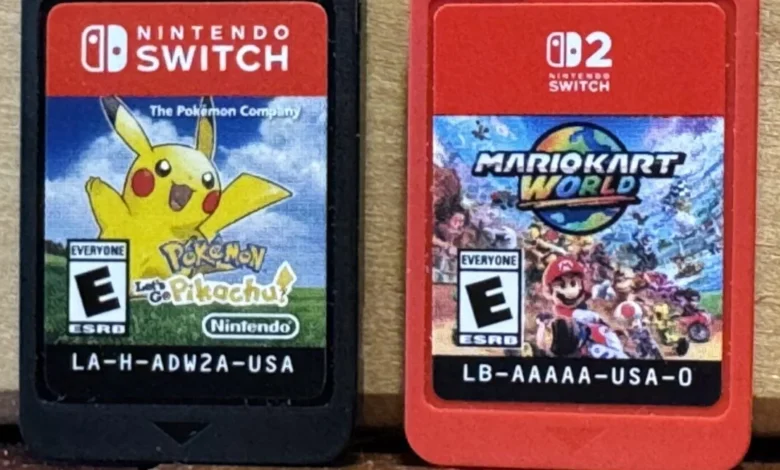
The production of physical game cartridges for the Nintendo Switch ecosystem relies on a highly specialized supply chain that is increasingly at odds with modern semiconductor manufacturing trends. Nintendo’s primary reliance on legacy chip suppliers, most notably Rohm and Lapis Semiconductor, highlights a vulnerability in the company’s hardware strategy. As the global semiconductor industry pivots toward high-performance nodes for artificial intelligence, automotive, and data center applications, the manufacturing capacity for the older-generation ROM chips required for Nintendo’s proprietary cartridges has constricted.
This supply-side pressure creates a paradoxical environment for the gaming giant. While Nintendo has publicly reaffirmed its intent to support physical media, the physical constraints of the market—namely, the dwindling number of fabrication plants capable of producing these specific ROM chips—are forcing a recalibration of how these products are brought to market. Industry analysts suggest that the overhead costs associated with sourcing these components from limited vendors are inevitably being passed down to the consumer, explaining the recent price disparity between digital and physical versions of the same titles.
A Chronology of the Physical Media Shift
The current state of Nintendo’s physical distribution strategy did not emerge in a vacuum; it is the result of several years of incremental shifts in both internal policy and external market pressures.
- Late 2025: The industry witnessed a pivotal moment when publishers began openly discussing the feasibility of physical releases based on production costs. The case of the publisher Inin, which cited the introduction of smaller, lower-capacity cartridge sizes for the Nintendo Switch 2 as a deciding factor in their ability to release R-Type Dimensions III physically, underscored how thin the margins have become for third-party developers.
- Early 2026: Nintendo implemented a formal price differentiation strategy, charging a premium for physical copies of select titles compared to their digital counterparts. This move marked a departure from the traditional retail model where physical and digital editions typically launched at parity.
- Mid-2026: The divergence between Sony and Nintendo became stark. While Sony continued to dismantle its physical distribution infrastructure, moving toward an almost entirely digital ecosystem, Nintendo issued a public statement confirming that it had no immediate plans to abandon physical cartridges, citing strong fan demand and a desire to maintain a presence in the physical retail space.
- Current Status: As of the second quarter of 2026, digital sales now account for over 61.5 percent of Nintendo’s total software revenue, representing a steady, if gradual, shift away from the legacy cartridge model that has defined the company’s identity for decades.
Data Analysis: The Digital Migration
The statistics provided by market observers such as Gibson indicate that the transition to digital is not merely a corporate goal but a reflection of evolving consumer behavior. In the second calendar quarter of 2026, digital sales reached 61.5 percent, a notable increase from the previous year. This metric is critical for understanding the long-term viability of physical cartridges.
From a logistics perspective, if digital sales continue to capture a larger share of the market, the aggregate demand for physical cartridges will likely reach a point of inflection. At that stage, the economies of scale that once made physical production profitable may evaporate. However, there is a counter-argument: as demand for physical copies reaches a "niche" status, the premium pricing model may actually sustain the format for a longer period than currently anticipated by bearish market analysts. Collectors and enthusiasts who prioritize the ownership of physical assets provide a resilient floor for demand that digital platforms cannot replicate.
Official Stances and Industry Responses
Nintendo’s official position has remained consistent throughout 2026: the cartridge is a fundamental component of the "Switch experience." By emphasizing the importance of physical ownership to its user base, Nintendo is attempting to differentiate itself from competitors who view physical media as an unnecessary overhead.
However, the company’s public rhetoric is nuanced. While Nintendo expresses commitment, it has also proactively introduced smaller, lower-capacity cartridges. This indicates that the company is not blindly supporting physical media, but rather attempting to optimize the cost-to-capacity ratio to ensure that smaller independent titles remain viable for physical distribution. This is a tactical maneuver designed to keep third-party publishers engaged in the physical ecosystem, thereby maintaining shelf space in major retail outlets.
Economic Implications for Publishers
For third-party publishers, the cost of manufacturing cartridges is a major hurdle in their profit-and-loss calculations. The high upfront cost of production—especially for games requiring higher storage capacities—often discourages physical releases for smaller or mid-tier titles. The introduction of smaller, cheaper cartridge tiers for the Switch 2 is seen as a lifeline for these developers.
If these cheaper, lower-capacity carts prove successful, we may see a bifurcated physical market: premium "AAA" titles distributed on high-capacity, high-cost cartridges, and a secondary market of smaller games utilizing lower-capacity, cost-effective media. This would allow Nintendo to maintain a diverse physical library while shielding publishers from the prohibitive costs that have historically led to "digital-only" releases.
Future Outlook: Can Physical Survive?
The sustainability of the physical game cartridge rests on two pillars: cost-efficiency and consumer demand. If Nintendo can successfully manage the supply chain for its legacy ROM chips—perhaps by incentivizing further innovations in cartridge storage technology—the format may survive well into the next hardware generation.
However, the "limping along" description remains apt. The reality is that the industry is moving toward a post-physical future. The 61.5 percent digital capture rate is unlikely to reverse. Instead, the future of physical media will likely be defined by a shift toward premium, high-value products. Much like the resurgence of vinyl records in the music industry, physical games may transition from a mass-market commodity to a specialized product for collectors and those who value the tangibility of ownership.
Nintendo is betting that the emotional and practical value of physical media—the ability to trade, sell, and preserve games—will remain a compelling selling point. As the company continues to navigate the scarcity of its supply chain, its success will depend on its ability to balance these nostalgic values against the cold, hard realities of manufacturing costs and the accelerating shift toward digital distribution.
Conclusion: The Strategic Balance
The road ahead for Nintendo involves a precarious balancing act. To maintain its current market position, the company must keep physical media alive for a user base that clearly values it, while simultaneously adapting to a digital-first global landscape. Whether the strategy of premium pricing and lower-capacity cartridge innovation will be enough to offset the rising costs of legacy semiconductor production remains the primary question for investors and consumers alike. For now, the cartridge lives on, but it does so in a market that is increasingly prioritizing the convenience of the digital cloud over the permanence of the physical chip. The persistence of the cartridge is not just a technological choice, but a strategic statement by Nintendo, signaling its refusal to be forced into a mold defined by the strategies of its competitors. As we look toward the remainder of 2026 and beyond, all eyes will be on whether the manufacturing constraints tighten further or if the company finds a sustainable path to keeping its physical legacy relevant in a rapidly digitizing world.