Arsenal survive a second-half scare in Prague to extend their unbeaten Champions League run and climb the league phase table

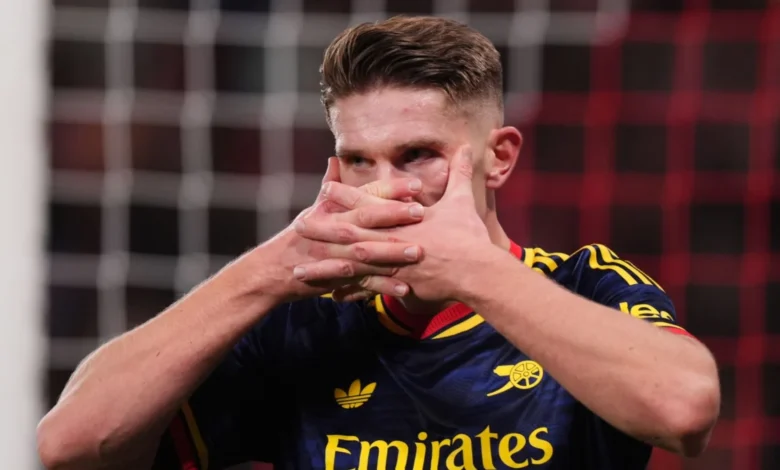
Arsenal successfully navigated a turbulent evening at the Fortuna Arena to secure a vital 2-1 victory over Slavia Prague, maintaining their momentum in the Champions League league phase. While the result cements the Gunners’ status as one of the competition’s early frontrunners, the match served as a stark lesson in the volatility of European football, with a dominant first-half display giving way to a frantic, defensive rearguard action in the closing stages.
The victory, their third in four matches, moves Mikel Arteta’s side to third in the overall table, positioning them firmly within the qualification spots. However, the contrast between the opening 45 minutes and the final half-hour provided ample talking points for a squad currently juggling domestic title aspirations with continental ambitions.
A Tale of Two Halves: The Tactical Breakdown
Mikel Arteta arrived in the Czech capital having made six changes to the starting XI that narrowly defeated Liverpool over the weekend. The rotation appeared to pay dividends immediately, as Arsenal dismantled the Slavia Prague defensive structure with clinical precision. The visitors dominated possession and dictated the tempo, with Noni Madueke and Viktor Gyokeres spearheading a frontline that looked capable of scoring at will.
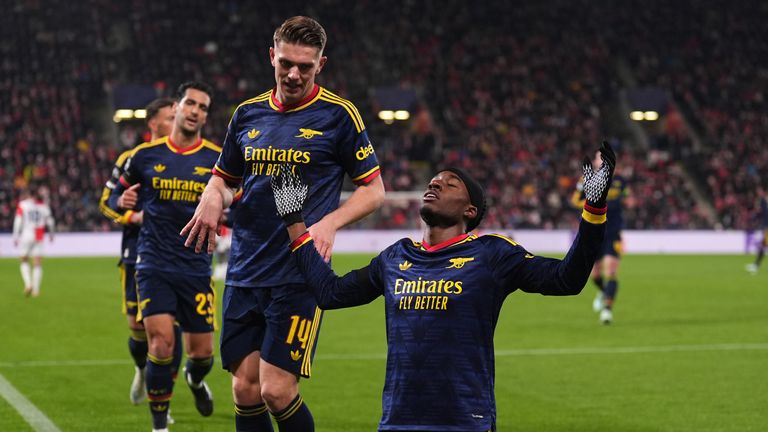
The deadlock was broken early when Gyokeres, exhibiting signs of newfound confidence, played a perfectly weighted pass around the corner to release Madueke. The winger finished with composure, slotting the ball home to give Arsenal a deserved lead. The partnership between the two strikers continued to flourish throughout the first half, culminating in a second goal for the visitors. Following a slick exchange with midfielder Mikel Merino, Gyokeres produced a curling, clinical finish into the far corner, extending the lead and seemingly putting the result beyond doubt before the interval.
However, the second half witnessed a complete shift in momentum. Slavia Prague manager Jindřich Trpišovský made a decisive tactical adjustment, abandoning a traditional back four in favor of a back three. This allowed the hosts to push their wing-backs high and commit additional bodies to the attacking third. The impact was immediate: whereas Slavia had recorded only a single shot in the first half, they unleashed a barrage of 17 attempts after the break, forcing Arsenal into a period of prolonged suffering.
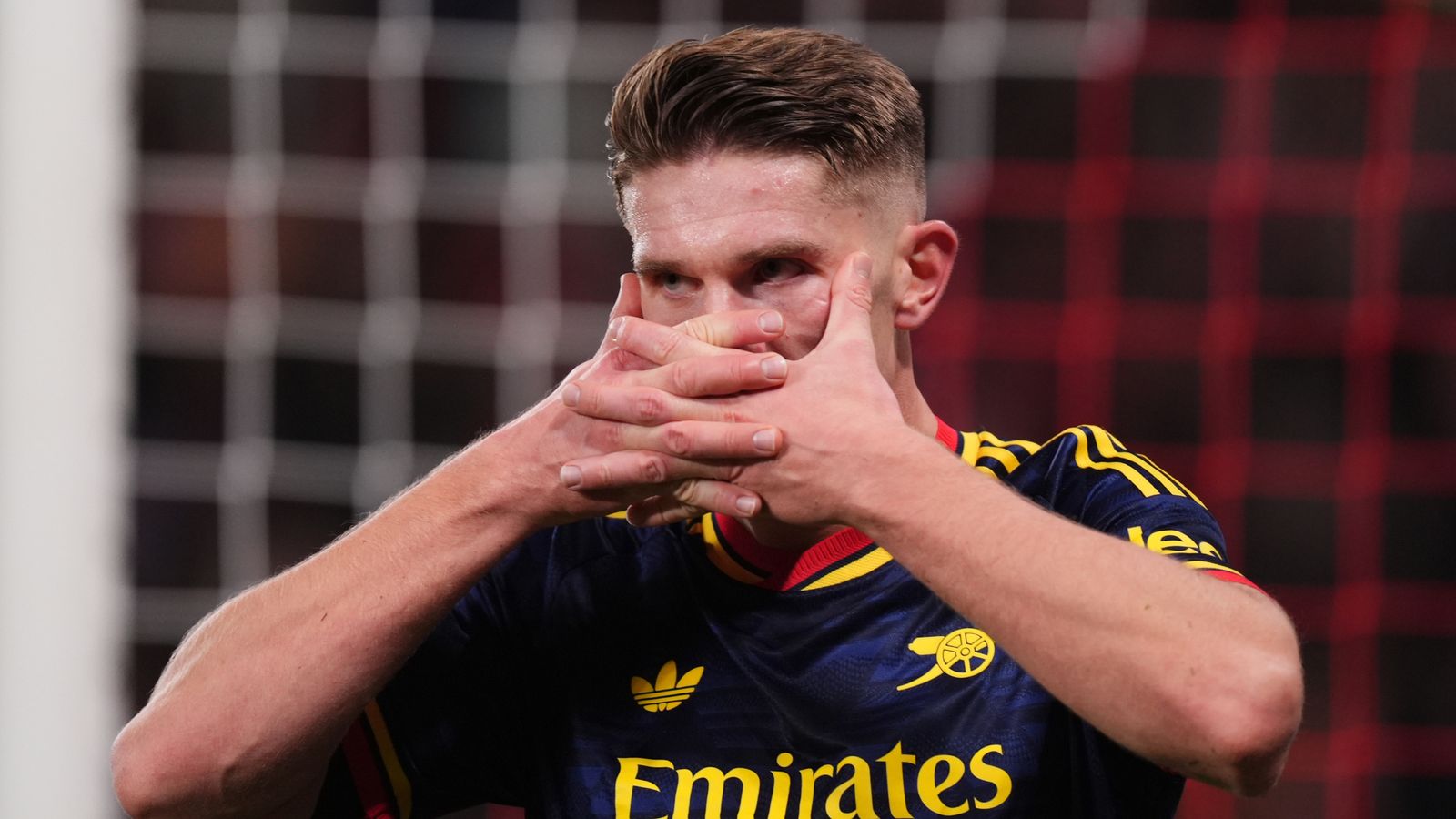
The pressure eventually told in the final minutes when Wiktor Nowak pounced from close range, narrowing the deficit and setting up a chaotic finale. Arsenal were forced to rely on the individual brilliance of David Raya, who produced a string of crucial saves—most notably a fingertip effort that pushed an Oskar Kubiak header onto the post—and a vital goal-line clearance from Gabriel Magalhaes to preserve the three points.
The Resurgence of Viktor Gyokeres
The narrative surrounding Viktor Gyokeres has been a focal point of Arsenal’s season. Having failed to find the net in his first ten competitive appearances, the Swedish international had faced mounting pressure to justify his place in the starting lineup over Kai Havertz. His performance in Prague, however, provided the strongest evidence yet that he is finding his rhythm in North London.
Beyond his well-taken goal, Gyokeres displayed an improved understanding of his role within Arteta’s system. His ability to hold the ball with his back to goal, link play with the midfield, and provide the assist for the opening goal highlighted a more rounded contribution. While critics will argue that consistency against elite European opposition remains the true litmus test, the last week—marked by goals against Fleetwood Town in the Carabao Cup and now a decisive strike in the Champions League—suggests that the striker is turning a significant corner.
Official Reactions: A Lesson in Resilience
In the post-match press conference, Mikel Arteta offered a candid assessment of his side’s performance. "Winning away in the Champions League is extremely difficult, and we have to value that," he told TNT Sports. "The first half was at a really high level—exceptional, even. The scoreline should have reflected three or four goals, and we didn’t capitalize on that."
Arteta was particularly critical of his team’s management of the second half, citing a loss of composure and structural integrity. "At half-time, I warned them that Slavia is a team with huge spirit that would keep running. They became more chaotic, and we didn’t control that at all. We were sloppy, gave the ball away, and made poor clearances. You have to suffer in this competition, but there is a lot for us to learn from this."
Goalkeeper David Raya, who was arguably the difference-maker in the second half, echoed his manager’s sentiments. "We were surprised by their intensity after the break. They went man-to-man all over the pitch, which made it difficult to find our rhythm. I’m delighted with the win, but we know we have things to improve if we want to progress deep into this tournament."
Squad Depth and Injury Updates
The match also saw a significant development in Arsenal’s squad depth, with William Saliba returning to the matchday squad for the first time this season. Although he remained an unused substitute, his presence on the bench represents a major boost for Arteta, who has been managing a defensive injury crisis throughout the autumn. The return of the French international provides a timely reinforcement as the team enters a congested December schedule.
The success of the rotation strategy—bringing in players like Madueke and Merino—demonstrates that Arsenal’s squad is better equipped to handle the demands of the expanded Champions League format than in previous campaigns.
The Broader Implications
Statistically, Arsenal currently holds one of the highest win rates among English clubs in European competition over the last two seasons. This result in Prague serves to solidify their standing, but the match also highlighted the danger of complacency. The "chaotic" nature of the second half, as described by Arteta, is a common theme in modern European football, where home teams are increasingly willing to adopt high-risk, high-reward tactical shifts when trailing.
Looking forward, the upcoming fixtures will be defining. With three wins in four, Arsenal are well-positioned for a top-eight finish in the league phase, which would guarantee automatic entry into the knockout stages and avoid a potentially tricky play-off round. However, the performance against Slavia suggests that while the attacking chemistry is improving, the team’s ability to "kill off" games remains a work in progress.
Conclusion
Arsenal’s victory in Prague was a professional, if ultimately harrowing, exercise in game management. They demonstrated the ruthless efficiency required to build a lead in the first half and the defensive fortitude required to defend it in the second. As the squad prepares for the next phase of the Champions League, the focus will undoubtedly shift toward sustaining their performance levels for the full 90 minutes.
For Arteta, the challenge is clear: build on the growing form of strikers like Gyokeres, integrate returning personnel like Saliba, and ensure that the "sloppiness" witnessed in the second half of this fixture is not repeated against the tournament’s heavyweights. If they can marry the fluidity of their first-half display with the resilience shown at the death, Arsenal remain one of the most formidable prospects in this year’s Champions League.