MGM Resorts Officially Ends Merger Discussions with Barry Diller Controlled IAC After Reaching a New Strategic Voting Agreement

MGM Resorts International has officially concluded merger and acquisition discussions with IAC/InterActiveCorp, the digital media conglomerate controlled by media mogul Barry Diller and serving as MGM’s largest shareholder. The termination of these high-level talks follows the successful negotiation and execution of a newly amended voting agreement that stabilizes the corporate governance relationship between the two entities. According to a regulatory filing submitted by MGM Resorts on Wednesday, the newly established pact definitively alters how both organizations will handle their respective board votes, putting an end to months of speculation regarding a potential full-scale acquisition or structural consolidation.
Under the terms of the newly revised agreement, IAC and its influential chairman, Barry Diller, have committed to voting all of their substantial MGM Resorts equity stakes in strict alignment with the recommendations put forward by the MGM board of directors. This development provides a definitive resolution to a long-standing partnership that has periodically fueled intense market speculation regarding a complete corporate takeover. For the leadership teams at both MGM Resorts and IAC, the decision to codify a voting alignment rather than pursue a complex, multi-billion-dollar merger signals a strategic pivot toward operational stability, shared long-term vision, and mutual focus on core business growth without the massive financial and regulatory friction typically associated with major hospitality-media consolidations.
The Evolution of the Partnership: A Historical Chronology
The roots of the relationship between MGM Resorts and IAC trace back several years, characterized by strategic investments, digital transformation initiatives, and evolving governance dynamics. Understanding the trajectory of this corporate alliance requires examining key milestones that ultimately led to the recent conclusion of merger discussions.
In August 2020, amidst the height of the global COVID-19 pandemic, IAC made a major splash in the traditional hospitality sector by acquiring a 12% stake in MGM Resorts International, valued at approximately $1 billion. Barry Diller, renowned for his strategic investments in digital enterprises such as Expedia, Vimeo, and Tinder, viewed the beaten-down hospitality and gaming stock as an undervalued digital play. Diller and IAC recognized that MGM Resorts was uniquely positioned to capture massive market share in the burgeoning online sports betting and digital gaming landscape through its BetMGM joint venture with Entain.
Following this initial equity purchase, IAC steadily increased its ownership stake, eventually crossing thresholds that made it the single largest shareholder in the resort and casino giant. As IAC’s stake grew, industry analysts and Wall Street financial institutions frequently speculated that Barry Diller would eventually engineer a full-scale merger or buyout, absorbing MGM Resorts into the broader IAC portfolio or restructuring the combined assets to maximize digital and physical synergies.
Throughout 2023 and 2024, discussions regarding a potential closer integration or complete corporate combination occasionally surfaced in financial circles. However, as macroeconomic conditions shifted—marked by fluctuating interest rates, evolving regulatory landscapes in the gaming sector, and differing strategic priorities for the respective leadership teams—both companies began to evaluate whether a structural merger truly served the best interests of their respective shareholders. The culmination of these internal deliberations arrived in late 2024, leading directly to the current governance pact that formally takes merger options off the table while solidifying a cooperative voting structure.
Analyzing the New Voting Agreement
The core mechanism of the newly minted agreement centers on corporate governance and voting alignment. By agreeing to vote IAC’s significant block of MGM shares in tandem with the recommendations of the MGM Resorts board of directors, Barry Diller and IAC have effectively relinquished any immediate ambitions of launching a hostile takeover or forcing structural corporate changes against the wishes of current management.
In the corporate world, large activist or strategic shareholders often maintain the leverage to disrupt board agendas, push for specific strategic exits, or challenge executive leadership. By neutralizing this potential friction through a voluntary voting pact, MGM Resorts leadership—spearheaded by CEO Bill Hornbuckle—gains a profound degree of operational insulation and certainty. This stability allows the executive team to focus squarely on executing their long-term strategic roadmap, which includes expanding their digital footprint, driving international resort development, and maximizing returns from their core domestic properties in Las Vegas and regional markets.
Conversely, for IAC and Barry Diller, the agreement provides a clear, liquid, and strategically aligned investment without the immense capital expenditure and regulatory hurdles required to own and operate a heavily regulated, capital-intensive global gaming enterprise outright. Diller, who has long championed asset-light digital business models, appears content to act as a supportive anchor investor rather than an operational parent company.
Market Data and Financial Context
To fully understand the weight of this announcement, one must evaluate the financial scale of both entities involved in the transaction. MGM Resorts International commands a multi-billion-dollar market capitalization, anchored by iconic physical properties including the Bellagio, ARIA, MGM Grand, and Mandalay Bay in Las Vegas, alongside substantial regional properties across the United States and international ventures such as MGM Macau.
Furthermore, the financial success of MGM’s digital arm, BetMGM, remains a crucial pillar of the company’s valuation. BetMGM, operated as a 50/50 joint venture with Entain PLC, has consistently maintained a leading market position across the United States and Ontario for sports betting and online casino gaming. IAC’s initial investment in 2020 was heavily predicated on unlocking and scaling these digital capabilities, a vision that has largely materialized as online gaming continues to represent a high-growth revenue stream for MGM.
Despite periods of macroeconomic headwinds and the cyclical nature of travel and tourism, MGM Resorts has maintained a robust balance sheet, executing strategic share buybacks and maintaining disciplined capital allocation policies. The removal of merger speculation eliminates a layer of uncertainty that had occasionally introduced volatility into MGM’s stock price, allowing investors to evaluate the company purely on its fundamental operational metrics and future cash flow projections.
Official Reactions and Leadership Perspectives
While formal public statements regarding the termination of merger talks have been measured, industry insiders and corporate governance experts have inferred clear institutional motivations from the filings.
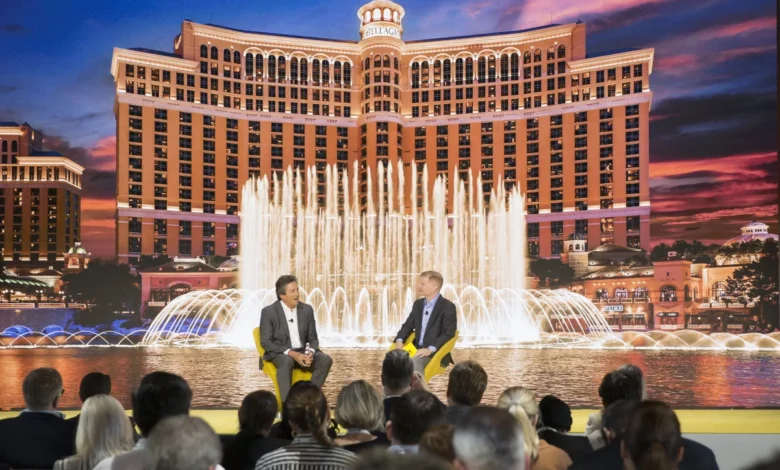
MGM Resorts CEO Bill Hornbuckle, who has frequently outlined the company’s vision at major industry conferences such as the Skift Global Forum, has consistently emphasized the importance of operational independence, brand strength, and digital integration. Hornbuckle’s leadership has steered MGM through post-pandemic recovery, major cybersecurity incidents, and the rapid expansion of its loyalty ecosystem, MGM Rewards. The solidification of the voting agreement with IAC underscores the board’s confidence in Hornbuckle’s strategic direction, ensuring that management will not be distracted by external takeover pressures or conflicting boardroom agendas.
Representatives for IAC and Barry Diller have similarly signaled satisfaction with the current arrangement. Diller, known for his pragmatic and opportunistic investment style, has historically demonstrated a willingness to adapt investment structures when market realities shift. By securing a formalized, cooperative relationship with one of the premier names in global hospitality, IAC maintains exposure to MGM’s financial upside while avoiding the operational complexities of running a massive brick-and-mortar hospitality and gaming empire.
Broader Implications for the Hospitality and Gaming Sectors
The conclusion of the MGM-IAC merger talks carries broader implications for the wider travel, tourism, and gaming industries.
First, it highlights a broader market trend where strategic investors and conglomerates are increasingly favoring cooperative governance agreements and minority stakes over costly, complex mergers. In an economic climate defined by cautious capital deployment and stringent regulatory scrutiny over large-scale corporate consolidation, establishing clear boundaries through voting pacts offers a pragmatic alternative.
Second, the stabilization of MGM’s ownership structure reinforces confidence in the traditional casino-resort sector. As Las Vegas continues to experience record-breaking visitation, major convention demand, and lucrative sports tourism events—ranging from Formula 1 Grand Prix races to the Super Bowl—institutional investors require corporate stability to commit long-term capital. With the question of a potential IAC buyout permanently settled, MGM Resorts can project a unified corporate front to investors, credit rating agencies, and regulatory bodies alike.
Finally, the ongoing partnership—albeit in a strictly investment and advisory capacity rather than a merger—ensures that the technological and digital expertise that IAC initially brought to the table will continue to inform MGM’s broader digital ecosystem. As the lines between physical hospitality experiences and digital consumer engagement continue to blur, the relationship between these two corporate giants, even in its newly defined parameters, remains a fascinating study in modern cross-industry collaboration.
Ultimately, the filing marks the end of an era of speculation and the beginning of a formalized, stable chapter for MGM Resorts International and IAC. By choosing a collaborative voting framework over the turbulence of a merger, both organizations have opted for clarity, stability, and a shared commitment to long-term value creation.