House Republicans Block Impeachment Push Against Secretary of War Pete Hegseth in Bipartisan Showdown Over Executive Authority

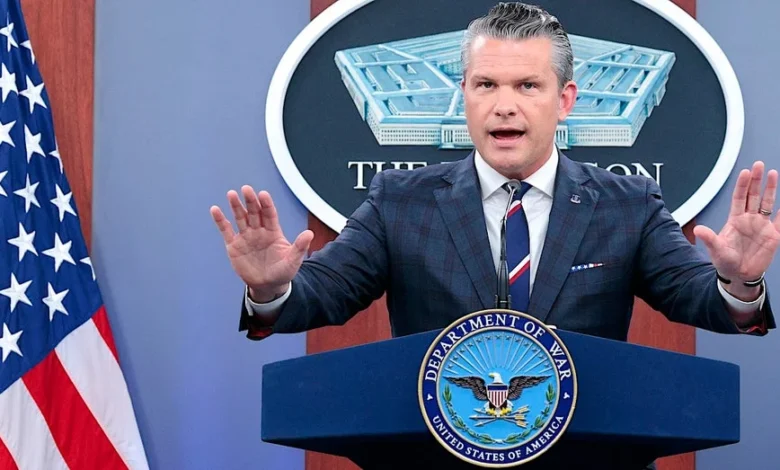
WASHINGTON — U.S. Secretary of War Pete Hegseth successfully evaded an immediate impeachment vote in the House of Representatives on Tuesday evening, as Republican leadership orchestrated a legislative maneuver to sideline an aggressive resolution introduced by outgoing Representative Thomas Massie, R-Ky. The parliamentary block, secured by a 211-204 vote, effectively killed the wide-ranging articles of impeachment by referring the resolution directly to the House Judiciary Committee, ensuring that Hegseth would not face an impeachment floor vote.
The high-stakes legislative battle unfolded amid intense political undercurrents on Capitol Hill, driven by post-midterm attendance vulnerabilities, fierce intra-party divisions, and fundamental disagreements over the limits of executive power, congressional war powers, and military accountability.
The Anatomy of the Resolution and Core Allegations
Representative Massie’s resolution represented a sweeping and aggressive attempt to hold a cabinet-level official accountable through the ultimate constitutional mechanism of impeachment. The legislation detailed eight distinct articles of impeachment against Secretary Hegseth, touching upon some of the most controversial national security and domestic
defense actions of the current administration.
Among the primary grievances cited in Massie’s text was the administration’s military campaign in Iran, which critics argued was executed without explicit, formal congressional authorization, thereby violating the War Powers Resolution and the constitutional division of war-making powers. Additionally, the articles targeted U.S. military strikes against suspected drug-smuggling vessels in the Caribbean, questioning the legal framework and rules of engagement utilized during those interdiction operations.
Massie’s resolution also took aim at Hegseth’s internal department management, specifically highlighting his retaliatory measures against Senator Mark Kelly, D-Ariz. The backlash followed a video message released by Kelly that called upon active-duty troops to carefully evaluate and potentially disobey orders they deemed unlawful. Hegseth’s subsequent administrative and public pushback against Kelly formed a core pillar of the personal and institutional misconduct charges leveled by the Kentucky Republican.
Chronology of the Confrontation
The path to Tuesday night’s vote moved at a breakneck pace, catching many legislative observers by surprise given the truncated calendar following last week’s brutal midterm elections.
- Monday: Representative Massie filed a privileged resolution on the House floor, forcing the chamber’s leadership to schedule action within two legislative days. This procedural tool allowed him to bypass the traditional committee process and the gatekeeping authority of House leadership, creating an immediate emergency for Republican whips.
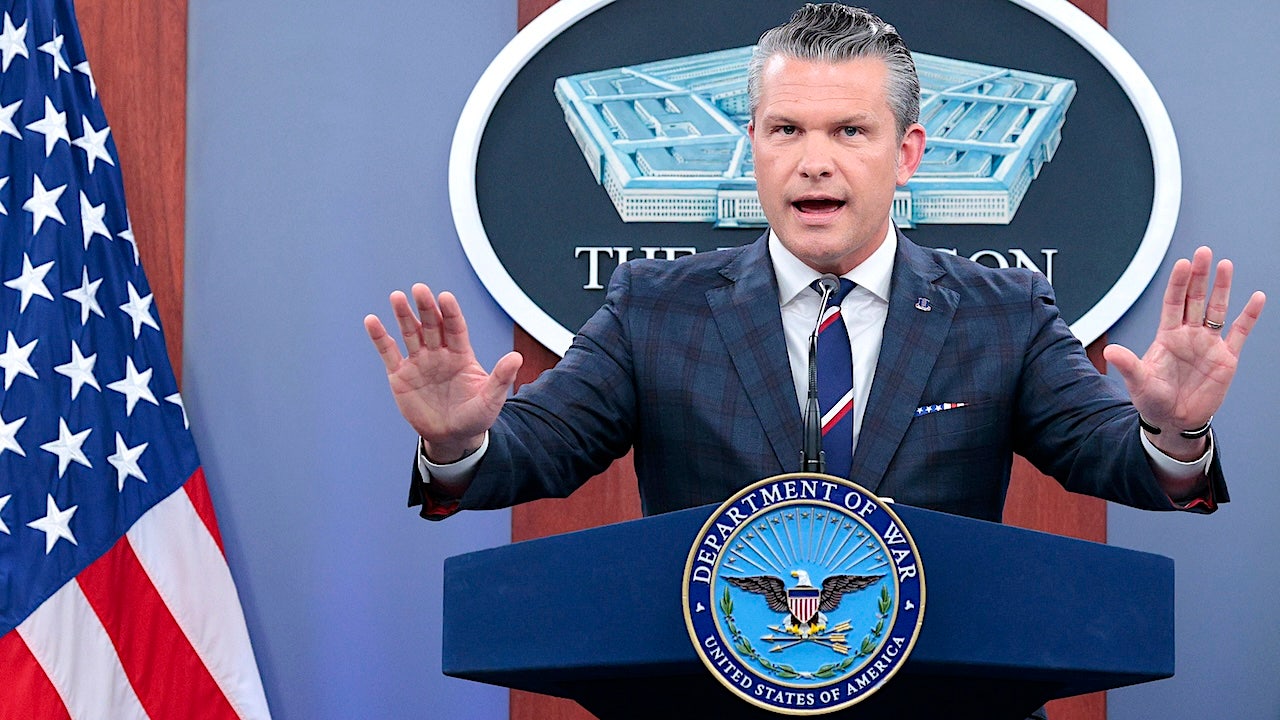
- Tuesday Morning: Secretary Hegseth fired back aggressively during a high-profile news conference at the Pentagon in Arlington, Virginia. Visibly incensed, Hegseth dismissed the impeachment drive not as genuine legislative oversight, but as a personal vendetta. "What one disgruntled and defeated congressman is attempting is not oversight, and it’s not accountability," Hegseth told reporters. "It’s a political spectacle, a personal manifesto driven by ego and resentment."
- Tuesday Evening: The House convened for a tense vote. Speaker Mike Johnson, R-La., navigating the final days of his leadership tenure amidst a depleted Republican caucus struggling with post-election absenteeism, managed to whip enough votes to secure the floor victory. All attending Democrats voted in lockstep to advance the impeachment push, while the Republican caucus—with the sole exception of Massie—unanimously backed the motion to refer the resolution to the Judiciary Committee, effectively burying it.
Intra-Party Friction and Legislative Anxiety
While the leadership ultimately succeeded in shelving the resolution, the hours leading up to the vote were marked by palpable panic among Republican whips. Lawmakers privately warned that if Democratic attendance outpaced Republican numbers on the floor, an actual impeachment vote could have unexpectedly passed, creating an unprecedented constitutional crisis for the executive branch.
The uncertainty laid bare deep ideological fractures within the House Republican conference. On one side stood libertarian and non-interventionist Republicans like Massie, who argued that congressional abdication of war powers has empowered the executive branch to run roughshod over the Constitution. On the other side stood mainstream Republicans and defense hawks who, despite possessing their own policy disagreements with the administration, viewed the impeachment mechanism as an inappropriate and dangerous weaponization of the legislative process.

Representative Jake Ellzey, R-Texas, voiced the anxieties of many colleagues prior to the vote. "I’m going to vote no," Ellzey told reporters. "I don’t know if any Republicans other than Massie will be in support of his articles of impeachment, but I don’t even know how many Republicans will be here by the time of the vote. The real question is how short are we. Numerically, if they’re all here and we’re not, what happens then?" Ellzey flatly characterized the entire effort as "a ridiculous waste of time."
Even lawmakers who openly criticized the administration’s foreign policy found themselves refusing to support Massie’s specific remedy. Representative Warren Davidson, R-Ohio, who has consistently opposed the White House’s military involvement in Iran, argued that targeting Hegseth missed the fundamental structural issue.
"I think it’s an effort to scapegoat Pete Hegseth for Congress shirking their own duty and, frankly, the president taking action that, in my view, is unconstitutional. But it’s also not unprecedented," Davidson said following a Republican caucus meeting. Davidson emphasized that holding a cabinet secretary personally liable for overarching presidential decisions would shatter decades of institutional norms. "What would be unprecedented is to hold the secretary of defense accountable for a decision the president makes. Or, frankly, it would have been unprecedented for the secretary of defense to kind of break ranks on something that is clearly not unprecedented in terms of what has become the standard operating procedure for administrations going back to the Korean War."
Similarly, Representative Don Bacon, R-Neb., a vocal and frequent critic of Hegseth’s leadership style and policy decisions, distanced himself from the impeachment push. "I’m personally not a fan of the secretary. I don’t think he was the right guy in the job," Bacon admitted. "But, also, when you read Massie’s impeachment, I don’t agree with it."
Broader Implications and Institutional Impact
The failed impeachment vote underscores a recurring modern tension in American governance: the blurring lines between legitimate legislative oversight, policy disputes, and the constitutional threshold for "high crimes and misdemeanors."

For Secretary Hegseth, the defeat of the resolution provides immediate administrative relief, allowing him to maintain his portfolio at the Pentagon without the crippling distraction of an ongoing House impeachment trial. However, the episode leaves deep scars across Capitol Hill. It highlighted the fragility of House majorities in the wake of midterm electoral shifts, the challenges facing outgoing Speaker Mike Johnson as he manages a fractious caucus, and the persistent frustration among lawmakers regarding executive overreach in military engagements.
Constitutional scholars note that while executive military actions without explicit congressional authorization have historical precedent stretching back decades—spanning multiple administrations from Korea and Vietnam to the Middle East—the willingness of individual lawmakers to leverage the impeachment process against cabinet secretaries signals an increasingly volatile relationship between the legislative and executive branches.
As the 119th Congress draws toward its close and a new political landscape looms in January, the underlying grievances regarding war powers, congressional oversight, and military accountability remain unresolved. For now, however, the Department of War avoids a historic constitutional showdown, and Secretary Hegseth remains safely entrenched at his post.