PNOĒ 2.0 Brings Elite Metabolic Testing to the Masses With a Self-Administered Breath Analysis Mask

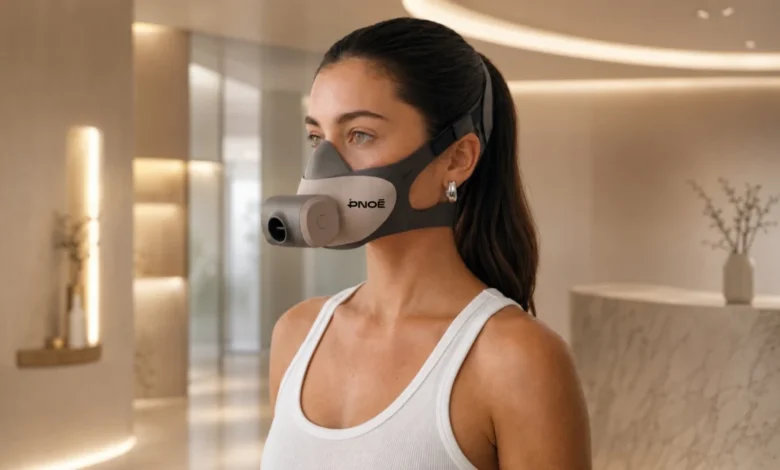
At first glance, the newest hardware innovation from health-tech firm PNOĒ resembles a piece of cinematic costuming. The apparatus, covering both the nose and mouth while securing firmly around the back of the head, bears an unmistakable visual parallel to the mask worn by the fictional comic-book villain Bane. Yet, beneath its intimidating exterior lies a health optimization tool designed for a purely benign and health-conscious purpose: quantifying human respiration to optimize nutrition, physical training, and long-term wellness.
Scheduled for official commercial release on October 1, the PNOĒ 2.0 represents a significant engineering leap from its predecessor. Operating out of dual headquarters in Malden, Massachusetts, and Athens, Greece, the 10-year-old startup has redesigned its flagship metabolic testing hardware to eliminate the need for a specialized technician. According to co-founder and CEO Apostolos Atsalakis, the updated operational workflow allows a gym member to independently secure the mask, initiate the test with a single button press, and complete an eight-minute respiratory evaluation while seated.
This transition toward self-administration removes a fundamental operational bottleneck that previously restricted the technology’s deployment. Earlier iterations necessitated a trained clinical operator, limiting placement strictly to supervised environments. By removing this barrier, the PNOĒ 2.0 opens commercial pathways into unattended fitness facilities, boutique wellness spaces, and potentially retail pharmacies.
The Evolution and Science of Metabolic Testing
While the hardware configuration is novel, the underlying biochemical science is well-established. Metabolic testing—which evaluates the gaseous exchange of oxygen consumption and carbon dioxide production to determine how the human body converts fuel into cellular energy—has a history spanning over a century. For decades, it has functioned as the clinical gold standard for measuring VO₂ max, the maximum volume of oxygen an individual can utilize during exhaustive exercise. Cardiorespiratory fitness measured via VO₂ max is widely regarded by exercise physiologists as a primary indicator of cardiovascular health and overall physical resilience.
However, traditional metabolic testing has historically been confined to high-end sports science laboratories, elite university departments, and specialized hospital wings. These legacy systems, often referred to as metabolic carts, are bulky, expensive, and require expert calibration and interpretation. Consequently, access has traditionally been limited to elite athletes, professional sports organizations, and affluent corporate wellness participants.
PNOĒ’s core proposition is the democratization of this diagnostic capability. By packing laboratory-grade accuracy into a portable, user-friendly device paired with proprietary analytical software, the company aims to make advanced metabolic profiling universally accessible.
The system captures 23 distinct physiological biomarkers during a brief test. Beyond calculating VO₂ max, the software determines resting metabolic rate—the exact quantity of calories an individual burns while at complete rest—and metabolic flexibility, which measures the body’s metabolic efficiency in alternating between lipid (fat) and carbohydrate oxidation. Atsalakis emphasizes that these granular metrics provide actionable insights regarding caloric requirements and training zones that conventional blood panels simply cannot deliver.
Chronology and Company Origins
The trajectory of PNOĒ reflects the broader commercialization wave of advanced biometric monitoring.
- 2014–2018: The foundational concepts behind the technology take shape during CEO Apostolos Atsalakis’s doctoral research in sensing technologies at the University of Cambridge, coinciding with the broader consumer wearables boom. Atsalakis recognizes a significant gap in the market: while wearables track movement and heart rate, they largely ignore the chemical composition of human breath. He partners with childhood friend Panos Papadiamantis, now the company’s chief product officer, to develop a portable respiratory gas analysis system.
- Winter 2019: PNOĒ participates in the prestigious Y Combinator accelerator program, entering the market well before "longevity science" achieves its current cultural prominence.
- 2019–2023: The startup secures early venture backing, scaling its business-to-business model across elite athletic franchises, high-end hospitality brands, and premier fitness networks.
- Late 2024: PNOĒ closes a significant $11 million funding round, bringing its total lifetime venture funding to approximately $22 million. Key investors include venture firm 50 Years and Google Maps co-founder Lars Rasmussen.
- October 1, 2024: The company prepares for the global commercial rollout of the PNOĒ 2.0, introducing self-administration capabilities, hardware modularity, and an optimized ergonomic design developed in collaboration with Milan-based Design Group Italia.
Addressing Post-Pandemic Hygiene and Hardware Design
Designing the PNOĒ 2.0 required overcoming substantial engineering hurdles, particularly concerning public health hygiene in shared fitness environments. To answer prospective users’ immediate concerns regarding sanitation in a post-pandemic landscape, the engineering team decoupled the sensitive electronic sensor array from the physical contact surfaces.
The proprietary electronics module detaches seamlessly from the medical-grade silicone mask and adjustable head straps. This architecture allows fitness facilities to invest in a limited pool of costly electronic hardware while provisioning individual, low-cost silicone masks for each unique user. According to Atsalakis, the industrial design required countless iterations alongside Design Group Italia to achieve a reliable, consumer-friendly device configuration that had no direct market precedent.
Regulatory Positioning and Commercial Strategy
Despite its clinical-grade precision, PNOĒ maintains a strict regulatory boundary. The device currently lacks clearance from the U.S. Food and Drug Administration (FDA) and is not marketed as a diagnostic medical instrument.
"We do not provide medical recommendations," Atsalakis stated clearly. "It’s like a body composition device, like a scale. A doctor cannot prescribe medication based on our results."
Instead, the company positions its platform firmly within the wellness and preventative health sector. While researchers continually investigate whether volatile organic compounds in human exhaled breath could eventually serve as early-warning biomarkers for oncological or systemic diseases, Atsalakis acknowledges that such clinical applications remain years away. Navigating the necessary regulatory pathways for diagnostic approval will require extensive clinical trials, meaning the company remains focused on performance optimization and biological age management for the foreseeable future.
PNOĒ operates on a business-to-business (B2B) distribution model, selling its hardware and software packages exclusively to commercial entities rather than direct-to-consumer buyers. Approximately 85% of the company’s revenue originates in the United States, which management characterizes as the most mature global market for longevity-focused services. International expansion is currently underway across Europe, Latin America, and Asia through strategic regional partnerships.
Corporate clients—including Equinox (where the test is deployed across nearly all clubs), Four Seasons hotels, Red Bull, the National Basketball Association (NBA), the Mount Sinai Health System, and Restore Hyper Wellness—pay a monthly subscription fee ranging from $400 to over $1,000. This subscription model, termed a "business in a box" by leadership, encompasses the necessary hardware, cloud software analytics, staff training protocols, and marketing collateral.
By integrating PNOĒ’s testing platform directly into client onboarding workflows, fitness operators and medical spas can dynamically prescribe personalized training regimens, nutritional guidance, and supplemental recovery services based on empirical respiratory data.
Market Landscape and Broader Implications
The commercial landscape for cardiorespiratory tracking has grown increasingly crowded. At the consumer end of the spectrum, wrist-worn wearables manufactured by Apple, Garmin, and Whoop utilize algorithmic estimates to approximate VO₂ max based on resting and active heart-rate variability. Niche consumer gadgets, such as the Lumen device, analyze singular breath samples to evaluate momentary macronutrient oxidation. At the clinical extreme, traditional metabolic carts continue to dominate hospital research departments.
PNOĒ occupies a strategic middle tier, bridging the gap between casual fitness tracking and exhaustive clinical evaluations. This positioning aligns perfectly with contemporary cultural inflections around biological longevity. Driven by longevity researchers and public health advocates who frequently identify VO₂ max as a dominant predictor of all-cause mortality, consumers are increasingly demanding quantitative metrics that extend beyond standard blood lipid panels and resting heart rates.
With a workforce of 110 employees, PNOĒ reports that it has recently achieved corporate profitability while sustaining a year-over-year revenue growth rate exceeding 100%. Looking ahead, the company is preparing to initiate a Series B fundraising round within the next six to twelve months. As the wellness industry continues its rapid expansion toward data-driven preventative care, PNOĒ’s strategic objective remains fixed on scaling its operations and introducing its distinctive respiratory hardware to a broader global audience.